
You can't optimize what you can't see. Which device loaded the ad? Was the ad request legitimate? Did the impression land on a flagship or a 2017 budget phone, routed through a data center proxy?
Epom Ad Server 143 gives you the data to answer these questions and the tools to act on them.
This release adds device-level intelligence powered by 51Degrees, traffic risk scoring powered by Pixalate, flexible pricing for programmatic campaigns beyond CPM, dynamic price adjustment rules, and first-party data activation. Plus a set of smaller improvements that make daily operations faster.
Here's what's new.
Device Detection: Target by What the Device Can Actually Do
"We added Device Detection to help teams optimize delivery by device quality, improve campaign performance by device segment, and build better analytics by hardware and platform dimensions."

Before this release, device targeting meant choosing between desktop, mobile, and tablet. That tells you the screen factor, but almost nothing about what the device can actually handle.
Epom Ad Server now resolves device signals through 51Degrees. Every request is enriched with hardware and software data.
What you can now target:
- Device Release Year. Set a floor. For example, 2021 and above.
- Device RAM. Require a minimum memory. 2048 MB for standard campaigns. 4096 MB for video or rich media.
- Price Band. Segment by device price tier. Separate premium devices from budget ones.
- Browser, Hardware, Platform Rank. Keep only top-ranked segments. A lower number means higher quality.
- Web App. Detect WebView and in-app browser traffic. Filter out HTML previews in messengers.
All targeting options work with INCLUDE and EXCLUDE rules. Combine them for layered control — for example, devices released after 2021 with at least 4 GB RAM and a top-tier browser rank.
A video campaign shouldn't be served on a phone that can't render it. A premium direct deal shouldn't land on a 2015 device. Now you control that.
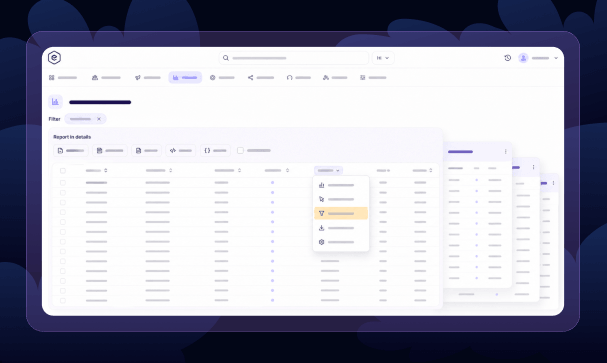
These signals are also available in Advanced Analytics. Group by device release year, RAM, price band, vendor, model, or rank. See where performance clusters, then build targeting rules based on your findings.
Traffic Risk: Block Fraud by Category, Not Just by Score
Fraud detection usually works as a single toggle. On or off. That's not enough, as different types of fraud require different responses.
Epom Ad Server 143 adds traffic risk scoring powered by Pixalate. Two dimensions: risk level and risk category.
Risk levels range from Low to Certain:
| Level | What it means |
|---|---|
| Low | Minimal fraud probability |
| Likely | Moderate signals detected |
| High | Strong fraud indicators |
| Very High | Very strong fraud indicators |
| Certain | Confirmed fraud |
Set a threshold. EXCLUDE everything at "Likely" and above for strict protection. Or block only "Very High" and "Certain" to keep volume while cutting the worst.
"Fraud is not one problem. It's twenty-five. Traffic Risk lets you block specific fraud types, not just set a single threshold."
Risk categories give you precision. 25 specific types of fraud, each individually blockable:
- Click farms.
- Datacenter proxies
- Bot traffic
- App spoofing
- Cookie stuffing
- Session hijacking
- TOR traffic
- Phishing
- Auto-reloaders, and more.
Same as Device Detection, all risk data is available in Advanced Analytics.
Three new fields: riskScore (numeric probability), riskLevel (the bucket), and riskCategory (the specific fraud type). Run a report, see your baseline, then gradually apply rules.
Note: The feature is disabled by default. Enable it when ready.
Flexible DSP Pricing: CPM, CPC, and CPV
DSP partners are no longer limited to CPM. Epom Ad Server 143 supports CPC and CPV pricing models alongside CPM.
This is necessary because some DSPs buy on clicks, while others buy on completed views. Now the ad server handles auction pricing correctly for each model.
What this unlocks:
- Partnerships with performance-focused DSPs that operate on CPC
- Video-specific demand sources that buy on CPV
- Correct price handling per model in the auction
- Faster DSP onboarding
More pricing models mean more demand sources. More demand sources mean better fill and higher yield.
Dynamic Price Adjustment Rules
"You shouldn't need to duplicate banners just to set different prices for different conditions. Now you set a rule, and the system handles it dynamically."
You can now set rule-based price adjustments at the banner level.
Define conditions: device type, OS, browser, country, or custom parameters. Then apply a percentage or fixed price adjustment. The system applies it automatically.
Example: increase price by 15% for iOS traffic from Germany. Decrease Android traffic by 10% from a lower-tier geo. No manual floor changes.
Rules clone automatically when you duplicate a banner. Permissions control who can manage them. This gives you fine-grained yield optimization without multiplying your setup.
First-Party Data Activation
Epom Ad Server now supports first-party audience data alongside third-party DMPs.
You can activate your own data assets directly in the platform. Target users based on data you collected, not just segments purchased from third-party providers.
Why this matters now: third-party cookies are disappearing. First-party data is the replacement, and Epom Ad Server is ready for that shift.
The result: more relevant targeting, better campaign performance, and a privacy-friendly approach that doesn't depend on external data sources.
Everything Else in This Release
Epom Ad Server's spring release also includes a set of smaller improvements. All of them make your daily work easier.
Custom Country Groups
Define your own geographic groups for targeting. Instead of selecting 15 countries every time, create a group once and reuse it. Faster setup, fewer errors, consistent targeting across campaigns.
Manual Analytics Reprocessing
Admins can now correct and reprocess analytics data using proportional redistribution. If something went wrong — a technical issue, a billing adjustment — you fix the data directly.
Macro Visibility Controls
Macros can now be selectively exposed to publishers or advertisers. You control who sees what, meaning less confusion for external partners.
Wrapping Up: More Data Signals & Control, Less Guesswork
Every feature in this release solves the same problem: you had to make decisions with too little data. Now the data is there.
A publisher running premium video can finally separate a 2024 flagship from a 2017 budget phone — and price them differently. An ad network onboarding a new DSP partner doesn't have to turn them away just because they buy on a CPC basis. A team that spent hours adjusting floors by geo and device now sets a rule once.
Epom ad server now sees more.
Run an ad server that provides the data you need to make better decisions.