
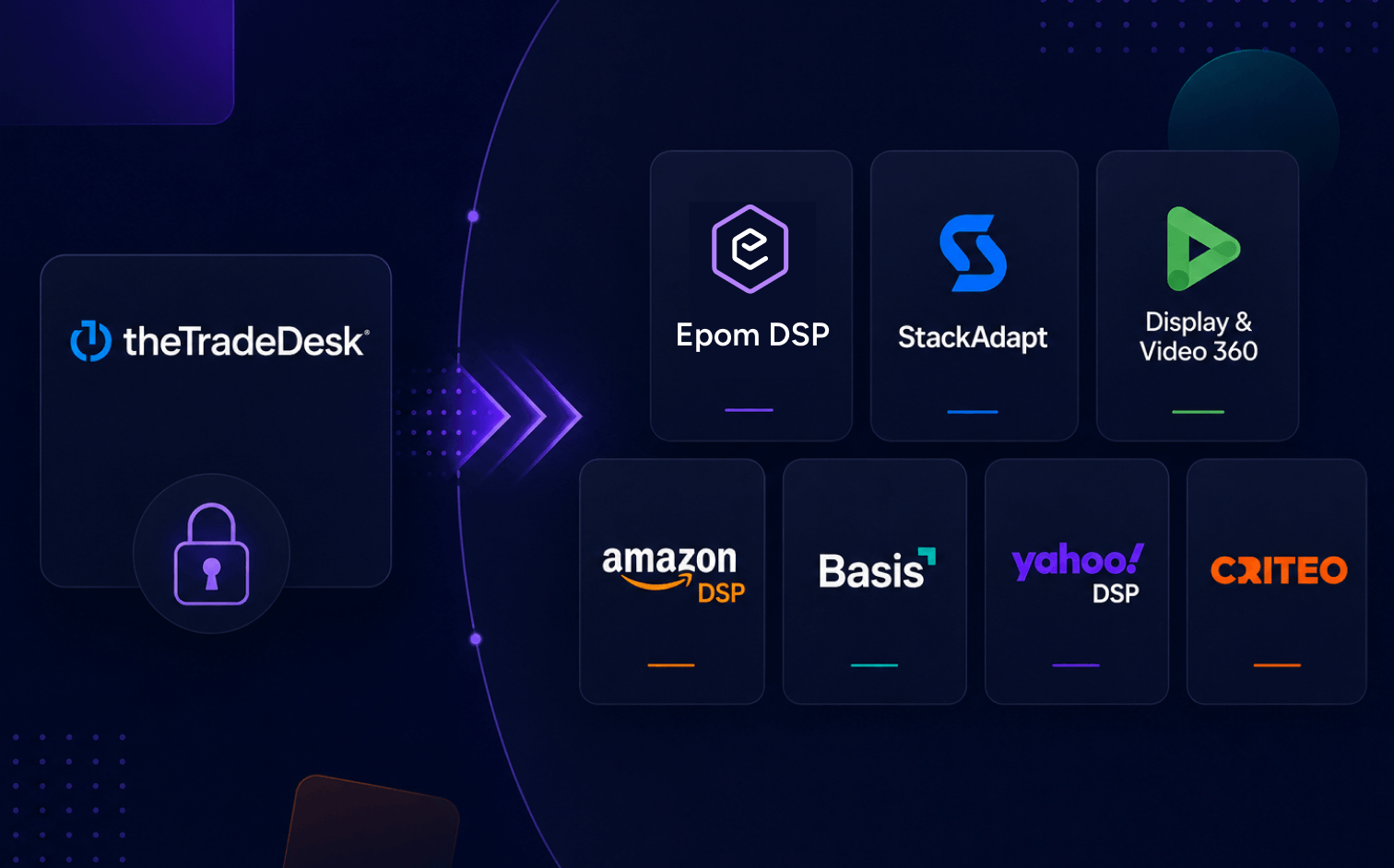
The Trade Desk is the “one DSP to rule them all” of the independent open internet. Yet, it comes with a price tag of a 100K–1M+ quarterly minimum spend and a demand for a whole “fellowship of the AdOps” to run it.
Most independent agencies and mid-market advertisers cannot cover both demands. If you fall into that majority, this guide compares eight alternatives across spend thresholds and use cases so you can make an architectural decision for your media buying.
TL;DR:
- The Trade Desk charges a take rate of roughly 15–20% of media spend (though enterprise MSAs can negotiate this down). Minimums are strictly enforced, and recent automated "Trading Modes" in beta require 20K–30K minimums just to train the algorithm.
- The most common reasons buyers switch: rigid spend floors, lack of margin control for agencies, and the steep ramp required to master Kokai, TTD's AI platform.
- DV360 and Amazon DSP are the enterprise-tier walled-garden alternatives.
- StackAdapt and Epom DSP are the most viable mid-market replacements.
- The right choice comes down to three variables: your monthly budget, whether you need a white-label DSP, and your primary channel mix.
- No single platform beats TTD on every dimension but several beat it on accessibility and overhead for budgets under $50K/month.
Epom provides DSP and SSP to 350+ companies worldwide. If you’d rather skip the research and see if our setup fits your use case, try Epom DSP right now.
What makes The Trade Desk worth switching from?
The Trade Desk built its reputation as the independent alternative to Google. Powered by its Kokai platform, it claims processing more than 15 million ad opportunities per second (QPS) and reported $2.9B in FY2025 revenue with $13.4B in gross spend flowing through its pipes.
The culprits driving people to The Trade Desk alternatives are the unit economics and resource requirements.
The minimum spend barrier
TTD's quarterly minimums range from $100K at the low end to over $1M for buyers in competitive markets. On top of that, the platform fee runs 15–20% of media spend, with separate line items for third-party data segments, cross-device graphs (like RampID or CoreID), and premium CTV inventory tiers.
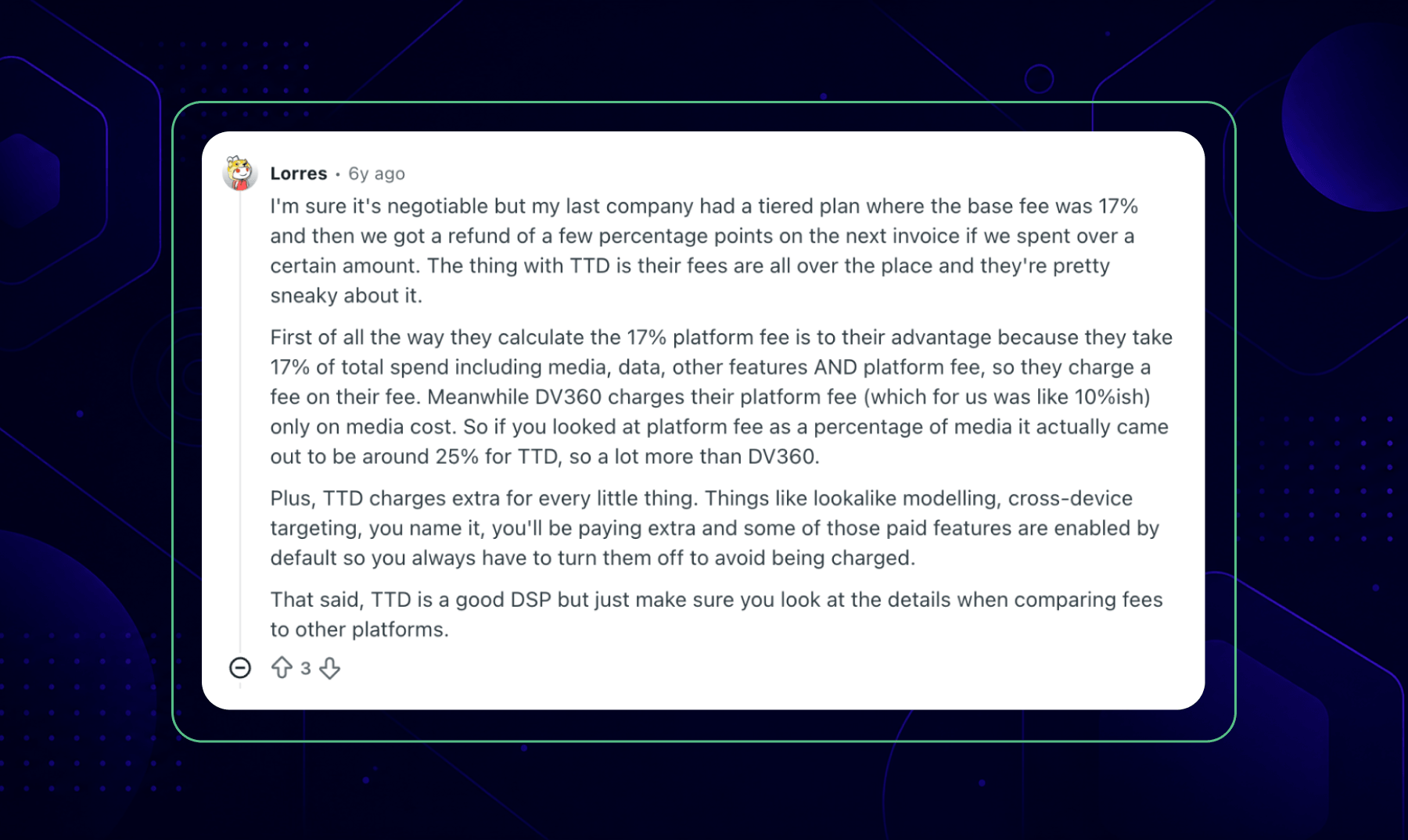
For a $5M/year enterprise brand, that math works. For an agency managing $200K/month across a fragmented portfolio of mid-market clients, not so much. Especially when each client account may fail to clear the per-seat minimum threshold.
The AI complexity tax
Kokai is powerful, but it assumes you have a trader who can configure bid multipliers, manage audiences based on identity graphs (UID2), and configure custom algorithms that score millions of impressions based on custom-weighted variables. The Trade Desk is not a platform you hand to a generalist media buyer on Monday and expect optimized pacing by Friday.
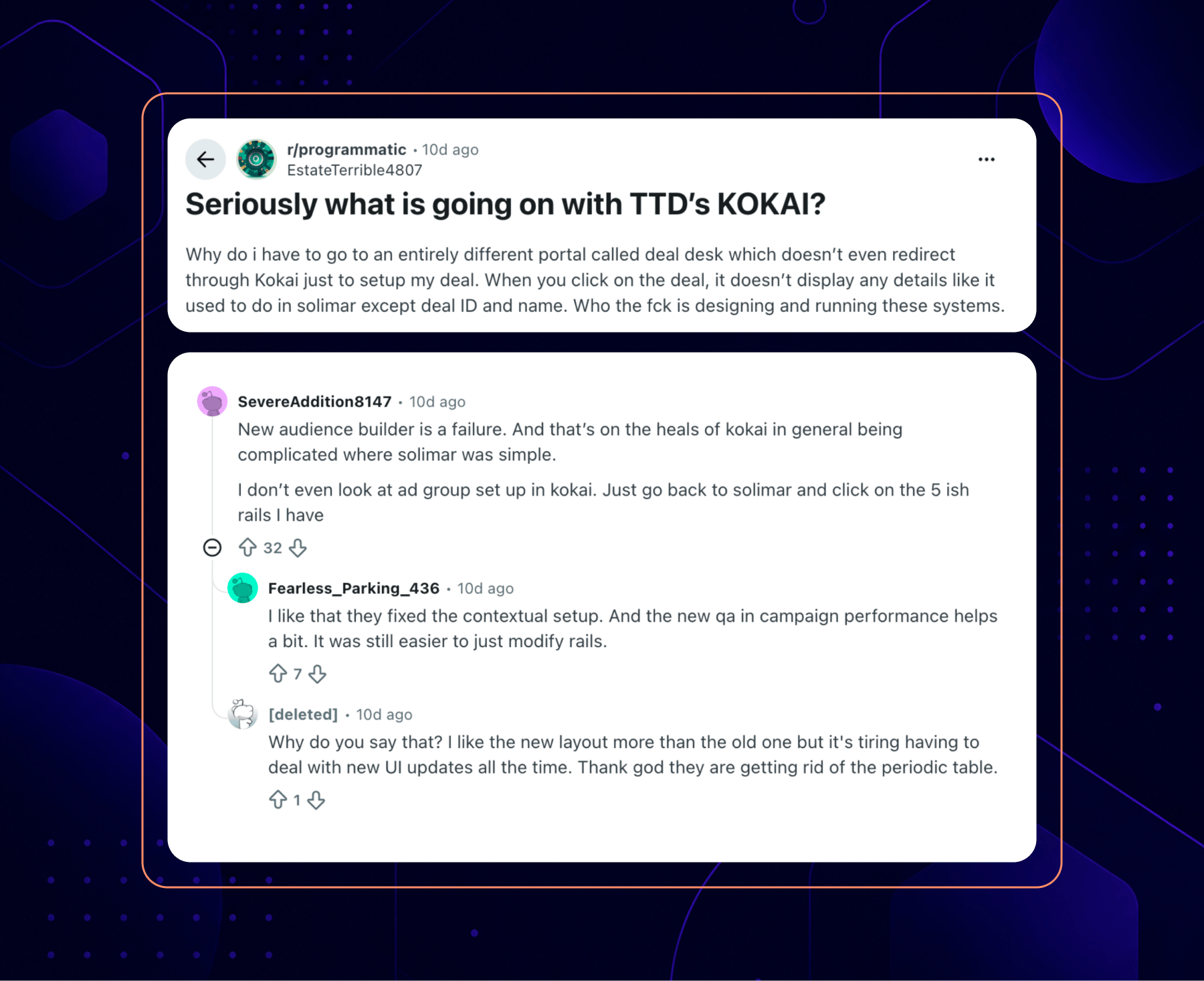
The platform offers immense power, but true self-serve access requires a level of programmatic fluency that lean agency teams rarely possess. TTD allows you to optimize campaigns across countless bid factors and dimensions. If you lack a deep understanding of which dimensions to optimize for using their built-in algorithms, TTD's sophistication becomes a liability. You risk draining budgets on sub-optimal bids.
Inventory access vs. the pitch
TTD's open-internet reach is real. It excels at connected TV (CTV), streaming audio, and premium publisher display. What it doesn't offer: Google or YouTube inventory (DV360's exclusive territory), and Amazon's ASIN-level purchase-intent data (Amazon DSP's moat). If your strategy relies heavily on those walled gardens, TTD’s independence works against you.
How we evaluated the TTD alternatives
Rather than ranking platforms by the number of SSP integrations, we scored each against six architectural and business criteria:
- Minimum spend / accessibility — what is the real financial floor?
- Channel coverage — display, video, CTV, audio, native, DOOH, in-app.
- Pricing models — is it a flat platform fee, a percentage markup on media spend, or a hidden margin?
- Data and identity — first-party data onboarding, clean room integrations, and contextual capabilities.
- Self-serve vs. managed service — do you control the levers, or are you handing your
- White-label availability — can you rebrand the platform and keep 100% of the media margin?
The 7 best Trade Desk alternatives in 2026
1. Epom DSP
Best for: Agencies that want a self-serve DSP without enterprise minimums, and AdOps teams that need a white-label DSP to own their margin.
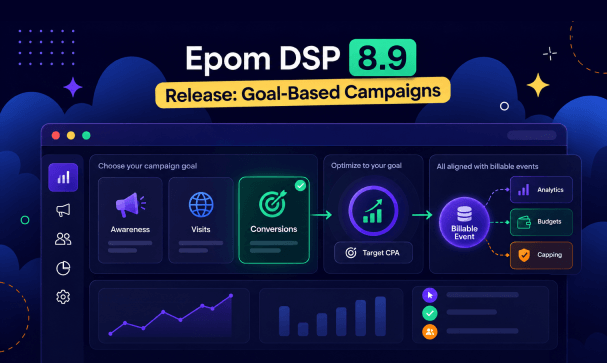
Epom DSP s built for ad agencies and brands with medium-sized budgets The Trade Desk prices out by design. There is no published spend floor. You can launch campaigns through a single interface, connected to 50+ SSPs.
📖Read more about DSP for agencies
If you are an agency that wants to offer programmatic under your own brand, Epom provides the core infrastructure. Instead of paying a 20% platform fee to a managed DSP, you pay a manageable flat fee for the bidder, connect your own SSP seats, and retain control over your margins and log-level data. If you just want to start buying without connecting your own seats, Epom's basic white-label tier provides pre-configured traffic.
- Channel coverage: display, video, CTV, mobile, in-app
- Pricing: no published minimum for self-serve; transparent platform or markup fees depending on the tier.
- White-label / BaaS: Yes — the only platform on this list offering pure infrastructural control.
- ❌ Not for: buyers who strictly require closed-ecosystem Google or Amazon retail data.
2. Google Display & Video 360 (DV360)
Best for: Advertisers already invested in the Google Marketing Platform who require YouTube access and Ads Data Hub (ADH) analytics.
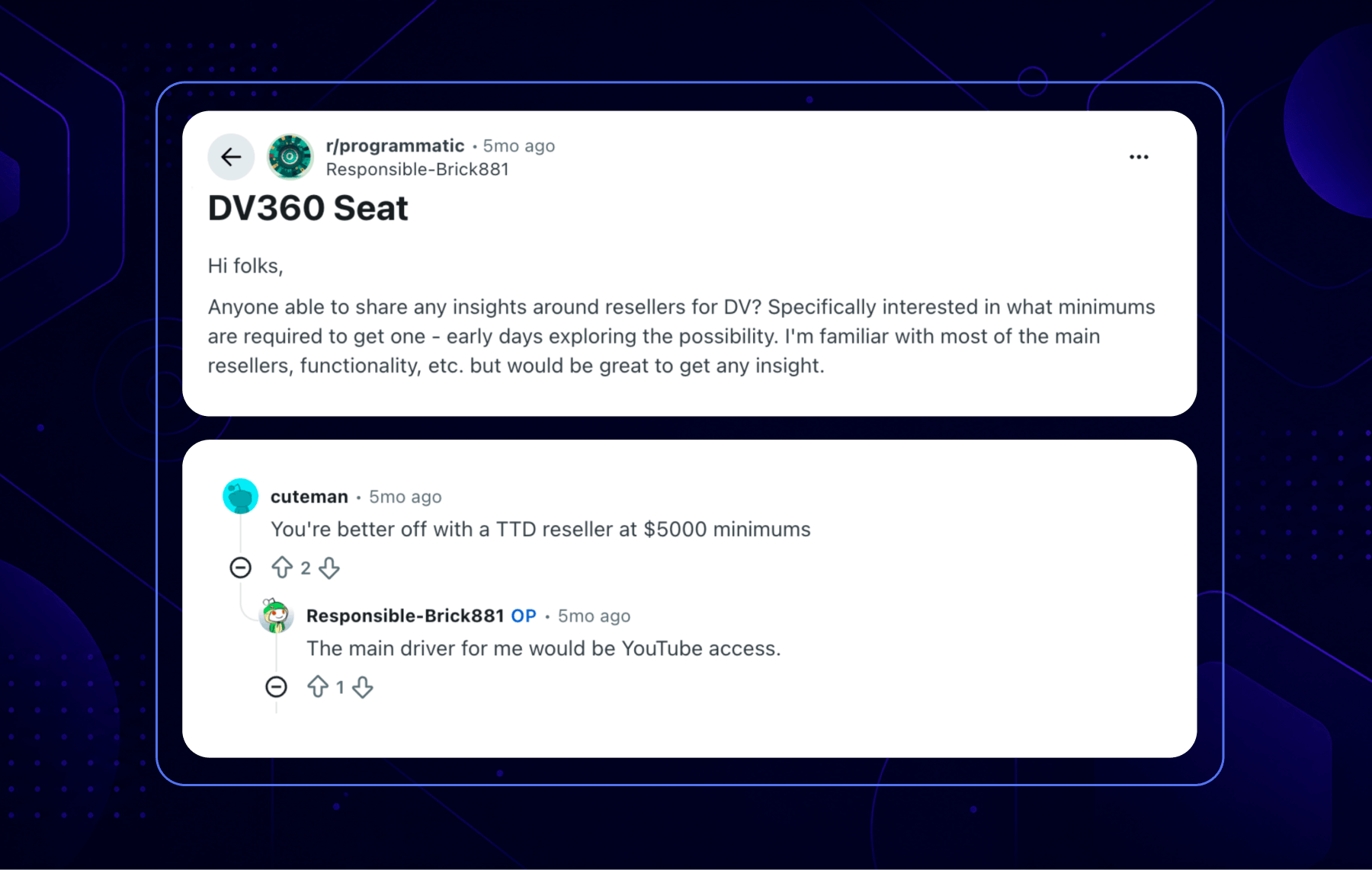
DV360 is The Trade Desk's primary enterprise rival. Its definitive advantage is YouTube.
DV360 is the only DSP with programmatic access to Google's owned-and-operated video inventory. Integration with Google Analytics 360 and Campaign Manager 360 also means your ad spend data connects seamlessly to your ad server and on-site behavior.
The tradeoff is the walled garden. DV360 is optimized for Google's ecosystem. While it bids on open exchanges, its algorithms favor Google Ad Manager (GAM) supply.
- Pricing: ~10–15% of spend; $50K/mo minimum (often structured via authorized sales partners).
- White-label: no
- ❌ Not for: buyers seeking objective, independent SPO outside of Google's preferential routing.
3. Amazon DSP
Best for: E-commerce brands that need to reach shoppers off-platform using Amazon's actual shopping data.
Amazon DSP's differentiator is data nobody else possesses: Amazon's purchase-intent signals. Through Amazon Marketing Cloud (AMC), advertisers can map their first-party data against Amazon's transaction logs.
The catch is the operating model.
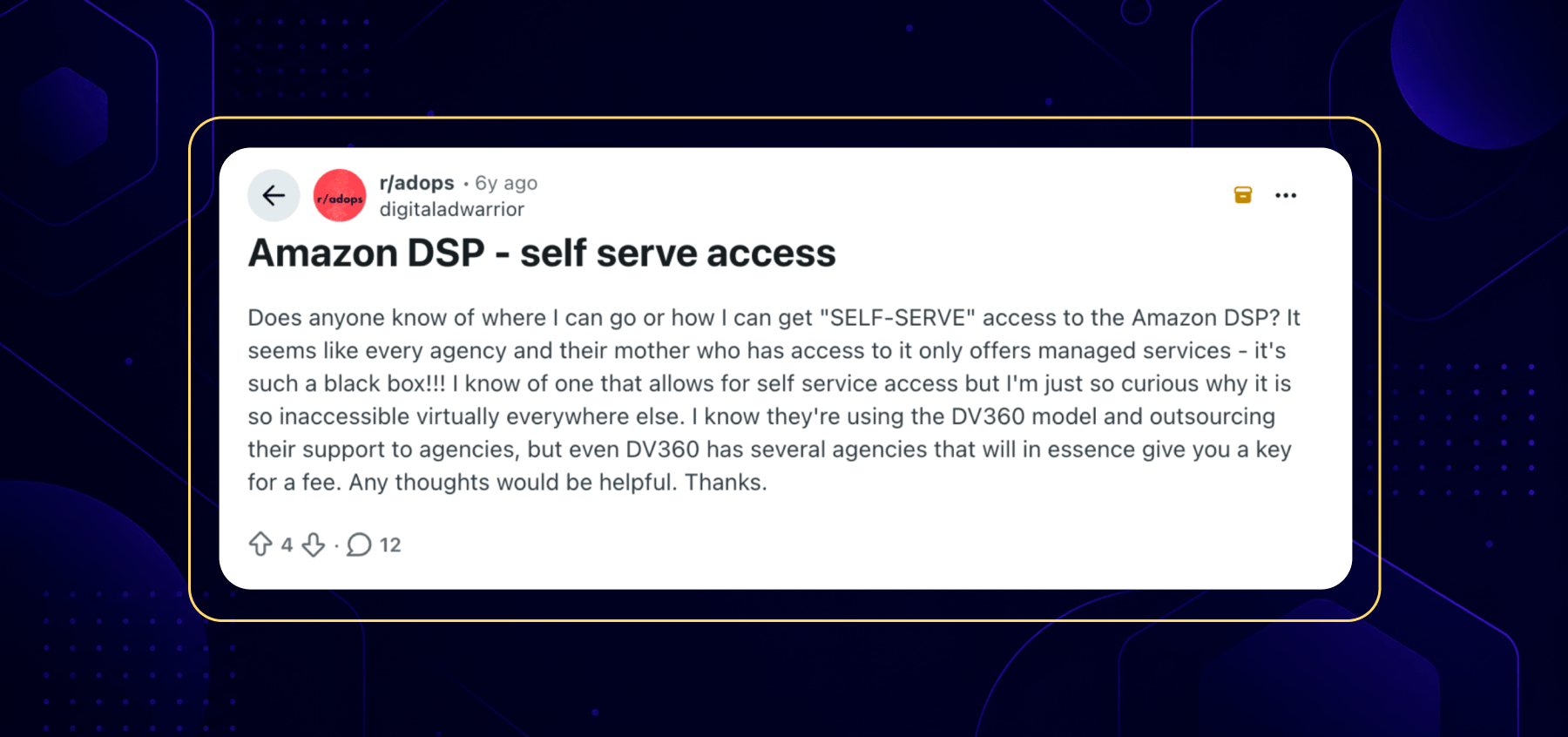
Amazon DSP relies heavily on managed service for mid-tier buyers. Self-serve seats are highly gated, pricing is quote-only, and the minimum spend threshold is enterprise-grade.
- Channel coverage: display, video, CTV (Prime Video), in-app.
- Pricing: quote-only; enterprise minimums apply.
- White-label: no
- ❌ Not for: B2B SaaS, lead-gen advertisers, or anyone seeking a lightweight self-serve UI.
4. StackAdapt
Best for: Mid-market performance teams that want an accessible, multi-channel self-serve UI without TTD's complexity.
StackAdapt has carved out a footprint in the mid-market agency space. It supports native, display, video, CTV, audio, and DOOH in a single UI. Unlike TTD, it emphasizes contextual targeting capabilities over complex identity resolution, making it highly resilient to cookie deprecation. The platform's AI-driven optimization easily handles bid shading and audience discovery.
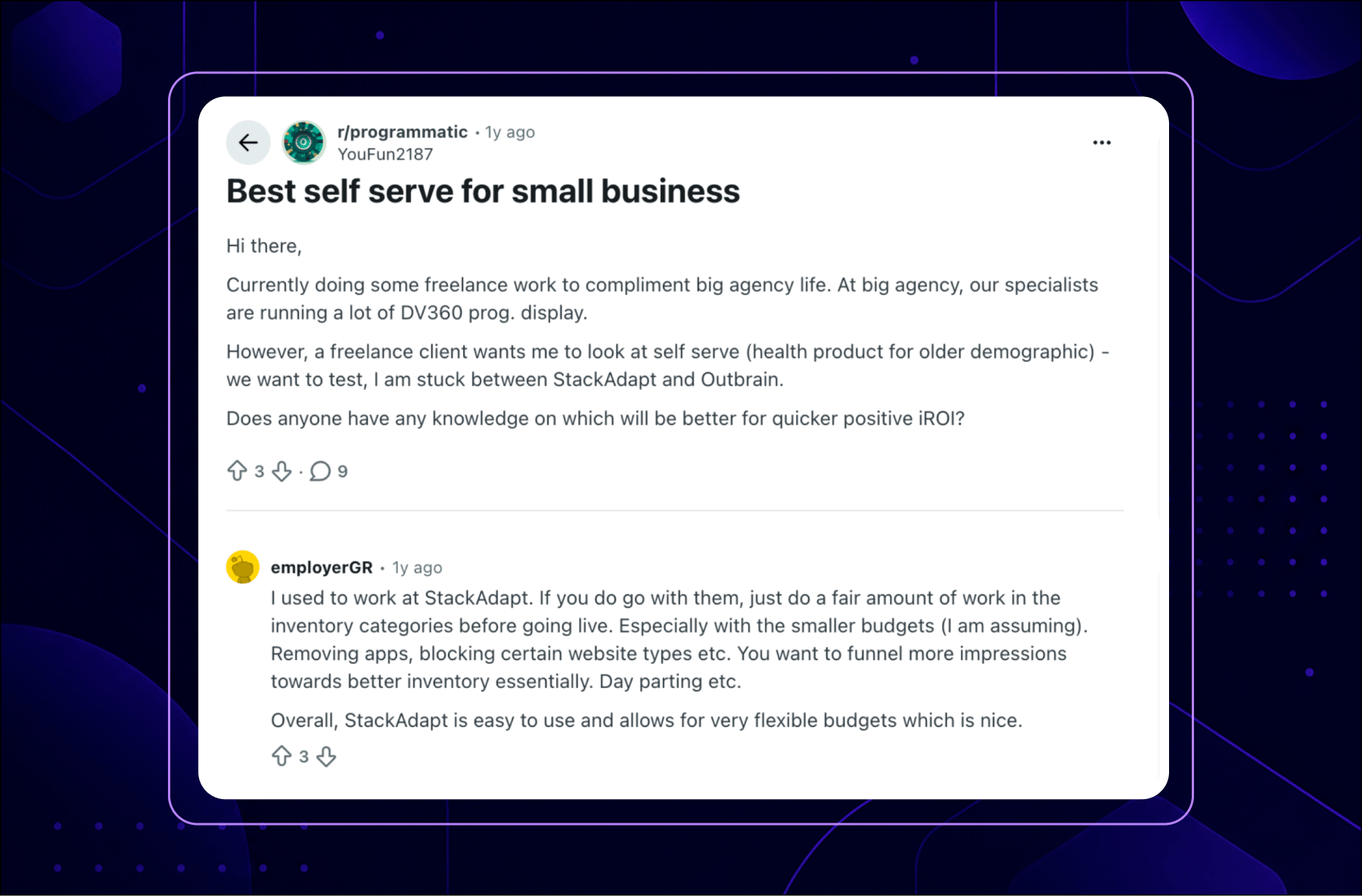
Campaign managers with general digital marketing experience can ramp up quickly, whereas TTD's Kokai requires a dedicated programmatic specialist.
- Channel coverage: native, display, video, CTV, audio, DOOH
- Pricing: not published; practically lower threshold than TTD.
- White-label: no
- ❌ Not for: buyers who need a white-label DSP infrastructure or raw log-level data.
5. Basis (formerly Centro)
Best for: Independent agencies managing hybrid media plans that need to reconcile programmatic buying with direct vendor IOs.
Basis is as much a workflow automation tool as it is a DSP. It integrates programmatic buying, direct IO management, pacing alerts, and financial reconciliation into a unified platform.
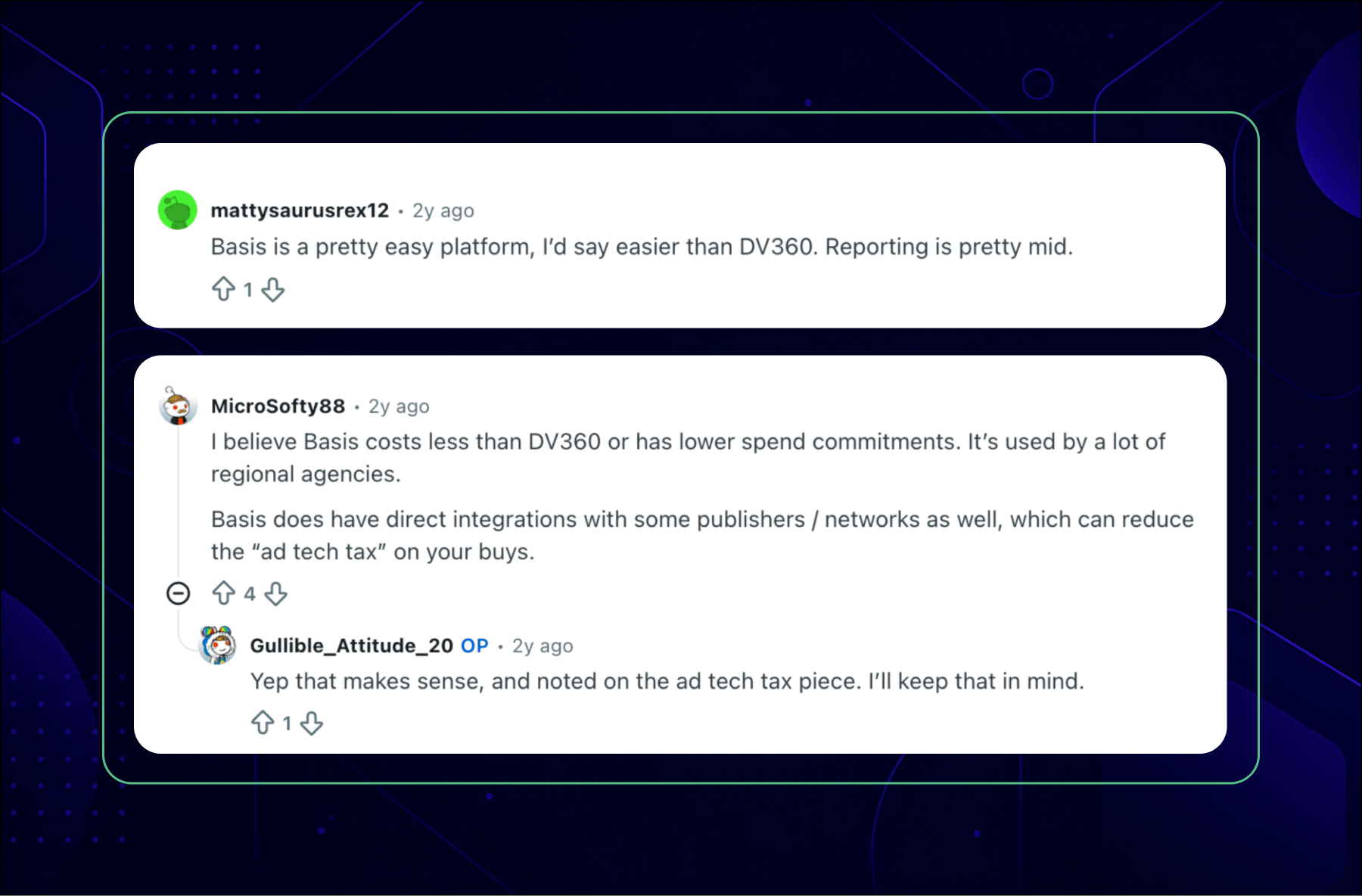
For agency teams manually tracking guaranteed direct buys in spreadsheets alongside their programmatic spend, Basis eliminates the operational friction.
- Channel coverage: display, video, CTV, audio
- Pricing: not published.
- White-label: no.
- ❌ Not for: pure-play programmatic teams that already have dedicated billing and ad-serving infrastructure.
6. Yahoo DSP
Best for: Advertisers targeting endemic audiences leveraging Yahoo ConnectID and Yahoo's owned-and-operated data.
Yahoo DSP (formerly Verizon Media/Oath) runs on a massive trove of first-party deterministic data from Yahoo Finance, Yahoo Sports, and Yahoo Mail. Total active users across the three platforms exceed 650 million monthly active visitors worldwide; of these, more than half are from the US.
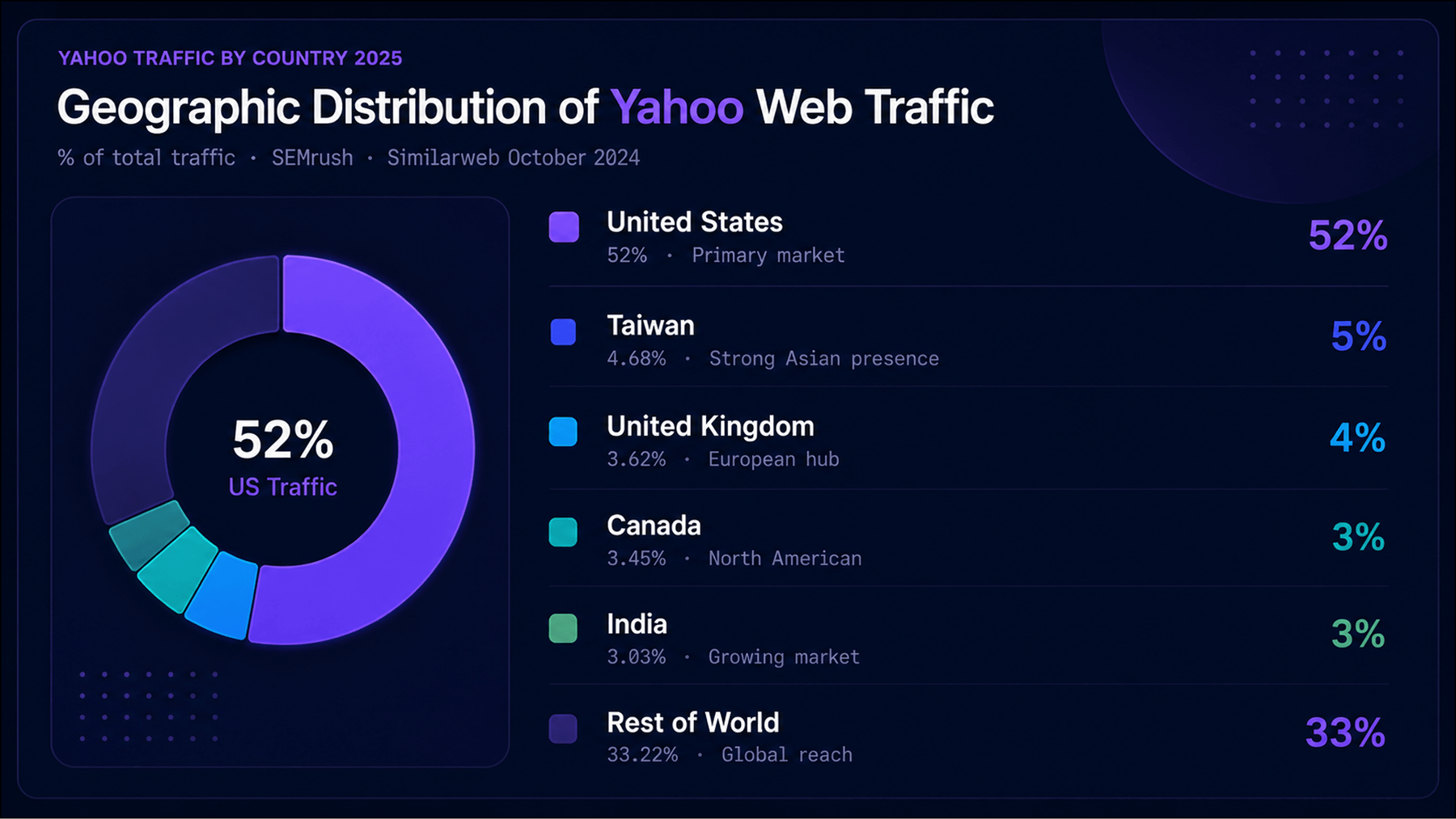
With the deprecation of third-party cookies, Yahoo ConnectID is a highly valuable identity graph for contextual and audience targeting accuracy.
- Channel coverage: display, native, video.
- Pricing: not published; mid-market accessible.
- White-label: no.
- ❌ Not for: B2B advertisers or CTV-first strategies.
7. Criteo Commerce Media
Best for: E-commerce performance marketers focused on dynamic retargeting and retail media networks (RMNs).
Criteo is a commerce specialist, so don’t expect it to be a full-stack omnichannel replacement for TTD. Through its Commerce Max platform, its strength lies in closing the loop on lower-funnel performance and tapping into major retailer networks.
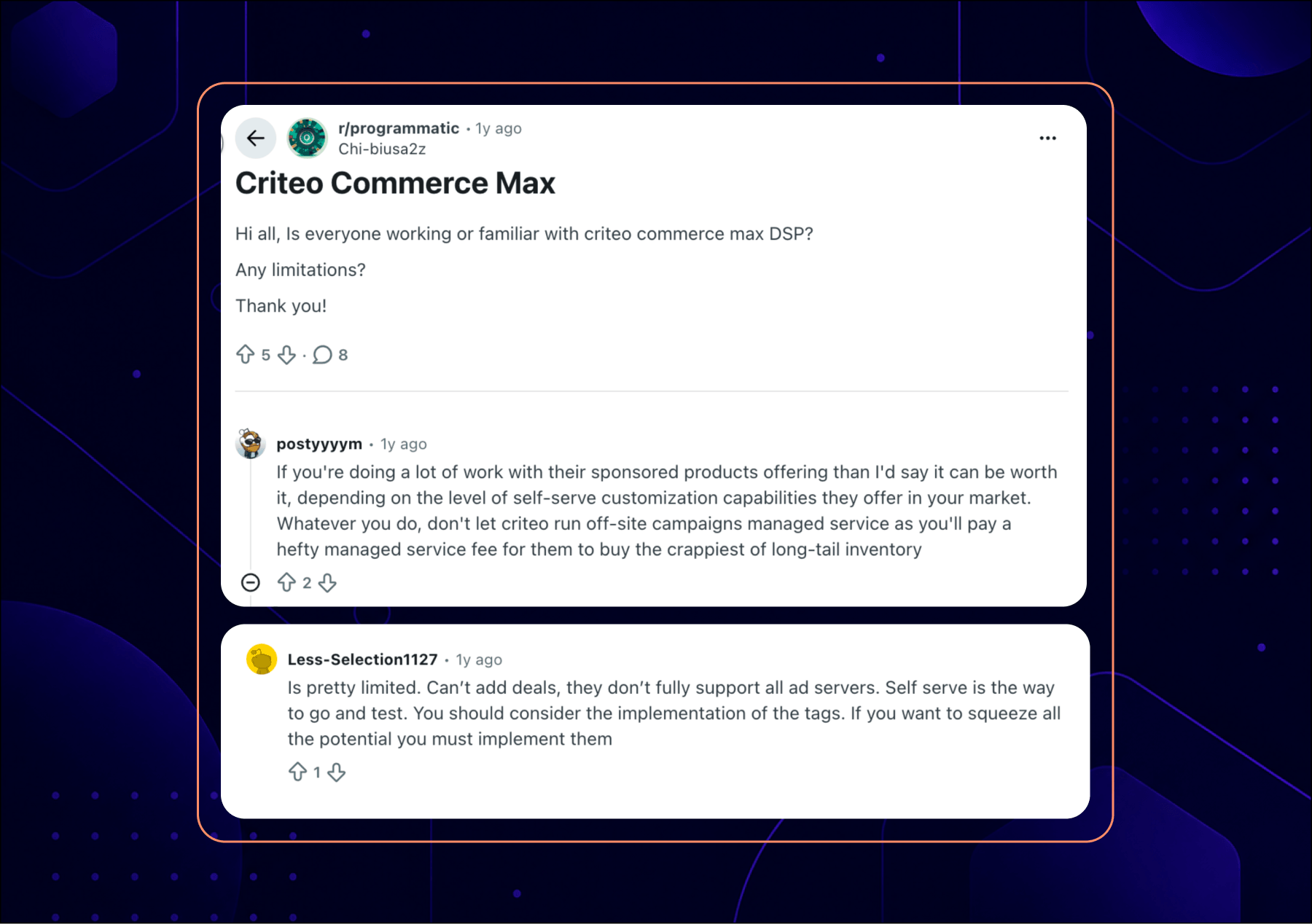
The shopper intent data is good. The top-of-funnel brand awareness targeting could be better.
- Channel coverage: display, retail media, dynamic product ads (DPA).
- Pricing: performance-model pricing available.
- White-label: no.
- ❌ Not for: brand advertisers, B2B, or broad open-web prospecting.
How to choose the right Trade Desk alternative
Three operational questions narrow the field faster than feature matrices.
1. What is your monthly programmatic spend?
This immediately rules out half the list.
- Under $30K/month: DV360 and Amazon DSP are not realistic. StackAdapt and Epom DSP are your starting points. Epom has no published floor, making it the most accessible environment for scaling.
- 30K–150K/month: StackAdapt, Basis, Epom DSP, and Yahoo DSP are viable. The decision shifts to workflow needs and data access.
- $150K+/month: You are in range for DV360, enterprise agreements, and potentially a direct TTD contract.
2. Do you need a white-label DSP?
This question eliminates every alternative on this list except one.
If you are an agency or a startup that wants to offer programmatic as a proprietary service you need architectural control, not just a login. Of the platforms above, only Epom DSP provides a genuine white-label tier. The others are buyer-facing managed seats which do not allow you to rebrand the UI or keep the DSP margin for yourself.
3. What is your primary channel or data requirement?
| IF: | THEN: |
|---|---|
| CTV and YouTube | DV360 |
| Retail media and purchase data | Amazon DSP (if Amazon-centric) or Criteo (for broader RMNs) |
| Contextual and mid-market performance | StackAdapt |
| B2B / Finance first-party data | Yahoo DSP (Yahoo Finance) |
| Agnostic open-web with total control | Epom DSP or Basis |
📖 Relevant reading: A full comparison of top DSP platforms in 2026.
How to migrate from TTD to Epom (a framework for any DSP)
Migrating from The Trade Desk (TTD) to Epom DSP requires adjusting to a more agile, white-label-friendly platform. Since you are moving from an enterprise giant to a hybrid self-serve DSP, you will shift from relying on TTD's AI algorithms to having greater manual control and direct SSP access.
Follow these concrete steps to execute a smooth transition:
1. Audit and export your historical data
Before you leave, extract all the campaign intelligence you have built up inside The Trade Desk.
- Export performance metrics
Export reports on your best-performing creatives, device targeting, and site lists.
- Copy audience segments
Download your audience taxonomy and CRM lists. Since Epom utilizes different data partners (e.g., Lotame), you may need to map your current audiences onto Epom's available segments.
2. Set up your Epom account
Depending on your business model, Epom offers either a standard self-serve or a white-label DSP.
- Start the platform
If you choose the self-serve option, you can create your account and deposit your initial budget (often starting around $100).
- Supply path syncing
Epom gives you access to 50+ pre-integrated SSPs on day one. You will need to manually configure which SSP endpoints and formats (display, video, native, CTV) you want to activate for your inventory streams.
3. Rebuild campaigns & bidding rules
You cannot seamlessly migrate your TTD campaigns via API, so you will need to reconstruct them in the Epom dashboard.
- Define strategy
Translate your TTD goals into Epom's framework. Since Epom gives you direct settings for your bidding rules, you will need to input your pacing, frequency caps, and GEO targeting manually.
- Upload creatives
Upload your ad assets directly into the Epom platform. You will need to insert click URLs and track tags on a per-campaign basis.
4. Transition Conversion Tracking
- Implement tags
Replace your current tracking tags on your website. Generate new conversion tracking pixels and postback URLs from the Epom dashboard and ensure they fire properly before turning off TTD campaigns.
- Verify postbacks
Test the data stream to ensure your CPA, ROAS, and attribution logic are accurately passing through Epom.
Frequently asked questions
Bottom line
The Trade Desk is the right architectural choice if you are deploying six-figure quarterly budgets, employ dedicated programmatic traders, and require deep, independent integration with open-web publishers.
If your budget is under $150K/month, you require an intuitive self-serve UI, or you are an agency that wants to reclaim the 20% DSP margin by running a white-label DSP, The Trade Desk was actively built to price you out.
The solutions to those constraints are clear: StackAdapt for mid-market, contextual performance, and Epom DSP for agencies and buyers who demand enterprise programmatic capabilities, complete margin control, and zero spend minimums.