


Demand Path Optimization (DPO) is a systematic approach to controlling demand routing in digital advertising. It helps reduce path duplication and margin stacking, and increases the share of the budget that actually reaches the publisher. Through improving the demand structure and bidding logic, DPO makes buying more transparent, predictable, and cost-effective. DPO aims to improve overall efficiency, deliver greater transparency, and drive revenue growth for publishers.
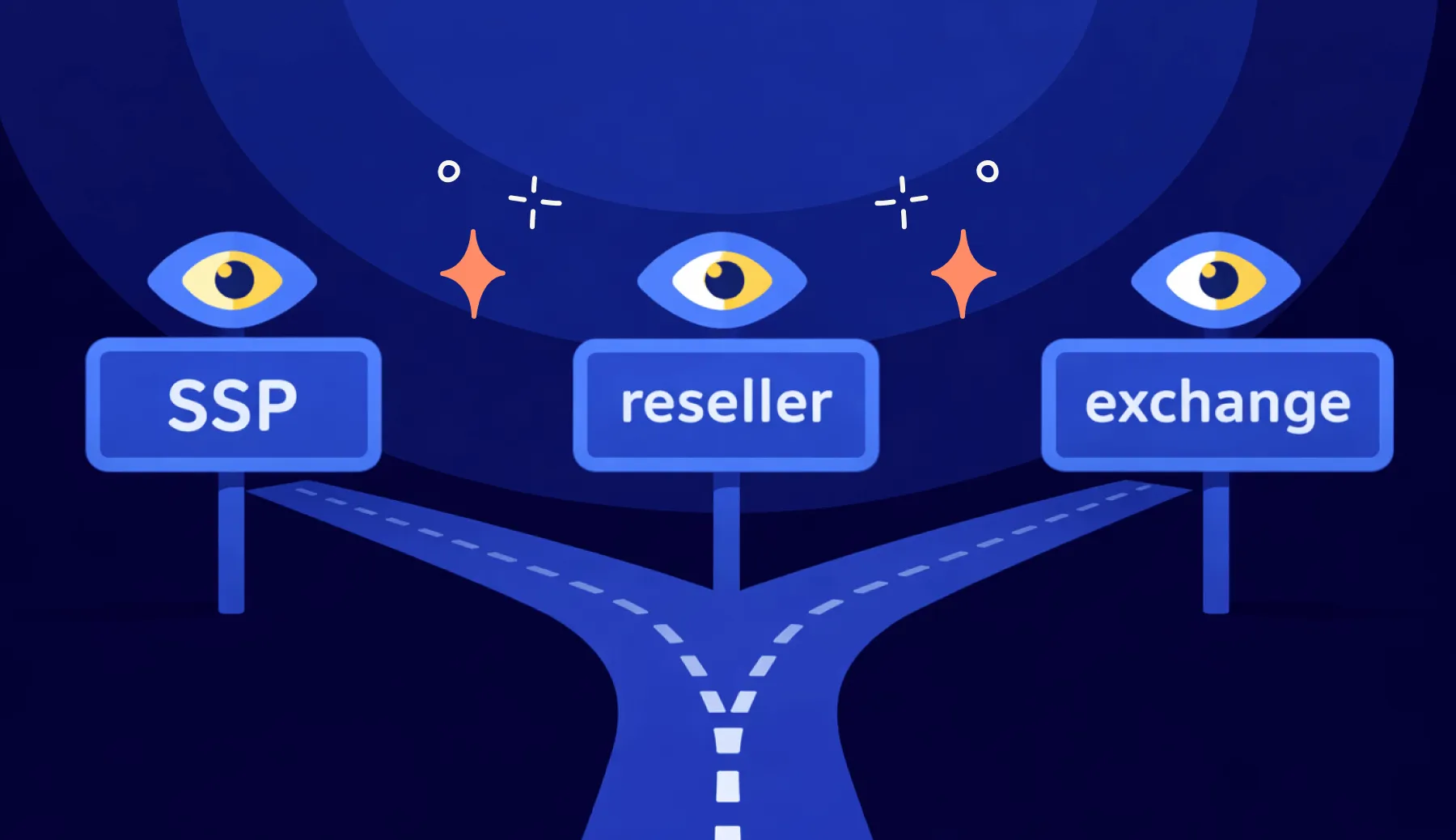
Programmatic buying today resembles a multi-level highway system. The same impression can reach the buyer via different routes — through a direct SSP, a reseller, or several intermediate exchanges. All of them have different fee structures and levels of transparency. In environments with first-price auctions and header bidding, an unoptimal demand path can negatively impact eCPM, CPA, and ROAS. That’s why demand path optimization has become a valuable strategic tool.

Supply Path Optimization vs Demand Path Optimization
Simply put, supply path optimization (SPO) is a buyer-side strategy that focuses on selecting SSPs and exchanges to buy ad inventory from, and on cutting down fees and increasing efficiency. Also, SPO tries to eliminate unnecessary intermediaries and path duplication.
Demand path optimization (DPO) is a wider concept that focuses not only on selecting the best SSP, but also on the entire media supply chain. Its goal is to optimize the demand path as a whole: how a DSP, an ad agency, or an ad network receives bid requests, handles duplicates, distributes bids, and monitors fee layers and internal competition.
So, both SPO and DPO help optimize ad buying, but the key difference between them is the level of optimization. SPO seeks the most efficient route for buyers to access inventory, reducing unnecessary intermediaries and improving efficiency, while DPO optimizes the entire demand architecture. SPO answers the question “through whom to buy” — and DPO answers the question “how exactly the buying mechanics work”.
Let’s look at the example. Say, the same impression is available through three SSPs (one direct and two resellers), SPO will simply connect directly to a SSP to avoid unnecessary intermediaries. DPO, on the other hand, will dig deeper: it will check how this impression reached the DSP, whether there are competing DSP seats, and whether there are additional fee layers.
In other words, SPO shortens the supply chain, and DPO rebuilds the demand routing logic across the entire system.
Why Demand Path Optimization Matters Today
Today, demand optimization is more than a trendy term. Due to the development of technologies, including machine learning, the programmatic advertising ecosystem has become much more complex, and mistakes are quite expensive. Demand path optimization (DPO) helps publishers optimize the pathways through which ad space is purchased, enhancing revenue and efficiency. DPO also makes it easier for advertisers to buy publisher's inventory efficiently, maximizing ad revenue. Also, the DPO process contributes to building a more transparent ecosystem for publishers working on improving performance, their demand-side partners, and other adtech companies. Optimizing buying paths can lead to increased performance by reducing latency and improving user experience.
In the complex programmatic ecosystem, understanding buyers' desired inventory and payment terms is crucial for optimizing demand relationships and strengthening connections with advertisers.
Here are the main reasons to consider DPO, drawn from Epom’s experience.
Header Bidding Can Cause Path Duplication
DPO is influenced by sell-side infrastructure, a part of which is header bidding. Header bidding technology (especially as server-side bidding) allows multiple SSPs to compete for the same ad impression. So, if a publisher has connected several supply-side platforms via a header-bidding wrapper, each can send the same impression to a DSP as a separate bid request. It’s a source of path duplication: a DSP can buy the same impression through a direct SSP, through a reseller, or through an exchange aggregator. Hence, internal competition and inefficient budget use.
First-Price Auctions Raise the Cost of Error
In the first-price model, demand-side platforms pay exactly the bid they submit, while in second-price auctions, the winner pays a bit more than the second-highest bid. Therefore, there is no safety buffer, which is critical if the demand path is configured incorrectly.
For example, a DSP is willing to pay no more than $5 per impression. Without demand-path problems, bid shading models can accurately estimate competitive pressure and often win at lower prices. But if the same impression reaches the DSP via different SSPs and the system doesn’t recognize it as the same impression, historical win-rate and competition signals become fragmented, and bid shading models receive distorted signals. As a result, the DSP bids more often near its maximum, worsening CPA and ROAS.
Margin Staking Grows
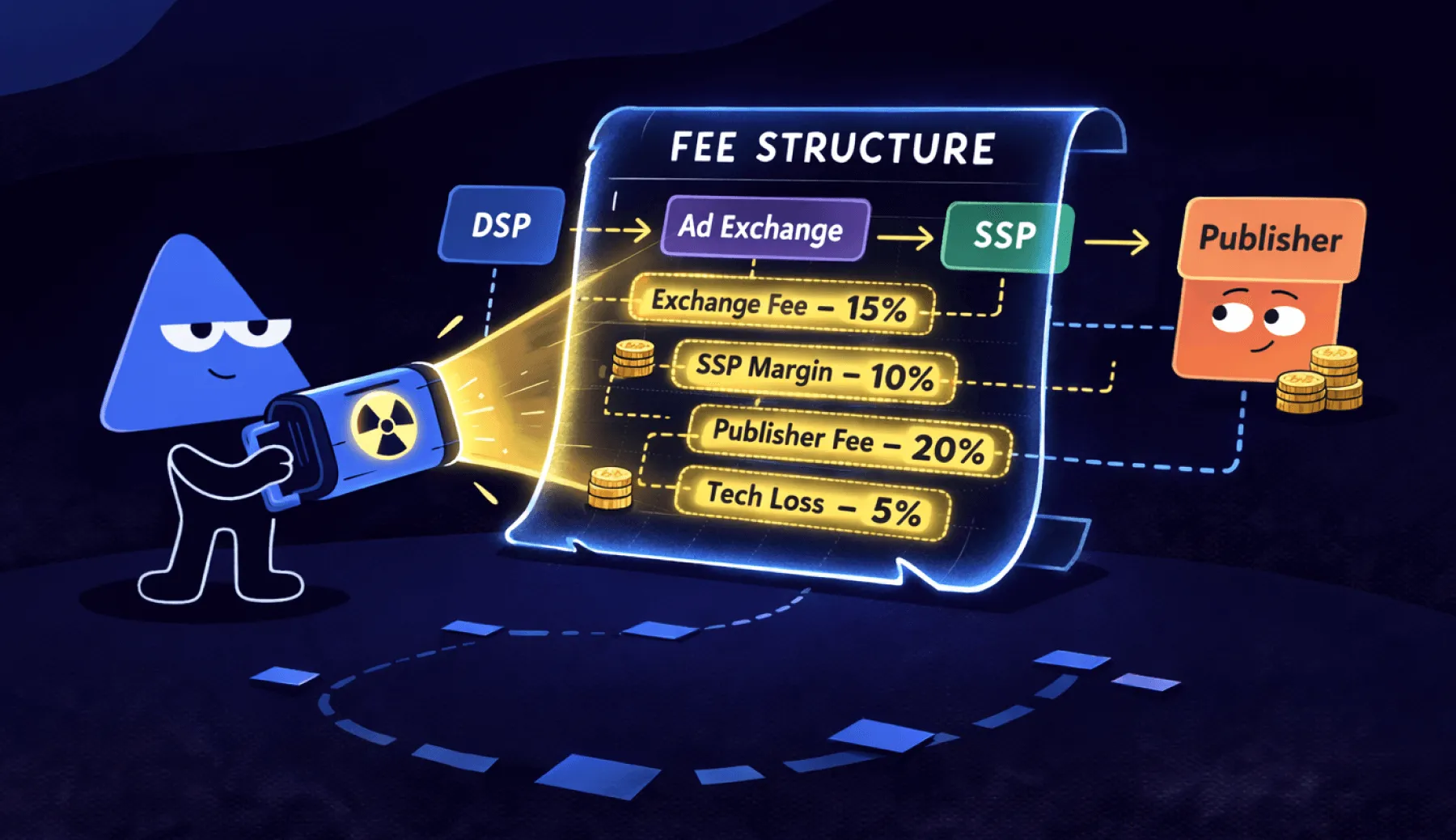
The programmatic advertising chain has become much more complex, and each element of it usually charges its own fee: agency fee, DSP fee, exchange fee, SSP fee, reseller margin, etc. Individually, these fees may seem small, but together they can become quite a burden. The biggest problem is that these fees are deducted sequentially as the budget moves through the chain. Each layer takes a cut, and the longer the chain, the smaller the share of total spend that actually counts as an inventory purchase.

Sure, if you optimize the demand path, it won’t magically reduce your expenses. However, DPO can identify and eliminate inefficient routes — and save a part of your budget. Also, DPO allows publishers to analyze transaction costs, helping to maximize revenue.
What Are the Main Goals of Demand Path Optimization
DPO is not simply about reducing costs; it is also about increasing the cost-effectiveness of the entire demand architecture. Therefore, its main goal is to make certain that every advertising budget is spent as efficiently and transparently as possible. The main benefits of demand path optimization (DPO) include improved transparency and increased ad revenue for publishers, which is especially crucial for premium inventory.
The other objectives of the demand optimization process are to reduce duplicate bid requests, eliminate redundant or inefficient supply paths, optimize demand path and win rates, and lower internal competition among DSP seats. Based on Epom’s observations, this means better CPA and ROAS for agencies and in-house teams without increasing the budget.
For ad networks, it means more stable margins. For all media buyers, this means a clear understanding of the fee-layer structure and real net spend. In general, DPO gives you valuable insights and more control over costs and makes your spending more predictable.
Key Elements of Demand Path Optimization
DPO works through a deep analysis of demand paths, their economics, and the auction’s behavior. It’s based on the transparency of demand routes, which means we can clearly understand how an impression reaches the DSP, which intermediaries are involved, and how the economics of each path are determined, including how you connect and manage new SSP endpoints.
The second core element is the control of duplication and internal competition. As we mentioned before, the same impression can reach the DSP through several SSPs. If the system does not notice that, data on competition and win rates becomes fragmented, which affects the efficiency of bidding algorithms.
The third element is economic rationality. Each path should be evaluated from the perspective of net spend (total spend minus DSP, ad exchange, and SSP fees), not just CPM. Comparing these indicators across paths allows you to find optimal paths. That’s why a data-driven approach (sometimes even including log level data) is essential for effective DPO.
In short, the foundation of DPO is the combination of transparency, technical control, and economic analysis to choose the most efficient paths.
Core Principles of DPO
One of the key principles of DPO is the shortest-path priority: every impression should be purchased via the shortest and most direct path to the publisher. So, the fewer intermediaries in the chain, the less margin stacking and the greater share of the budget that actually buys inventory.
The second principle is economic efficiency over surface metrics. It means that decisions should be made based on net spend, not just on CPM or win rate, because a path with better CPM may be less efficient due to margin stacking or inconsistent quality.
The third principle refers to signal consistency in first-price environments. In a first-price model, the accuracy of bidding models is critical. Duplicated supply and data fragmentation distort win rate and competition signals, while path consolidation helps reduce the risk of oversend.
Finally, DPO is based on the principle of controlled complexity. It means the DPO’s goal is to establish a managed demand architecture. Complexity can only be justified if it provides access to unique inventory.
What DPO Means for Different Market Participants
Different ad tech companies can benefit from demand optimization in their own ways. For example, DPO allows publishers and other supply partners to reduce auction noise and internal competition for the same impression. This contributes to a more predictable yield.
For agencies, DPO is a tool for managing client budgets and platform fees. Control over paths allows them to reduce hidden fee layers and increase transparency for the client. And for in-house teams, DPO means regaining control over the real net spend. Eliminating unnecessary intermediaries reduces margin stacking and increases the predictability of CPA and ROAS.
DPO also helps publishers to consolidate the number of adtech companies and media buyers they work with, improving efficiency.
How to Implement Demand Path Optimization
DPO doesn’t happen automatically by enabling some feature in your DSP. In fact, it’s a process initiated and implemented by teams on the buyer’s side. It usually consists of several steps.
Step 1. Mapping Your Demand Path
The first step is to build a path map and see how the budget flows through the system: from the DSP through the ad exchange and SSP to a specific publisher. At this stage, the effective CPM, win rate, duplication rate, spend, and fee structure for each path are analyzed, along with common technical reasons why bids may fail in a DSP environment. The goal here is to understand how many paths exist and where fragmentation or excessive complexity occurs.
Step 2: Evaluate Demand Partners
At the next stage, you need to evaluate the effectiveness of each partner in the chain, such as DSP, ad exchange, SSP, and resellers. You should check whether this partner provides unique access to inventory, what impact it has on win rate, and what fee structure it has. The primary goal of this step is to distinguish between strategically important and unnecessary integrations.
Step 3: Trim Low-Value Paths
After the assessment, paths that add no value should be reduced. For example, you can disable resellers with high margin stacking, consolidate DSP seats, or select direct integrations. Trade desks, as intermediaries in the programmatic ecosystem, can also contribute to margin stacking and should be evaluated for their unique value.
Step 4: Test and Scale
For efficient demand optimization, it’s vital to test any changes. For instance, you can redirect a part of the traffic to a reduced or prioritized set of paths for at least 2-3 weeks. While introducing changes, you should measure eCPM, ROAS, win rates, net spend, and delivery stability (pacing, fill rate, etc.).
If the revised configuration demonstrates better outcomes without losing inventory quality, the change can become permanent. Ultimately, this set of steps allows you to move from chaotic to a controlled demand architecture.
How Epom DSP Supports Demand Path Optimization Work
Epom DSP is a solid option for companies that value DPO, and here’s why. First, it can configure custom SSP connections, which allows you to work with selected inventory suppliers and avoid unnecessary intermediaries. Access to Traffic Hub expands the options for connecting to different sources of supply, allowing you to compare the effectiveness of different paths.
Bidding rules and modifiers help control bidding logic based on traffic source, which is important for improving path-based bidding. Endpoint-level control provides flexible management of integrations at the individual connection level, allowing you to limit or prioritize specific channels.
Real-time analytics and transparent optimization logic let you monitor key indicators — effective CPM, win rate, and spend — and make decisions based on current data. With Epom DSP, you can gain insights into the effectiveness of your demand path optimization strategies, and a basic DSP video course for beginners can help teams learn how to set up and optimize these campaigns properly.
What Common Mistakes Should You Beware of
To achieve the best results, you should prepare for possible setbacks and hidden obstacles. Here are the most common mistakes teams make when trying to optimize demand paths.
First, abruptly disabling a large number of SSPs or paths without proper testing can lead to losses and unstable delivery. That’s why DPO should be implemented with controlled tests; otherwise, instead of optimization, you can get an inventory shortage.
The second mistake is ignoring overlap and impression duplication. If you do that, you get the distorted picture. If you do not analyze which SSPs deliver the same impression, you can keep unnecessary paths that distort data and worsen the performance of bidding algorithms.
Finally, excessive concentration on the floor price without considering the full economics of the demand path can lead to loss of quality inventory. Reducing rates doesn’t guarantee better net spend if, at the same time, scale decreases or the win rate becomes unstable.
Demand path optimization provides real benefits only when implemented systematically, and not as a one-time initiative. In today’s first-price environment, demand architecture directly affects financial results, so DPO should be considered as a strategic action. A data-driven approach and ongoing monitoring are essential for a successful DPO, ensuring fewer intermediaries and better outcomes. If done with ongoing monitoring, it allows you to turn the complexity of the programmatic supply chain into a source of competitive advantage.