

Most publishers undermonetize their traffic not because they chose the wrong strategy, but because their ad setup was never built to capture the true value of their inventory. AdSense and ad networks are a reasonable starting point, and an expensive place to stay. The gap between open exchange earnings and a properly managed direct-plus-programmatic stack is not marginal. This article covers how serious publishers close that gap, and why the ad server is the infrastructure decision that makes it possible. Epom Ad Server does not provide monetization itself, but 15 years of working with publishers across 70+ countries have made the patterns clear: The strategies and infrastructure decisions that consistently move the needle are documented here.
You built something real. Your website pulls consistent visitors. Search engines are paying attention. Readers keep coming back. Then someone asks the perfectly logical question: "So how does this actually make us money?" And suddenly the room gets complicated.
Here is something nobody tells you upfront: many website owners genuinely experience something close to joy the first time their site generates revenue on its own. A commission notification at 2 am. A direct deal that closes over email. An eCPM that quietly climbed while you were doing something else entirely. That feeling is real. And it is also completely achievable. It just requires a clear-eyed strategy rather than guesswork.
Epom has worked with publishers in more than 70 countries for over 15 years. The pattern is clear. Publishers who earn a steady, growing income are not the ones who just picked the "best" way to make money by itself. They chose the right plan for their real situation and had the tools to make it work. If you want to know how to monetize a website in 2026, this is your real guide, not old ideas, but what actually increases income.
One honest caveat first: website monetization can be challenging yet rewarding. It requires time, effort, and a clear understanding of your target audience before anything else clicks into place.
If you want to know how to monetize a website in 2026, this is where that conversation actually starts.
How Do Websites Actually Make Money? (Seriously, All of It)
Before going tactical, it helps to settle the basic question, because the honest answer is wider than most guides admit.
Good news if you are starting from scratch: you can monetize traffic for a free website. There is no entry fee, no minimum traffic threshold for every method, and no single path that fits everyone. The variety is genuinely your advantage.
Most publisher revenue traces back to these sources. The surprising part is how many website owners only tap one or two of them.
- Display advertising. Selling ad inventory to brands directly or through advertising networks and exchanges
- Affiliate links. Earning a commission when readers convert on a partner's site
- Sponsored content. Brands paying for editorial proximity and your audience's trust
- Memberships and subscriptions. Charging a recurring fee for premium access or an ad-free experience
- Digital products. E-books, online courses, templates, and tools your audience will pay for directly
- Donations. Surprisingly effective for community-driven and niche editorial sites with loyal readers
- Website flipping. Building a site, growing its traffic and revenue, then selling it at a profit
- Selling products or services directly. Offering your own skills, tools, or reports without anyone in the middle.
None of these is always better than the others. Each works differently depending on the market type, your audience's behavior, and the number of visitors your site gets. Successful website monetization often requires a clear understanding of which of these your specific audience will actually respond to, before you spend months building the wrong one.
According to Statista, global digital advertising spend is forecast to reach $835.82 billion by the end of 2026. Most of that flows through publishers. The question is how much of it flows through yours. Most of that flows through publishers. The opportunity is real. The question is whether your setup is built to capture your fair share.
Website Monetization Strategies: What Actually Works
There is no shortage of options when you decide to monetize your website. There is a shortage of honest guidance on which ones work at which stage. Here is the breakdown, including a few that get overlooked in the standard playbook.
| Strategy | Best for | Revenue potential | Setup complexity | Time to first revenue |
|---|---|---|---|---|
| Google AdSense | Early-stage sites, under 50k visitors/mo | Low–Medium | Very Low | Days |
| Affiliate links | SEO-driven content, niche verticals | Medium | Low | 3–6 months |
| Native advertising | News, editorial, content-heavy sites | Medium–High | Medium | Weeks |
| Sponsored posts | Niche audiences with strong loyalty | High | Low | Weeks–months |
| Digital products / online courses | Any site with an engaged niche audience | High | Medium–High | 1–3 months |
| Membership / subscription | Community sites, high-loyalty audiences | High (recurring) | Medium | 1–3 months |
| Donations | Community, journalism, niche editorial | Low–Medium | Very Low | Weeks |
| First-party ad server | 200k+ monthly visitors | Very High | Medium | Days (after setup) |
#1. Google AdSense: A Good Start Line, Not a Finish Line
Almost every publisher starts here, and for good reason. AdSense is free, fast, and works reasonably well while you are building web traffic. For a site in early growth, it is genuinely the right starting point.
The problem is that it was designed as a starting point, not a destination. Revenue is capped by Google's pricing logic. You cannot negotiate it, run direct deals, or control which advertisers appear on your pages. And for publishers in certain verticals, iGaming, crypto, dating, adult, or some finance and healthcare niches, Google's advertising policies restrict or block monetization entirely, regardless of traffic volume.
5 Signs You Have Outgrown AdSense
- eCPM has not moved in 3+ months despite growing traffic.
- Brands are approaching you for sponsorships but you have no infrastructure to manage them.
- Zero visibility into which advertisers appear on your pages.
- You cannot set pricing floors or control which demand sources compete for your inventory.
- Your team spends more time in spreadsheets than on strategy.
Based on Epom observations, publishers who connect to multiple demand sources after moving beyond AdSense typically see meaningful eCPM improvements within 90 days. Not because AdSense is bad technology. Because it was never designed for publishers with serious scale ambitions.
AdSense is training wheels. Useful. Necessary. But you do not race in training wheels.
How to Monetize a Website with Ads at Scale
The moment you ask how do websites make money and how to properly monetize a website with ads, the conversation shifts from "which network" to "how do I make buyers compete." More competition for your inventory means higher prices. Simple economics.
Putting ads in the right places is important. Ads that get in the way of what people are doing make them leave the site faster and lower the quality of the audience that advertisers want. Common ad placements include banners, sidebars, and ads within the content. If you want to go deeper on placement strategy, where ads go, how they stack, and what publishers consistently get wrong, this breakdown covers it in full.
The Core Demand Stack
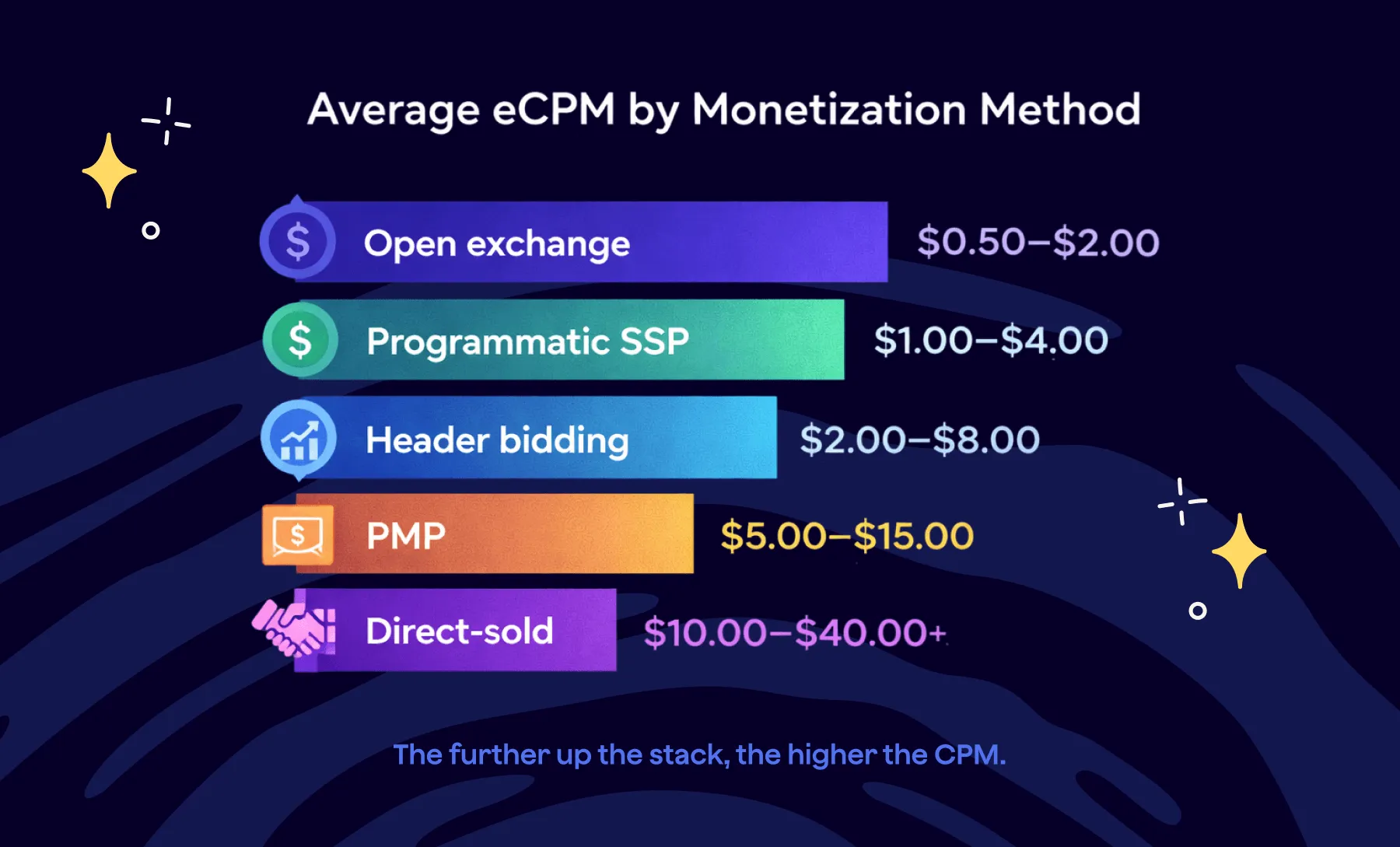
- Header bidding. Multiple buyers bid simultaneously, pushing up the clearing price in real time.
- Private Marketplace (PMP). Invite-only programmatic auctions at negotiated floor prices, preferred by publishers like Forbes and Bloomberg. Header bidding is where most publishers leave the most money on the table. Here is a full explainer on how it works and what setup actually costs.
- Direct-sold campaigns. Premium inventory sold directly to advertisers at CPMs well above open exchange rates.
- Programmatic open exchange. Automated RTB filling remaining inventory without leaving impressions dark.
According to eMarketer, programmatic now accounts for nearly 90% of all US digital display ad spend. Publishers that do not participate programmatically are structurally disadvantaged before the day starts. More competition for your inventory equals higher clearing prices. That is the whole game.
Prefer watching to reading? Here is a short walkthrough of what managing direct and programmatic demand inside Epom actually looks like:
#2. Sponsored Posts and Native Advertising: The Formats That Actually Pay
If your audience trusts you, that trust has commercial value. Sponsored content is how you monetize website with ads without turning your site into a banner farm.
Native advertising generates revenue while still giving visitors a good experience, unlike most ad formats. It fits in with your site's content but is still clearly marked. Advertisers pay more for it. Readers are more okay with it.
And in an era when contextual, non-intrusive advertising formats are genuinely trending, native is the obvious play for editorial publishers. If you want to know how to monetize a news website, native advertising is your best option because it fits in with your articles and usually pays more than regular ads.
#3. Affiliate Links: Passive Income With an Asterisk
Affiliate links are among the most accessible ways to monetize a website traffic, especially for content-heavy sites where visitors are researching purchases. You embed a link, a reader converts, and you earn a commission. Affiliates essentially act as middlemen, connecting consumers with merchants and earning a commission for each successful transaction.
Thin content targeting high-volume keywords converts poorly. Deep, genuinely useful articles targeting specific buyer-intent queries convert well.
Many publishers who share their personal experiences and strategies for affiliate growth report that their most consistent earners are articles they wrote two or three years ago, not their most recent content. Quality content draws in a larger audience over time, and the website's value increases with it.
#4. Digital Products and Online Courses: The High-Margin Play
Here is where it gets interesting. Selling straight to customers, whether that is an e-book, a template pack, or an online course, lets you keep more of the money because you set the price and keep the customer information. No sharing your earnings. No platform is taking a piece. Just your audience and your product.
Expensive online courses are becoming a big trend in digital products. People who really know their topic and have a loyal audience are finding that one good course can make more money than months of ads. You can create online courses directly from the knowledge your content already demonstrates; your existing articles are essentially a free course outline waiting to happen.
#5. Membership Sites: Recurring Revenue That Compounds
The subscription revival is real and not limited to Substack celebrities. Membership fees can be billed monthly, annually, or as lifetime memberships; each structure creates different cash flow and retention dynamics. Publishers asking how to monetize a news website with a loyal but ad-sensitive readership often find that a light membership tier on top of native ads is the most stable starting combination.
For publishers figuring out how to monetize a community website when members are ad-sensitive, layering a membership model on top of light advertising is typically the right starting point. If you build community relationships slowly and thoughtfully, they grow stronger over time. If you try to profit too quickly, they fall apart.
#6. Donations: The Underdog Strategy
Worth mentioning because most publishers dismiss it too quickly. If you run a niche editorial site, an independent newsletter, or a community resource with genuinely loyal readers, you can request donations directly from your audience.
This approach works best when your content offers something readers cannot get anywhere else and when your connection with them feels personal, not just like a business deal. It will not make as much money as large-scale ads. But it can add real extra income while you set up more reliable ways to make money, and you do not have to rely on any outside platform.
#7. Website Flipping: Monetization With an Exit
This is not for everyone, but it is a strategy worth knowing about. Website flipping means creating a site, getting more visitors and making more money from it, and then selling it for a profit, usually for several times what it makes in a month.
A site that earns $1,000 per month might sell for $30,000 to $50,000, depending on the topic, the stability of its traffic, and the number of revenue streams it has. What this means for publishers: the effort you put into setting up ways to make money does not just earn you income while you own the site. It also makes your site worth more if you decide to sell it.
When Your Current Setup Stops Keeping Up
This is the part most money-making guides leave out, because it means admitting that making things easy comes with a price.
At a certain scale, the tools that got you here are the same ones holding you back. Not because they are bad tools. Because they were never built for what you are trying to do now. You need direct deals managed properly. You need pricing logic that you set yourself. You need to see exactly which demand sources are competing for your inventory, and which ones are not. You need reporting that tells you what is actually happening at the placement level, not just what the aggregate numbers look like at the end of the month.
That is what a first-party ad server gives you. Your own infrastructure, built around your inventory, your advertisers, and your pricing rules. Whether you are a publisher monetizing owned content or an ad network managing inventory across multiple partners, the principle is the same: control over your stack is control over your revenue.
What Changes When You Own the Stack
Switching to your own ad server is not just about new technology. It changes how your business works. You run direct ad campaigns and automated ads from one place. You decide how prices work. You control your audience data. Everything is clear. There are no hidden fees.
No one else's algorithm decides what your inventory is worth, on desktop or mobile. Before committing to a publisher ad server, there are five factors most evaluation guides never mention, worth reading before you make the call.
How Publishers Use Epom Ad Server to Take Control of Their Revenue
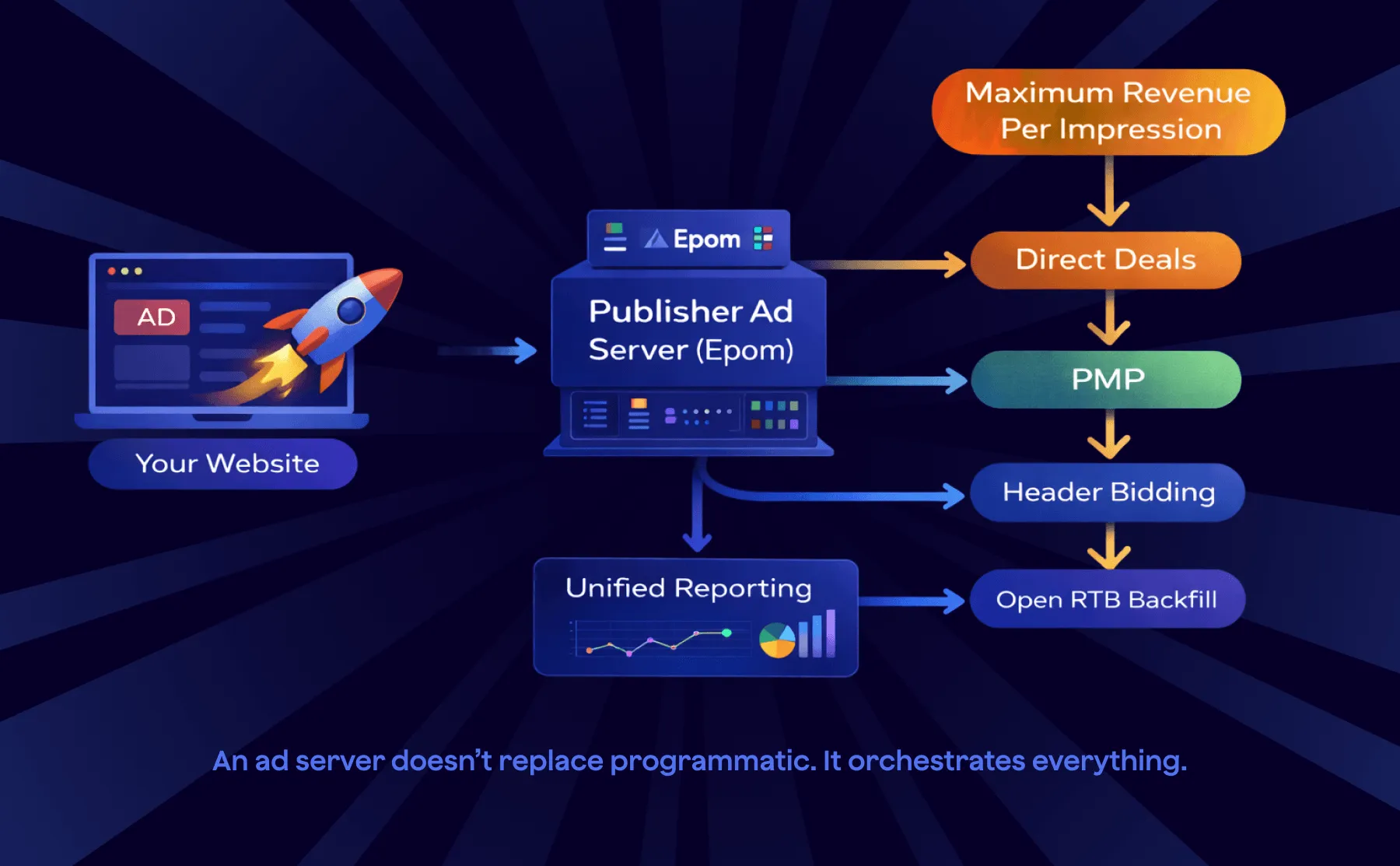
Epom Ad Server does not sell your ad inventory for you. It gives you the infrastructure to manage it properly, which is a different and more valuable thing.
What 15 years of working with publishers across 70+ countries does give us is a clear view of the patterns. Publishers who close the gap between what their traffic earns and what it should earn are not doing something radically different on the content side. They are running a better ad stack. Here is what that looks like in practice.
GazetaExpress: Infrastructure as a Revenue Lever
GazetaExpress, a high-traffic news publisher, was managing ad operations across multiple sources with no unified system. Campaigns were tracked manually. Reporting required exports and reconciliation. The operational overhead was significant and was slowing the team's ability to optimize placements in time to matter.
After restructuring their ad operations with Epom Ad Server, the results were measurable on two dimensions. AdOps team productivity improved by 50%. Page loading speed improved by 137%. Neither of those is a vanity metric for a news publisher. Faster pages mean better viewability scores. Better viewability scores mean higher CPMs from programmatic buyers. And a more productive AdOps team means optimization cycles that actually run weekly rather than only when someone has time.
The revenue impact was downstream of the infrastructure improvement, which is exactly the point. The content did not change. The audience did not change. The system that connected that audience to advertisers did.
FinanzTrends: Granular Control Over Campaign Targeting
FinanzTrends, a financial media publisher, had a different problem. Their inventory had genuine value — a financially literate, high-intent audience that advertisers in their vertical would pay premium rates to reach. But without granular targeting controls and campaign-level management, they could not demonstrate or deliver that value to direct advertisers.
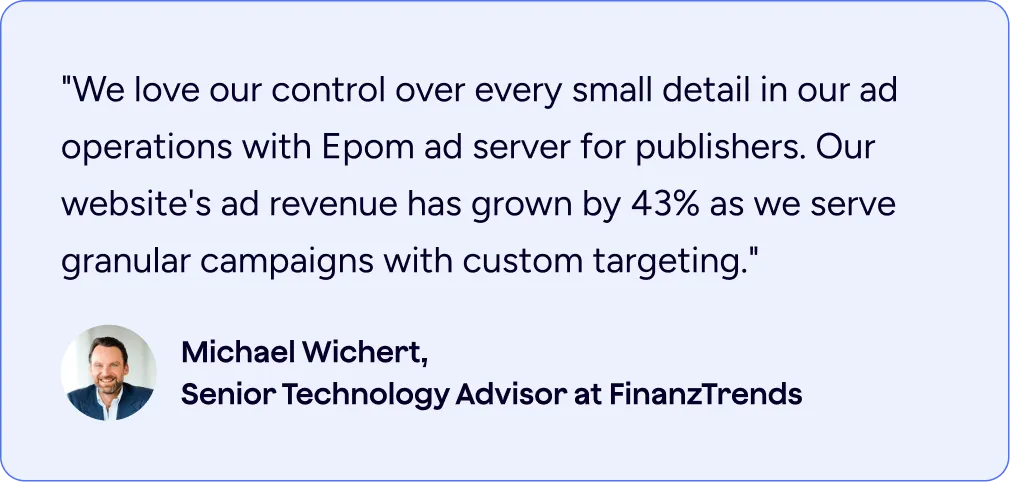
After moving ad operations to Epom Ad Server, ad revenue grew by 43%. The shift was not about adding more placements or increasing ad density. It was about making every existing placement perform closer to its actual market value, through custom targeting, direct campaign management, and the ability to segment inventory by audience and context rather than serving everything through a single programmatic pipe.
What These Cases Have in Common
Neither publisher needed to rebuild their content strategy. Neither added significant ad volume. Both shifted from a setup in which an intermediary controlled their pricing logic to one in which they controlled it themselves.
That is the pattern. An ad server does not generate revenue by adding more ads. It generates revenue by ensuring that every ad you already serve competes in the right auction, at the right price, with the right buyers in the room.
What Epom Ad Server Specifically Gives Publishers
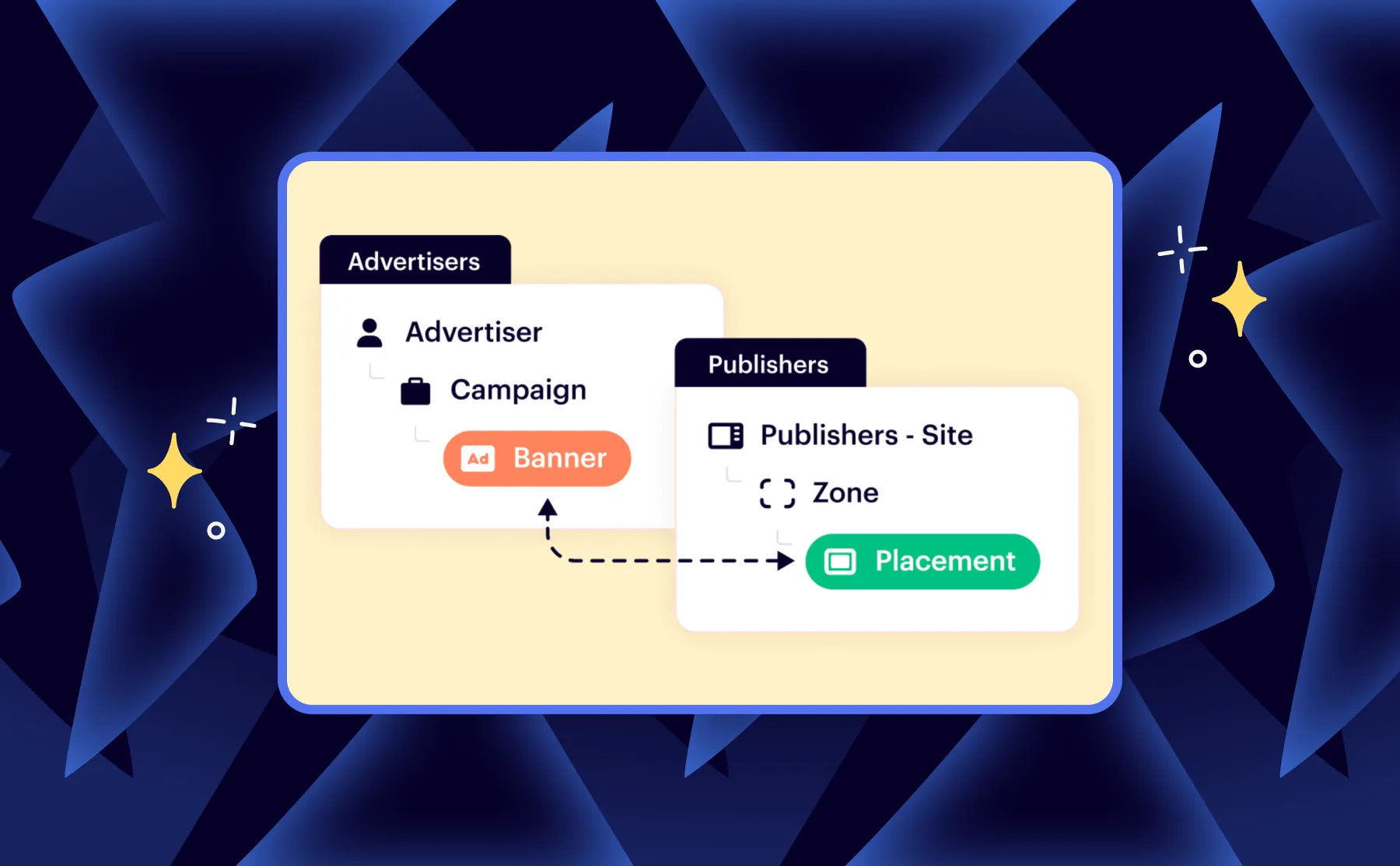
For publishers evaluating infrastructure options, the practical difference with Epom comes down to four things:
- Full demand stack in one platform. Direct deals, PMP, header bidding, and programmatic open exchange managed from a single interface. No switching between systems. No reconciling data from four different sources.
- Transparent pricing logic. You set the floor prices. You define the priorities. You decide which demand sources compete for which inventory. No black box. No hidden revenue share. Based on Epom observations, publishers who move from managed network setups to self-controlled infrastructure consistently recover margin they did not know they were losing.
- 40+ real-time performance metrics. Placement-level reporting, campaign-level breakdowns, and eCPM tracking across every demand source. The data your team needs to make optimization decisions in hours, not weeks.
- Dedicated support that scales with you. Not a ticket queue. Direct access to ad ops specialists who have seen the same infrastructure transition dozens of times and can shorten the learning curve significantly. Long-term Epom clients cite support quality as one of the primary reasons they stay — and as a genuine competitive differentiator compared to larger platforms where smaller publishers get deprioritized.
Choosing the Right Monetization Strategy: A Practical Framework
Most guides list different strategies and stop. The harder, more useful question is how to match them to your actual situation. Analyzing your website's traffic is where this starts, not at the strategy level, but at the data level.
Key metrics to monitor include sessions, bounce rate, and conversion rates. Website traffic analysis helps identify high-traffic areas that can be optimized for maximum earning potential. Data-driven decisions based on traffic analysis can enhance the user experience and drive ongoing engagement, which is ultimately what both advertisers and members are paying for.
Continuous monitoring is a must. It helps you see when a strategy has stopped improving and when you should try something new.
Making user experience a top priority is essential. It keeps people from leaving your site quickly, helps your audience grow over time, and keeps your website traffic strong, which is important for making money.
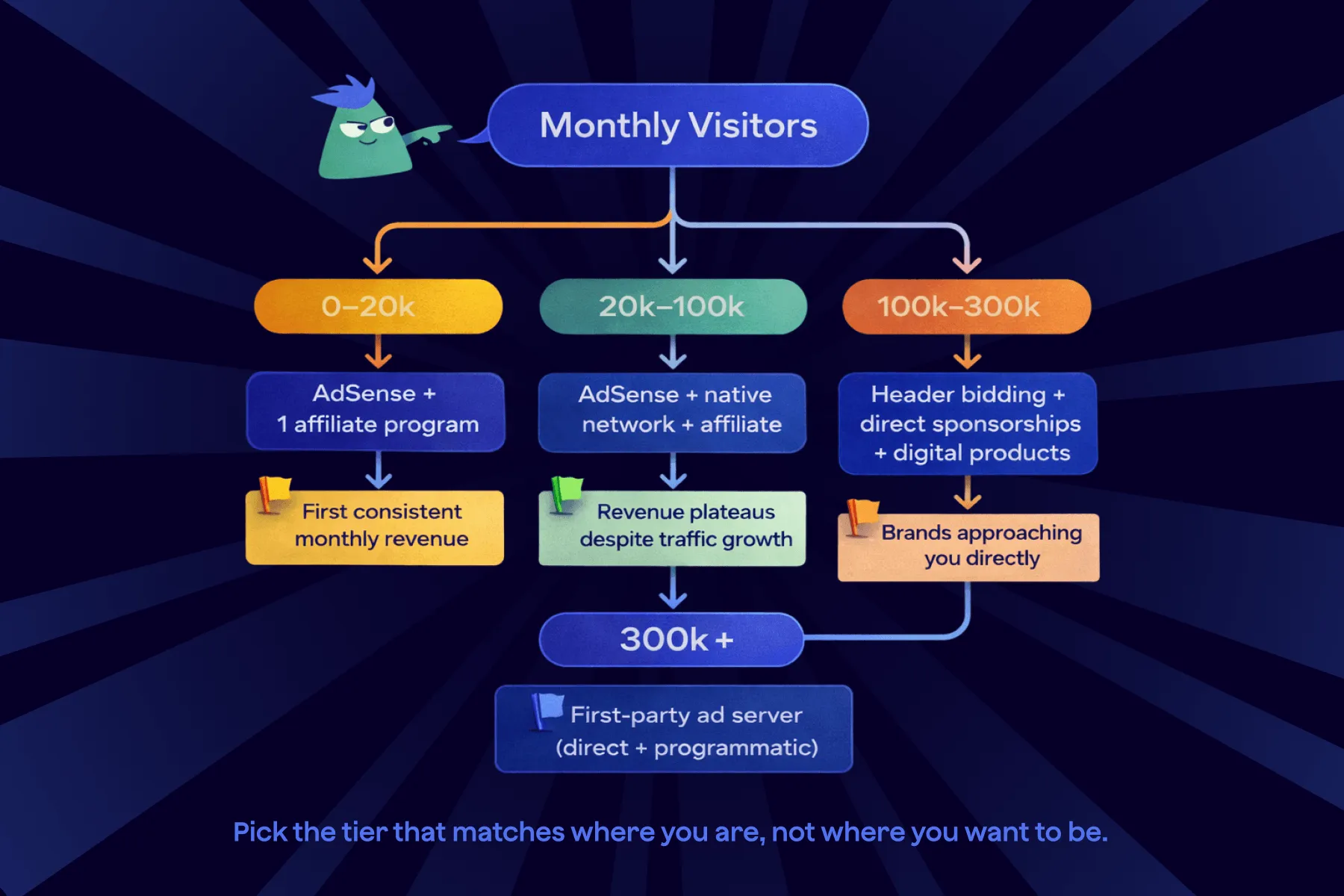
5 Steps to Picking Your Strategy:
- Audit your traffic: volume, source, and intent (SEO, direct, referral).
- Identify audience loyalty: do they return, subscribe, or share?
- Map revenue per thousand visitors: benchmark against the eCPM ranges above.
- Pick one method to optimize first: running five simultaneously at launch is how you succeed at none of them.
- Set a clear upgrade trigger: the threshold at which you move to the next infrastructure level.
| Monthly visitors | Recommended setup | Signal to move up |
|---|---|---|
| 0–20k | AdSense + 1 affiliate program | First consistent monthly revenue |
| 20k–100k | AdSense + native network + affiliate | Revenue plateaus despite traffic growth |
| 100k–300k | Header bidding + direct sponsorships + digital products | Brands approaching you directly |
| 300k+ | First-party ad server (direct + programmatic) | Manual ops becoming a bottleneck |
The plan is only part of the solution. Having the tools to make it happen is just as important.
Wrapping Up
Website monetization is not a single decision. It is a sequence of decisions that unlock the next tier of revenue.
The publishers who build durable, compounding income are the ones who start with the right method for their current scale, monitor what the data tells them, and upgrade their infrastructure before the ceiling becomes a problem. For most publishers beyond 100k monthly visitors, that upgrade means moving from a network-dependent setup to one where they own the pricing logic, the demand relationships, and the data.
The question is whether your setup is working as hard as it should.
![Video Ads for Website Publishers: Make More - Spend Less [+7 Best Ad Formats Inside]](https://cms.epom.com/api/media/file/video-ads-for-publishers-preview.webp)