
TL;DR:
To pick the right mobile DSP, it’s important to evaluate transparency, fraud protection, and ease of launch. These are the criteria that help you understand whether programmatic mobile advertising will become a managed growth channel, rather than an opaque source of costs.
Most DSPs want $10,000+ before you see a single impression. Epom starts at $100. Launch your first mobile campaign today →
You have probably noticed that Meta CPMs are currently rising, mobile audiences are becoming more expensive to reach, and scaling campaigns only through Google and Meta is getting increasingly difficult. Analysis of Epom's 2026 data shows that Meta and Google CPMs have increased by 13–20% year over year, partly driven by the growing adoption of automated campaign types such as Advantage+ and Performance Max. That’s why more and more brands and agencies are considering exploring new opportunities in DSP mobile advertising.
The problem is that most mobile DSPs look too complex. Everyone talks about AI optimization, global reach, and billions of impressions, but it can be hard to understand where exactly your money will go. Also, how are you supposed to choose the right DSP when almost every platform competes on the same promise of wider reach? The correct answer is — you can’t do that unless you start looking at other criteria. Read on to learn how to evaluate your DSP options.
Why Programmatic Advertising in DSP Mobile Often Seems Like a Black Box
Many companies approach programmatic mobile advertising with the same mindset: interesting, but scary. Especially if, before, all mobile acquisition was driven mainly by Meta and Google, where the workflow is already clear, and the interfaces are familiar.
With a mobile DSP, everything looks different. Instead of a few campaigns and audiences, the advertiser sees dozens of technical settings, SSP integrations, bidding models, inventory types, and parameters.
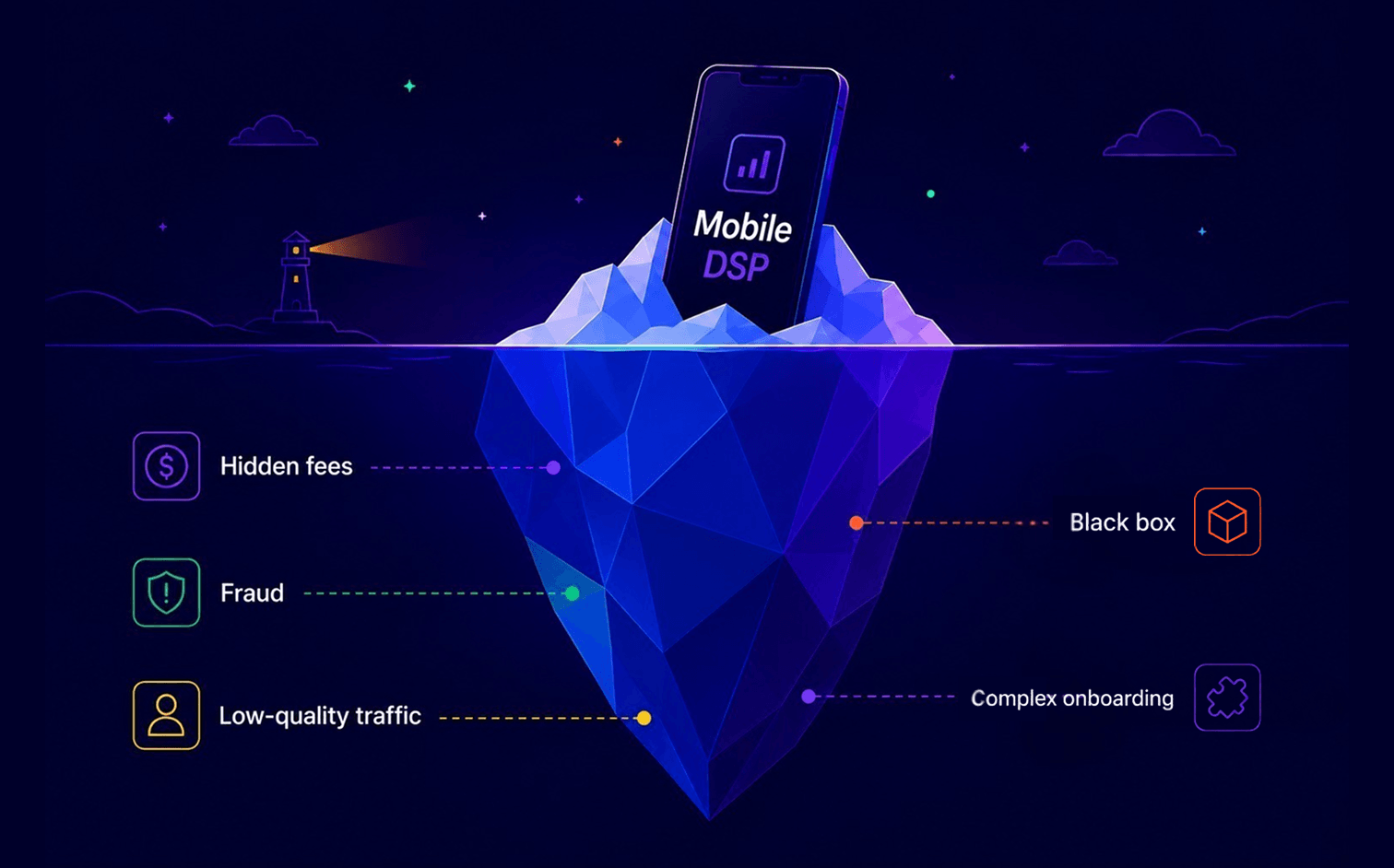
And the problem is not even that DSPs are too complicated. The main issue is that many platforms hardly explain what happens to the budget after the campaign launches. The advertiser sees ad impressions, clicks, installs, CPM, CPA, and other metrics — but behind these numbers, you can miss the core value: exactly where the ads were shown, which placements really deliver results, which inventory should be disabled, and which should be scaled.
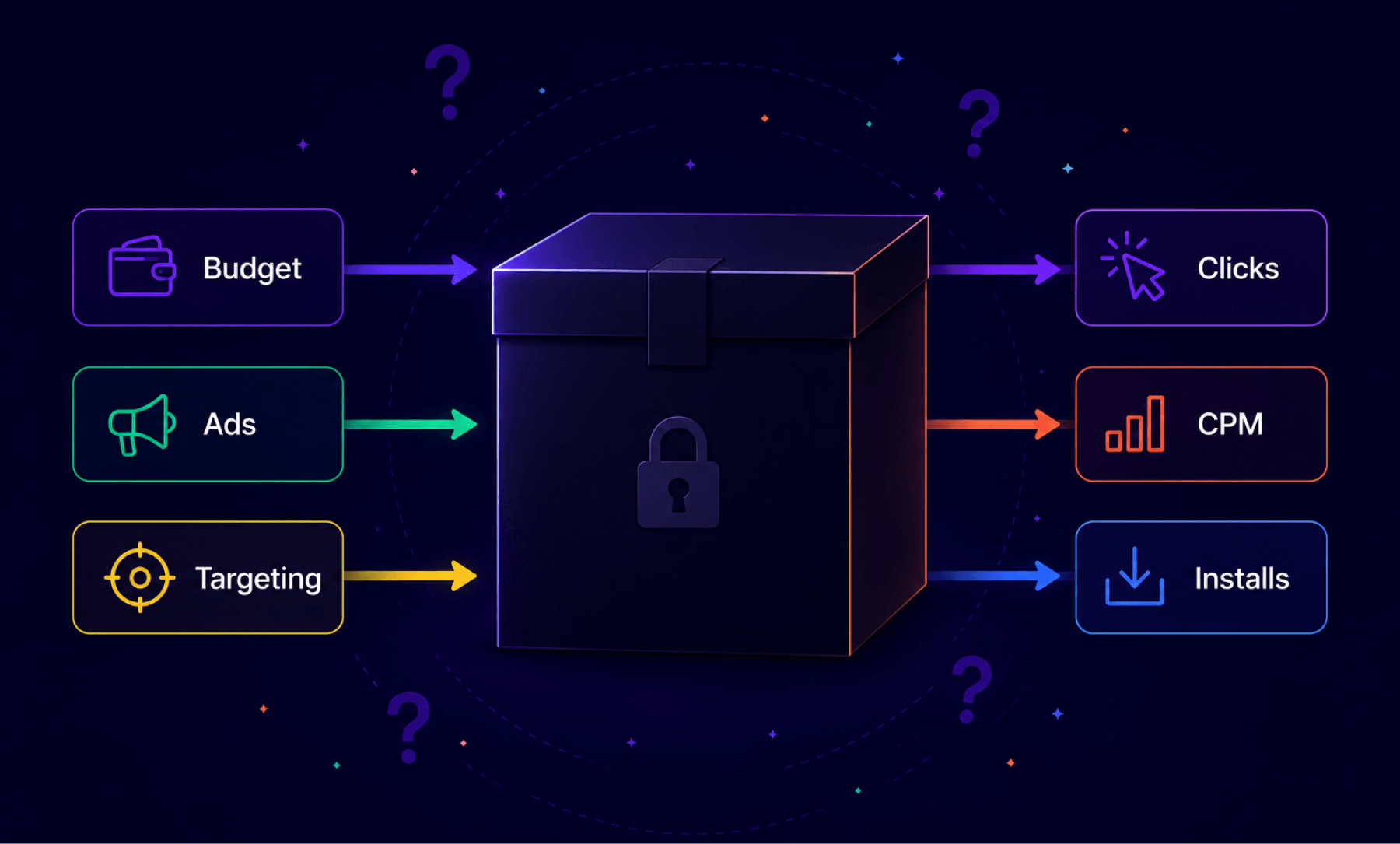
Discussions among media buyers on Reddit highlight this concern: better performance often comes at the cost of reduced transparency. Many advertisers even describe it as a "black box" where traffic sources and optimization decisions are difficult to evaluate. Traffic quality is another frequently discussed issue. One Reddit user reported receiving 56 clicks and 6 conversions in a single hour, but none of them resulted in actual leads. So, perhaps, it was a bot-driven activity.
That’s why some advertisers associate mobile DSP platforms with a lack of control — as if the campaigns are working and money is being spent, but the process itself remains opaque. And the larger the volume of traffic, the more difficult it is to assess the traffic quality.
This issue is especially acute for small and mid-size teams. Large enterprises can afford programmatic specialists, ad ops teams, and long testing cycles. But for smaller brands and agencies, mobile programmatic advertising needs to work fast and simply. The good news is that this is entirely possible — if you choose a DSP using the right evaluation criteria from the start.
Let’s cut to the chase: when choosing a mobile DSP today, it is much more important to look not at the amount of inventory or loud AI promises, but at much more practical things, such as:
- how transparently the platform shows placements;
- how it works with fraud prevention;
- whether your marketing team can launch campaigns without programmatic expertise.
It is these criteria that best show whether a DSP will become a real tool for scaling programmatic mobile advertising or will become another non-transparent channel with difficult-to-predict results.
Transparency: Where Is Your Budget Going
For companies that are just starting to look at mobile DSP options, one of the biggest concerns is: how do you even understand what is happening inside campaigns?
This is a valid question. At Meta or Google, most marketers are already used to a certain level of control. You can quickly review placements, audiences, and the performance of individual campaigns to understand exactly what affects the results.
With mobile DSPs, everything looks less obvious. Programmatic mobile advertising operates across a large number of apps, SSPs, ad exchanges, and supply sources, where programmatic ad buying uses real-time bidding (RTB), the automated process of buying and selling ad impressions.
For example, a single campaign can simultaneously purchase inventory across hundreds of mobile applications. Some of this traffic can be very high-quality, while others yield weak results. That is why transparency is one of the most important things when choosing the right DSP.
Transparency is not only about seeing where your ads appear. It is also about understanding where your budget goes. In programmatic advertising, this issue is often called the "reseller tax" — the extra fees and markups that intermediaries add when advertisers buy inventory.
The thing is, direct access to enterprise DSPs such as DV360 often requires annual spending commitments of around $5 million. So many smaller advertisers and agencies have no choice but to work through resellers. As a result, hidden fees can consume 20% to 40% of the total media budget. This is why it is important to understand how a DSP is priced. For instance, unlike many managed-service platforms, Epom uses a SaaS pricing model, so advertisers pay for the technology rather than hidden markups on media spend.
Why General Campaign Metrics Are Not Enough
Many DSPs only show aggregated metrics, but those numbers (impressions, clicks, installs, CPM, or CPA) are not enough to judge campaign effectiveness. At first glance, they can look normal. The campaign is working, installs are coming, CPA looks acceptable — everything seems to be under control. But the problem is that these numbers only show the overall result, not how it is formed.
Let's imagine a common situation. Two placements show the same CPI — $2 per install. At the dashboard level, they look equally effective. But after the install, the difference can be huge. Users who came from one placement regularly return to the application, go through onboarding, and make purchases. Users from the other — disappear almost immediately or show minimal engagement.
If the DSP shows only aggregated campaign metrics, this difference is lost in the average numbers. At Epom, we often hear from advertisers that they see an adequate CPI but do not know which part of the budget actually drives valuable users. Without data from a data management platform and deeper analytics, it is harder to distinguish valuable users from weak traffic sources.
What Changes With Placement-Level Reporting
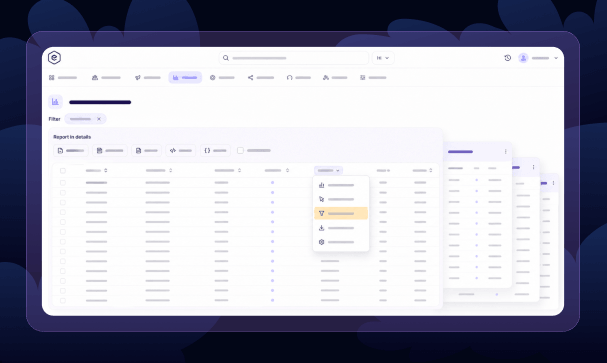
Detailed reporting is an important part of transparency. Ideally, a DSP should provide access to log-level data (by the way, Epom does). It allows advertisers to see domains, impressions, and bid requests behind campaign performance. With this level of visibility, it becomes much easier to identify low-quality inventory, understand where the budget is going, and spot apps that are draining spend without delivering results.
The lack of such visibility can be costly. For example, one of Epom’s clients described a previous failure with a million-dollar spend through his previous platform this way: "At the surface, all looked good, but the results weren't there. Just fake bots were visiting these pages."
If that sounds familiar, the fix isn't a bigger budget — it's placement-level visibility before you scale. See how Epom reports it →
This is where placement-level reporting becomes valuable. It allows you to see not only the overall campaign results but also which ad placements, apps, or publishers drive them.
For example, you might see that a few specific apps consistently deliver high-quality users with good retention, while other placements bring in cheap but low-quality traffic. In such a situation, the problem can be resolved much faster — without restarting the campaign or endlessly testing creatives and targeting criteria. In fact, placement-level reporting allows you to understand not only what results the campaign brings, but also why it brings them.
It’s crucial for mobile programmatic advertising, where optimization never ends after launch. After all, the quality of inventory is constantly changing, different supply sources behave differently, and performance can fluctuate even with the same campaign settings.
Why Transparency Is Especially Important For Small Teams
Large advertisers can afford long testing cycles, dedicated analysts, and large optimization budgets. But for small brands and agencies, transparency is often the difference between profitability and wasting a significant part of the budget.
For example, imagine that 25–30% of the campaign budget goes to placements with very low-quality traffic instead of reaching high-value users. If you don’t see the real performance of these placements, you can’t exclude them. So, the DSP continues to buy this inventory, the general campaign metrics look more or less normal, but the business metrics gradually deteriorate.
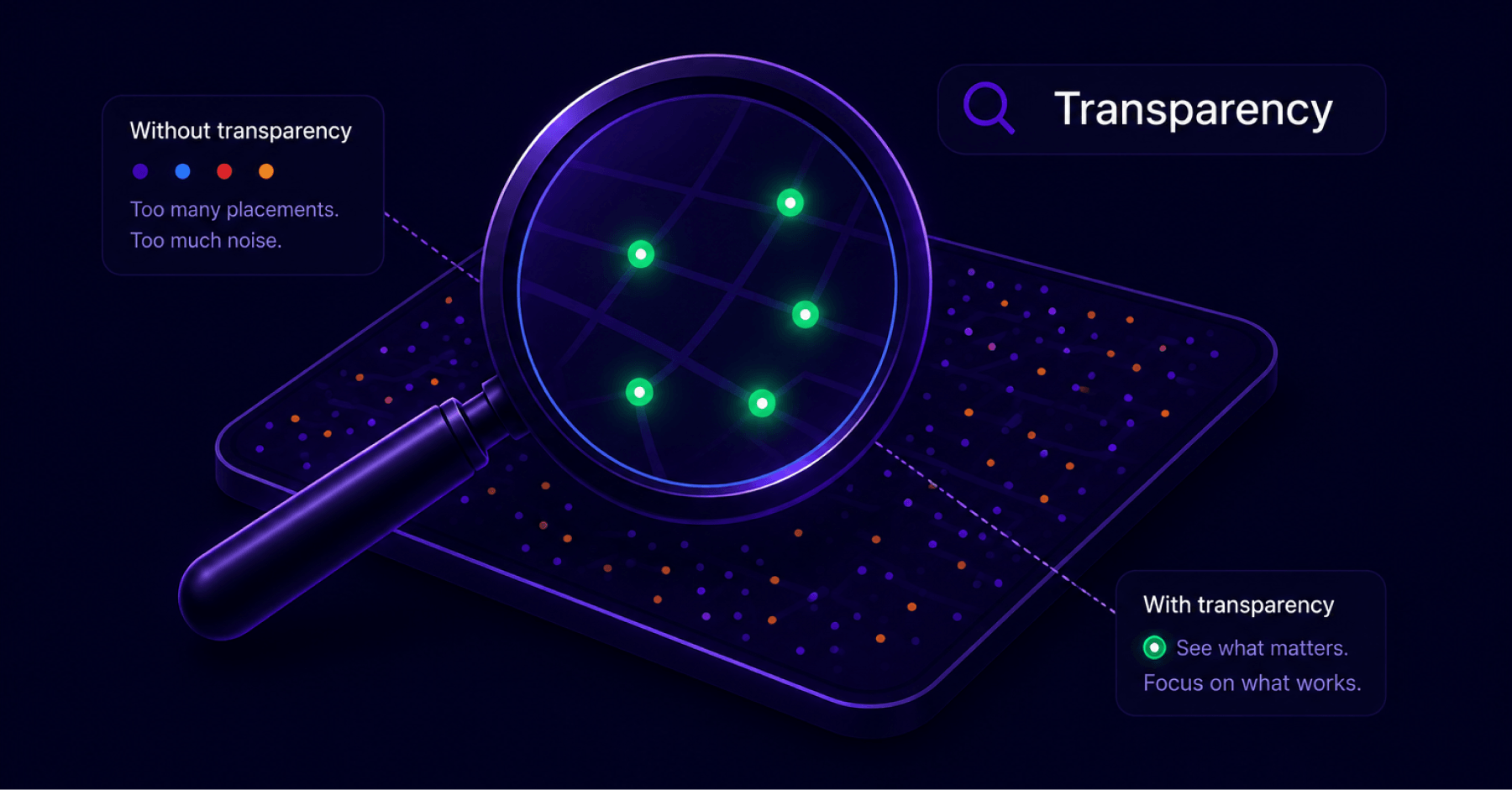
Eventually, you decide to optimize ad campaigns. But without placement-level reporting, you can start optimizing for the wrong things. Say, CPA has increased — change the bid strategy; retention has dropped — start testing new creatives. Although the real reason may be much simpler: some placements simply stopped giving quality traffic.
For small teams, this situation can be especially painful because the testing budget is limited. For instance, one of Epom’s clients inquired about the ability to identify specific high-performing sources to avoid wasteful spending. He suggested, based on the SSPs, that some sites are better than others and did not want to overspend on them.
But if the DSP doesn’t provide sufficient transparency, optimization quickly becomes constant guesswork. That’s why placement-level reporting today isn't an advanced feature but a basic part of a practical ad strategy for small teams when choosing a DSP.
Most DSPs want $10,000+ before you see a single impression. Epom starts at $100. Launch your first mobile campaign today →
Fraud Protection: How a DSP Protects Your Budget From Low-Quality Traffic
When companies are just starting to find the answer to the question “which DSP is best for mobile advertising?”, fraud often seems distant and irrelevant in digital advertising. Many imagine ad fraud as a problem of huge enterprise campaigns with enormous budgets. But in practice, small brands and agencies are often the most vulnerable to low-quality traffic.
The reason is simple: they have fewer resources for errors. A large advertiser can lose part of the budget on weak inventory, spend more time analyzing data, and gradually “clean” campaigns. But if a small team operates on a budget of several thousand dollars, even a relatively small percentage of fraudulent traffic can significantly impact results and undermine broader digital advertising efforts. And the problem here is not only the lost money.
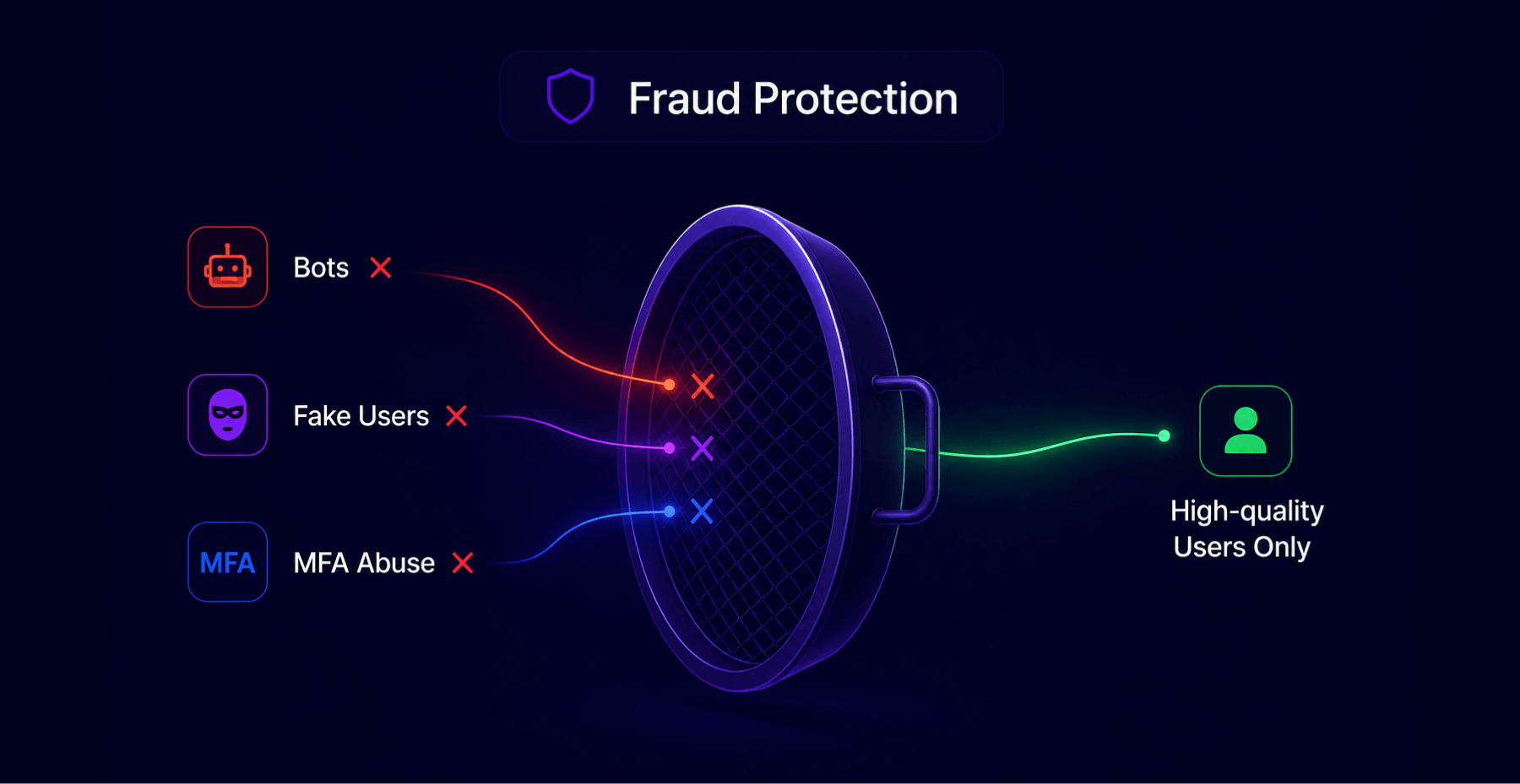
Fraud protection today goes far beyond simply blocking bots. One growing threat is the rise of MFA (Made for Advertising) websites. These are AI-generated sites created to capture programmatic advertising budgets through fake traffic, arbitrage, and low-quality impressions. The impact can be significant. As one marketer shared on Reddit: "We had a customer who was getting around 50,000 fake clicks each month, and we got it down to a few hundred, just by blocking the scam websites responsible for the clicks."
To reduce these risks, some mobile DSPs provide pre-bid verification that evaluates inventory before a bid is placed. For instance, Epom integrates with Pixalate to filter out bot and invalid traffic before bidding. It helps our clients to keep invalid traffic rates below 2%.
Budget protection also extends beyond traffic quality. In today's first-price auction environment, a DSP without bid shading may cause advertisers to overpay significantly for impressions. For example, an advertiser might bid $10 to win an impression that could have cleared at $5.01. Bid shading algorithms help prevent overspending and improve overall campaign efficiency.
How Fraud Hurts Campaign Performance, Budget, and Optimization
When marketers think of ad fraud, they usually imagine bots or fake clicks. But in mobile programmatic advertising, the problem is much broader.
Low-quality traffic can look completely normal at the campaign metrics level: installs can keep coming, CTR can look good, and CPI can even be lower than expected. As a result, fraud in DSP mobile advertising is often hard to spot right away.
For example, some traffic can generate installs without any real interest in the product. Users open the app once or don’t interact with it at all after installing. Sometimes the problem is related to bot traffic, sometimes to low-quality inventory, and sometimes to aggressive placement mechanics, such as accidental clicks or install manipulation. The company spends the budget, but no real growth occurs.
Moreover, low-quality traffic can distort optimization. Programmatic mobile DSPs constantly analyze campaign performance and search for patterns. But if some traffic is low-quality, the algorithms start to learn from the wrong signals.
For example, a DSP can notice that certain ad placements give cheap installs and good volume, which looks effective. As a result, the system begins to actively buy such inventory, and the campaign scales to ineffective traffic.
What to Check When Choosing a DSP
When evaluating which is the top DSP platform for mobile ad campaigns, you want to look beyond reach, CPM, inventory volume, and platform efficiency. This checklist can help you:
- Anti-fraud protection: Does the DSP actively filter invalid traffic and suspicious inventory before it affects campaign performance?
- Inventory quality: Can the platform consistently deliver quality inventory rather than simply large traffic volumes?
- Pricing transparency: Are there any hidden service fees, media markups, or other costs that can quietly increase ad spend?
- Traffic visibility: Can you see placements, publishers, and traffic sources to identify problematic inventory and optimize campaigns effectively?
- Independent verification: Does the DSP work with trusted anti-fraud partners or provide third-party validation of its invalid traffic rates?
- Ease of use: Is campaign management simple and accessible without sacrificing control and transparency?
These factors can help advertisers reduce fraud risk, improve traffic quality, and ensure their budget is spent on inventory that delivers real business value.
Epom DSP is built to answer yes to every item on this list.
See the platform → or run a $100 test to verify it yourself →
Ease of Launch: How Soon You Can Start Your Ad Campaigns
Some mobile DSPs look powerful until they actually launch campaigns. For example, after registering, the advertiser discovers a very complex interface with dozens of settings, incomprehensible optimization logic, and numerous technical details that require specialized programmatic expertise and complicate the broader media buying workflow. As a result, you must spend countless hours trying to understand how to start — instead of actually starting.
That is why ease of launch is one of the most important criteria for companies just starting to work with DSP mobile advertising and evaluating programmatic platforms.
Why Many DSPs Actually Focus on Enterprise Teams
Historically, programmatic advertising was built around large advertisers and agencies (whether it's a self-serve platform, white-label, or full-service setup). So, many DSPs are still designed with the expectation that the team already has programmatic specialists, ad ops managers, analysts, or even separate teams for attribution and optimization.
For small brands or agencies, working with such DSPs quickly leads to operational overload. A team used to working with Meta Ads Manager often expects approximately similar logic: create a campaign, upload ad creatives, use sophisticated targeting, and start testing. In reality, the ad launch process in many DSPs is much more complicated and requires an understanding of how the supply path and bidding strategies work, how to filter traffic, and many other details. All this creates a very high threshold of entry for teams without a programmatic background.
Why a Complex Launch Often Means Additional Costs
Ease of launch may seem less important than reach or targeting. But in practice, the complexity of the launch often makes DSP an expensive channel because each additional layer in the ad buying process slows testing, complicates how teams manage digital ad inventory and optimization, and increases wasted spend rather than enabling smarter budget allocation. For example, it can take weeks to launch the first campaigns because you don’t fully understand the platform's logic, especially when an ad server adds another technical layer that increases setup complexity and cost.
For large advertisers, this is unpleasant, but not critical. For small teams, this is often why DSP mobile advertising is too complex a channel, especially since these platforms are usually designed for enterprise teams and experienced media buyers.
Why a Low Minimum Deposit Is Important
Another problem with many DSPs is a high financial barrier to entry. Some platforms are designed for advertisers with large monthly budgets and require significant minimum deposits.
For companies that are only testing programmatic mobile advertising, this creates additional risks. The team does not yet understand how DSP works, which also makes it harder to test the right demand-side platform before scaling budgets and enables advertisers to learn with smaller exposure before committing more spend. Yet it is already being forced to invest heavily in a new acquisition channel.
A low minimum deposit is important not only from a financial perspective. It can also empower advertisers to run smaller tests, validate traffic quality, and gradually learn how to work with the platform before committing larger budgets. For small brands and agencies, this creates a much safer and more realistic entry point into programmatic mobile advertising.
This shift is becoming increasingly visible among the programmatic advertising trends mobile 2026. Advertisers are no longer choosing DSPs solely based on inventory scale or advanced feature sets. More and more teams prioritize platforms that are easier to launch and less risky to test without complex onboarding or dedicated programmatic specialists.
Evaluating Epom DSP Through These Three Criteria
Entering the programmatic mobile advertising game can be challenging — but if you choose the right DSP, this stage goes much more smoothly. So let’s take a look at how Epom DSP fares against the three criteria we discussed above: transparency, fraud protection, and ease of launch.
Transparency: How to Control Traffic Properly
One of the main advantages of Epom DSP as a programmatic advertising platform is placement-level reporting. This means that advertisers see not only general campaign metrics, but also specific placements and publishers that really affect performance, helping them understand which ad space publishers sell drives results.
This is important primarily from an optimization perspective. If part of the inventory starts to show poor retention or low-quality traffic, the team can quickly identify problematic placements and adjust spend without having to completely restart the campaigns.
In mobile programmatic advertising, where a single campaign can buy traffic across many apps, multiple ad exchanges, and supply sources simultaneously, this visibility significantly simplifies optimization and reduces the risk of wasted spend.
Fraud Protection: How to Check the Quality of Traffic
Another important question is how DSP works with invalid traffic. In mobile programmatic advertising, a low CPM or CPI alone does not indicate quality traffic. If the platform poorly controls inventory quality, part of the budget may go to placements that do not bring real business value. Quality control also matters across different ad formats, including video ads.
Epom DSP uses anti-fraud filtering and maintains invalid traffic levels below 2% according to Pixalate. For advertisers, this is also a way to make optimization more stable and predictable. The less weak or suspicious traffic enters the campaigns, the more accurately the DSP can optimize delivery, and the less budget is spent on inventory that doesn't deliver real performance. By the way, it matters not only for mobile inventory but also for channels such as connected TV ads.
Ease of Launch: How to Start Fast for User Acquisition
For many brands and agencies, DSP mobile advertising seems difficult precisely because of the high barrier to entry. Therefore, the important question is not only what capabilities the DSP has, but also how much time, resources, and money are required to get started.
Getting started with Epom DSP typically looks like this:
1. Deposit your budget (starting from $100). It allows you to run smaller tests with minimal upfront risk and gradually scale spend. For smaller brands and agencies, this is a much safer way to enter programmatic mobile advertising without having to invest large budgets right away, whether they are testing app traffic or the mobile web.
2. Start launching campaigns. Our unified platform already has 50+ pre-connected SSP integrations. It helps advertisers manage multiple ad exchange relationships from a single interface and access the digital ad space they need without building a complex supply setup or manually connecting inventory sources.
3. Test traffic quality and campaign performance across your target GEOs — and then scale successful campaigns. The platform supports campaigns across 190+ GEOs, so teams can start with small tests in individual markets and scale mobile advertising further without changing DSPs or rebuilding campaign setups.
Additional Epom DSP’s Features
Beyond transparency, fraud protection, and ease of launch, certain DSP features can offer additional performance and optimization benefits (see table 1).
| Feature | Technical Reality | Business Value |
|---|---|---|
| Placement-Level Reporting | See every site/app ID where an impression ran. | Eliminates "black box" anxiety; enables precise blacklisting of poor performers. |
| Polygonal Geofencing | Target specific building footprints rather than broad radii. | High-precision mobile targeting that reduces wasted spend on highways or uninhabited areas. |
| Rule-Based Optimization | The system automatically raises/cuts bids based on your target CTR/CPA. | Replaces manual spreadsheet labor; scale what works and pause what doesn't in real-time. |
| CPC-Based Push/Native | Pay only when the mobile user actually clicks the notification. | Drives high impression volume for brand awareness while only consuming budget on intent-driven actions. |
These aren't feature claims — they're what your first campaign sees on day one. Start with $100 and test them yourself →
Conclusion
As you can see, Epom DSP is a good fit for brands and agencies that want to go beyond Meta and Google but are not ready to make mobile programmatic advertising a complex operational project. Its functionality allows teams to launch campaigns faster, maintain visibility of traffic quality, and scale spending more confidently across mobile app campaigns without losing control over optimization.
For growing brands and agencies, this makes programmatic mobile advertising feel less like a risky experiment and more like a real and manageable growth channel. Transparency, fraud protection, easy launch — Epom checks all three. The fastest way to verify that is a $100 test campaign.