
TL;DR:
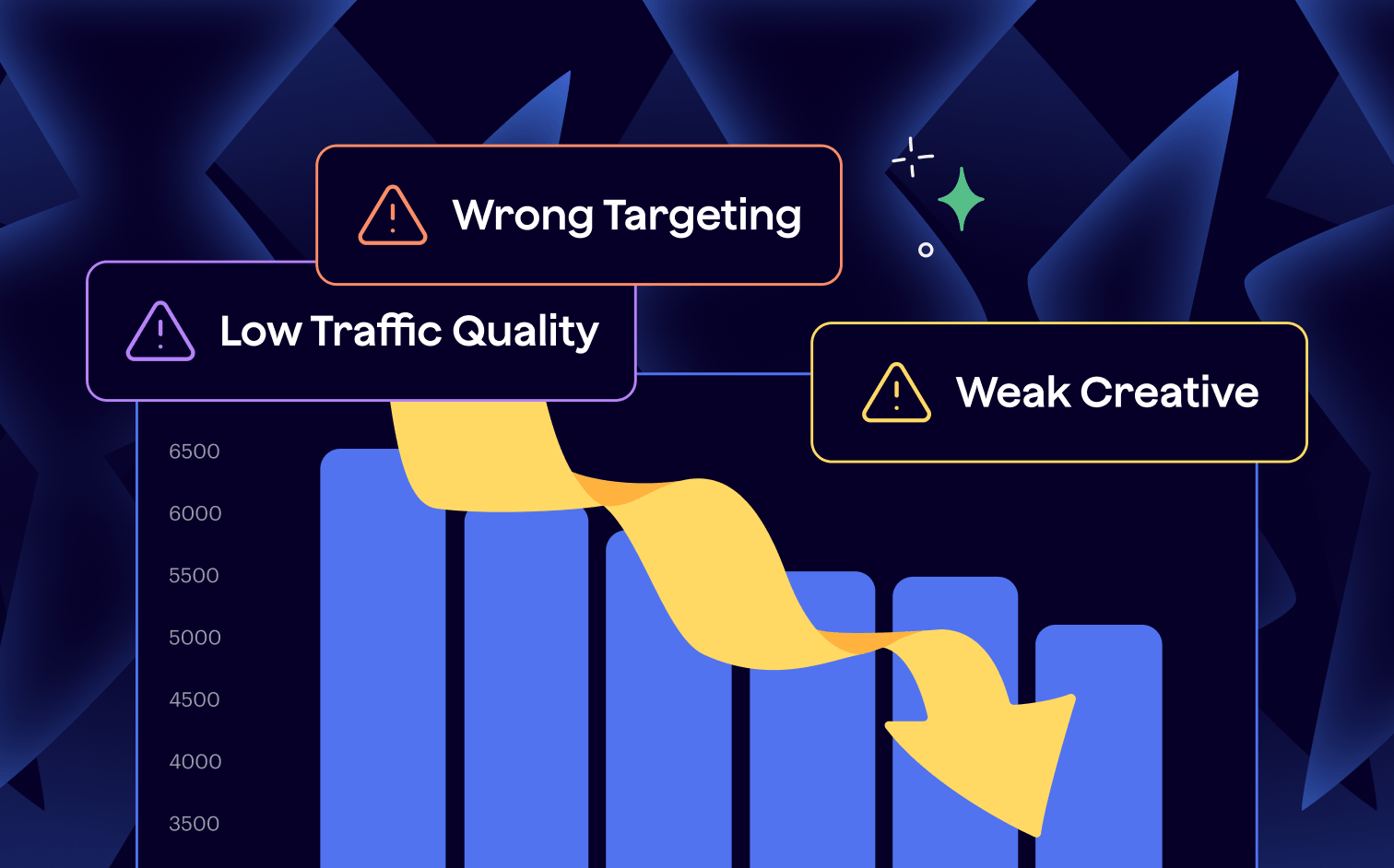
Most programmatic advertising campaigns fail to convert because of three common issues:
- Low traffic quality – ads are shown to bots or appear in placements users never actually see.
- Incorrect targeting – ads reach audiences that are unlikely to be interested in the offer.
- Weak ad creative or offer – the message fails to capture attention or motivate action.
These are among the most common advertising mistakes in programmatic and PPC campaigns.
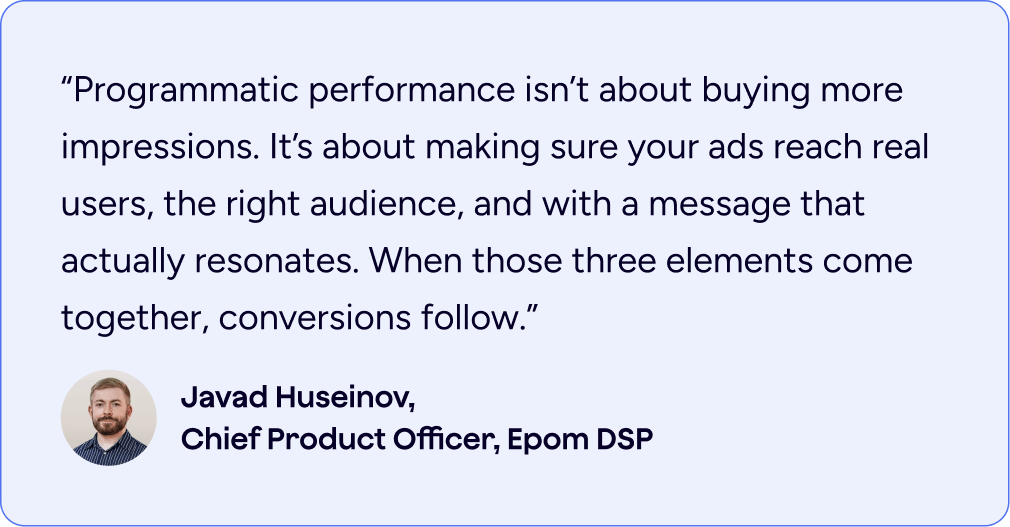
For programmatic campaigns to generate conversions, three elements must work together:
- Real, viewable traffic
- Accurate audience targeting
- Compelling ad creatives
If any of these elements breaks down, ads may generate impressions but fail to convert.
Programmatic campaigns underperform for some pretty obvious reasons and the platform itself is rarely the problem.
When ads are not converting, the root cause is usually one of three things: low-quality traffic, misaligned targeting, or creatives that fail to capture attention. And if you don't catch these problems soon enough, they'll quietly drain your budgets before you even know what's going on. Poor campaign performance can negatively impact business outcomes, including lost revenue and damage to your reputation.
The good news is that diagnosing these problems isn’t complicated – as long as you know where to look. In this article, we break down the three most common mistakes in programmatic advertising and explain how advertisers can fix them to improve campaign performance.
1. Nobody Actually Sees Your Ad
Based on Epom observations, one of the biggest programmatic advertising challenges is traffic quality, and it’s often more complex than advertisers expect.
When ads are not converting, a lot of advertisers assume the audience just isn't that interested. But sometimes the real issue is that the ad was never really seen in the first place. And that can happen in two pretty sneaky ways:
- The impression is fake (from bots or invalid traffic).
- The ad technically gets delivered, but just lands in a place the user will never look.
In fact, bots account for around 11% of global programmatic web traffic, which means a significant share of impressions may never reach real users.
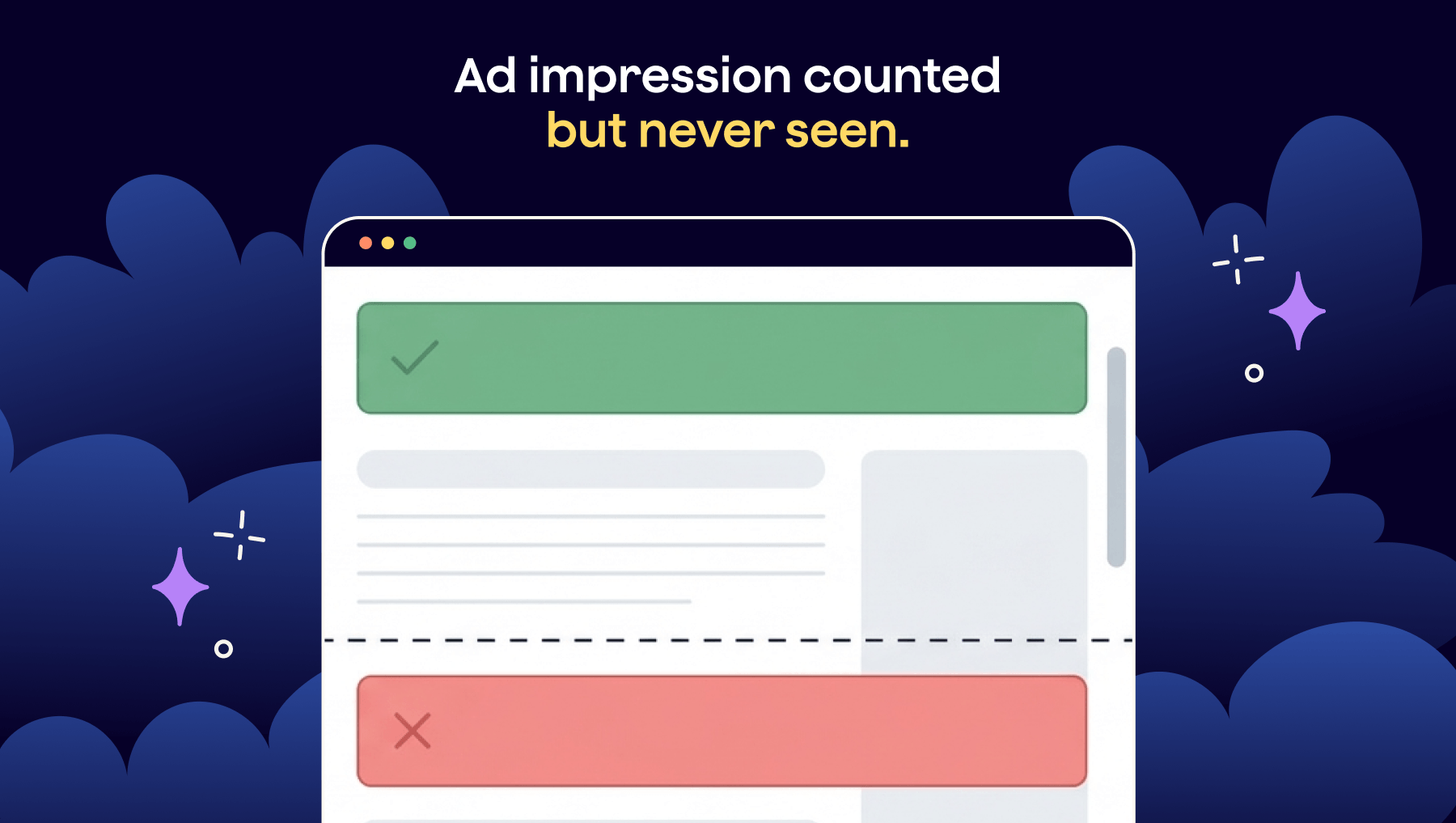
You need to get at least 50% of the ad to be visible for more than a second if you want to get any value out of it.
Fortunately, there are solutions available to help advertisers overcome these challenges and improve campaign performance.
How to Fix It
So, how do you fix this? Improving traffic quality usually comes down to three practical steps:
1. Block Fake Traffic
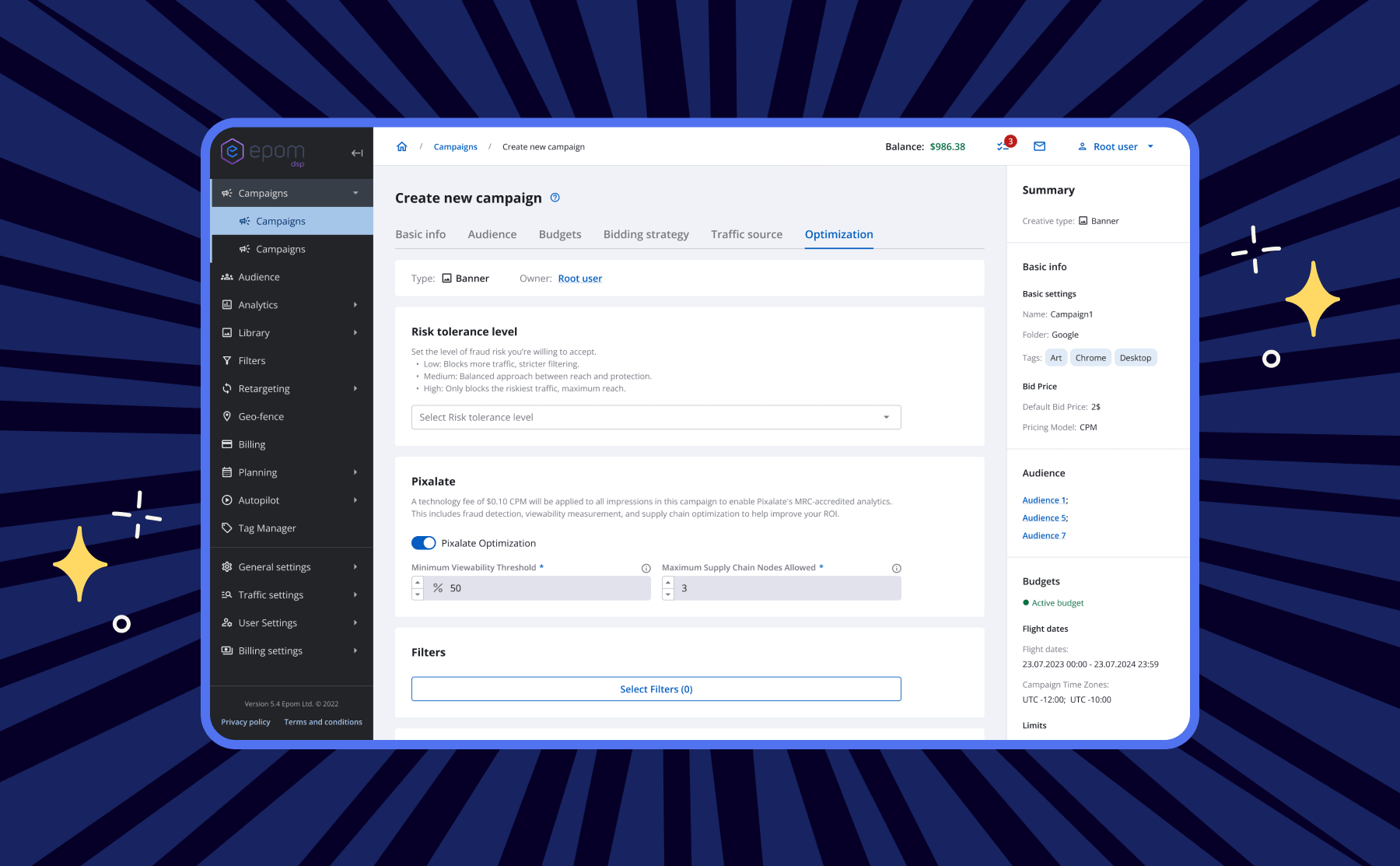
Invalid traffic can quietly drain campaign budgets Epom DSP integrates Pixalate traffic verification, which helps advertisers:
- detect bot activity;
- block known fraudulent IPs;
- identify invalid impressions before they impact performance.
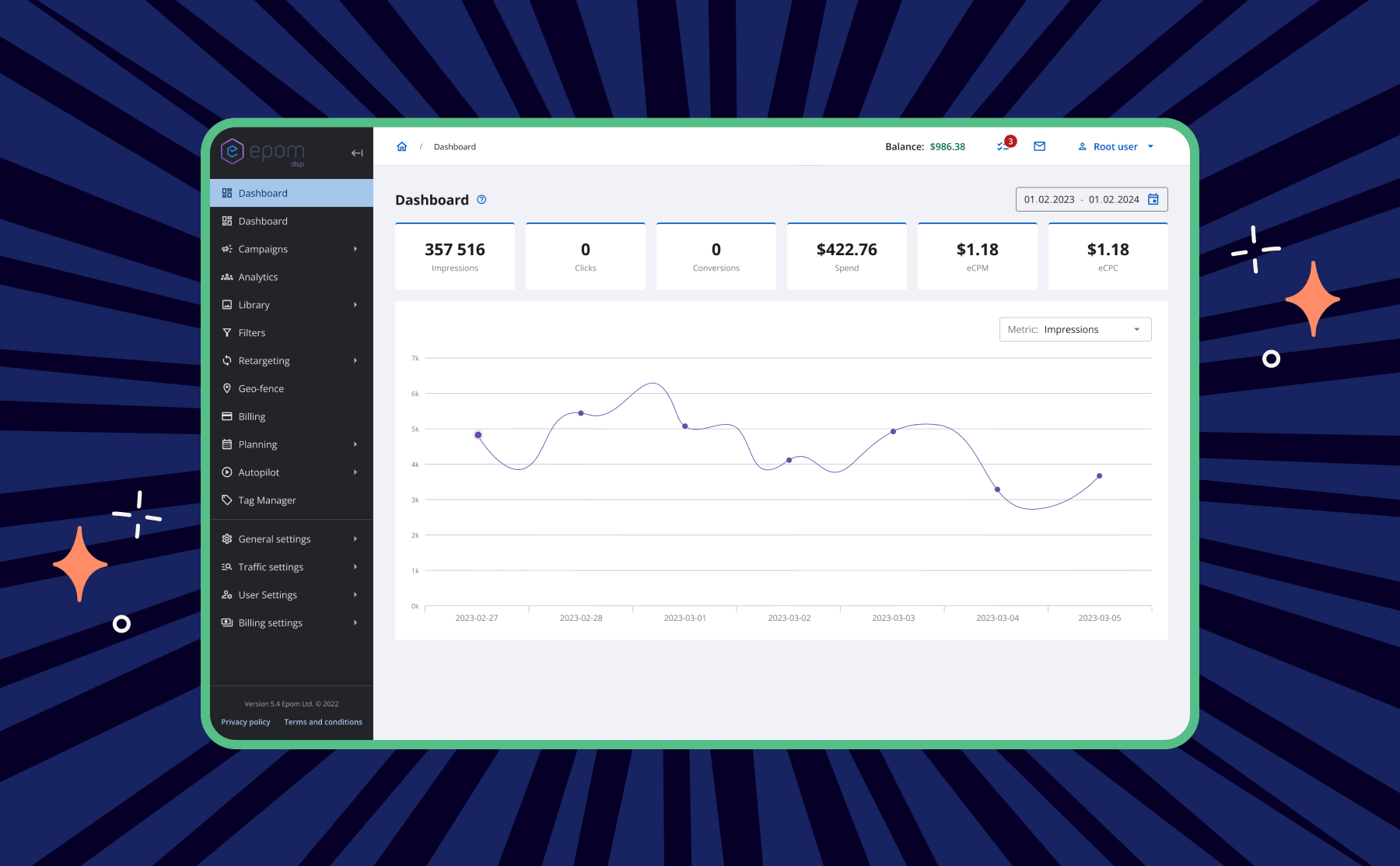
2. Analyze Placement Viewability
Don't just look at campaign-level averages; break it down by individual placement, and see where ads are being delivered but not really seen, using also conversion tracking and targeting optimization techniques to understand which impressions actually drive results.
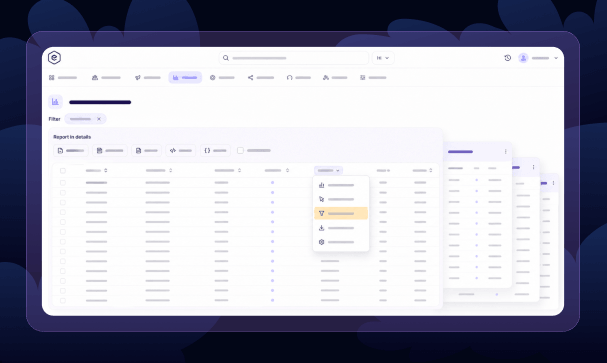
Epom DSP provides reporting tools that allow media buyers to evaluate which placements actually generate visible impressions and engagement.
3. Filter Low-Performing Placements
Once you've identified the problem spots, exclude them, and concentrate your budget on the inventory that actually works.
Filtering ineffective placements allows advertisers to concentrate budgets on inventory that actually drives results.
Plan Your Inventory Before Launch – This Will Save You A Lot of Headaches
Another thing that's pretty common is targeting that's either too broad or too narrow. If you layer on too many filters (geo, device, audience segment), you can leave yourself with so little available inventory that you can't even get your campaign to scale. It's one of the most common advertising mistakes in programmatic campaigns, and it usually doesn't become obvious until after launch.
Media planning tools can help you avoid this problem before it even starts. By giving you an estimate of available inventory volume, potential reach, and expected CPM ranges ahead of time, you can sanity-check your targeting and make adjustments while there’s still time to do so. Using advanced targeting options and automated optimization tools also enhances your ability to respond to changing market conditions and audience behavior.
Targeting specific segments allows for more precise and effective campaigns by reaching distinct audience groups with tailored messaging, and layering in ad retargeting strategies can further lift conversions from users who already showed interest.
Control traffic quality, viewability, and inventory from one platform.
Explore Epom DSP2. Your Ads Are Reaching the Wrong People
Even if you've got high-quality traffic, it won't do you any good if you're targeting the wrong people. To avoid misaligned targeting, it’s crucial to understand your audience and their intent before launching your campaign. And this is where targeting often goes off the rails.
Targeting problems don't always look obvious. Sometimes the audience is just too broad, and your campaign gets diluted across users who were never going to convert anyway. Sometimes you're locked into a segment that just doesn't work in real life. And sometimes you see the signs – flat engagement, poor conversion rates – but just keep running the campaign anyway, without making any adjustments.
Misaligned targeting often means:
- Showing ads to the wrong demographic.
- Relying on broad data points rather than focusing on specific user intent or pain points.
Research shows that programmatic campaigns can improve conversion rates by 10-30% when audience data and targeting signals are used effectively.
The reality is that there’s no universal formula for defining the perfect audience. DSP platforms provide the targeting tools, but advertisers still need to experiment to identify which audiences actually respond to their offer.
How to Fix It
The advertisers who get targeting right treat it as an ongoing experiment, not a one-time set-up. They start with a hypothesis, run the campaign, and let the data guide them. They gradually concentrate their budget on the audiences that actually respond.
This means you need a DSP with enough depth to make those experiments meaningful. And that's where Epom's demand-side platform comes in.
How Epom DSP Helps You Find the Right Audience
Epom DSP gives you granular control in targeting over who sees your ads, across every dimension that matters.
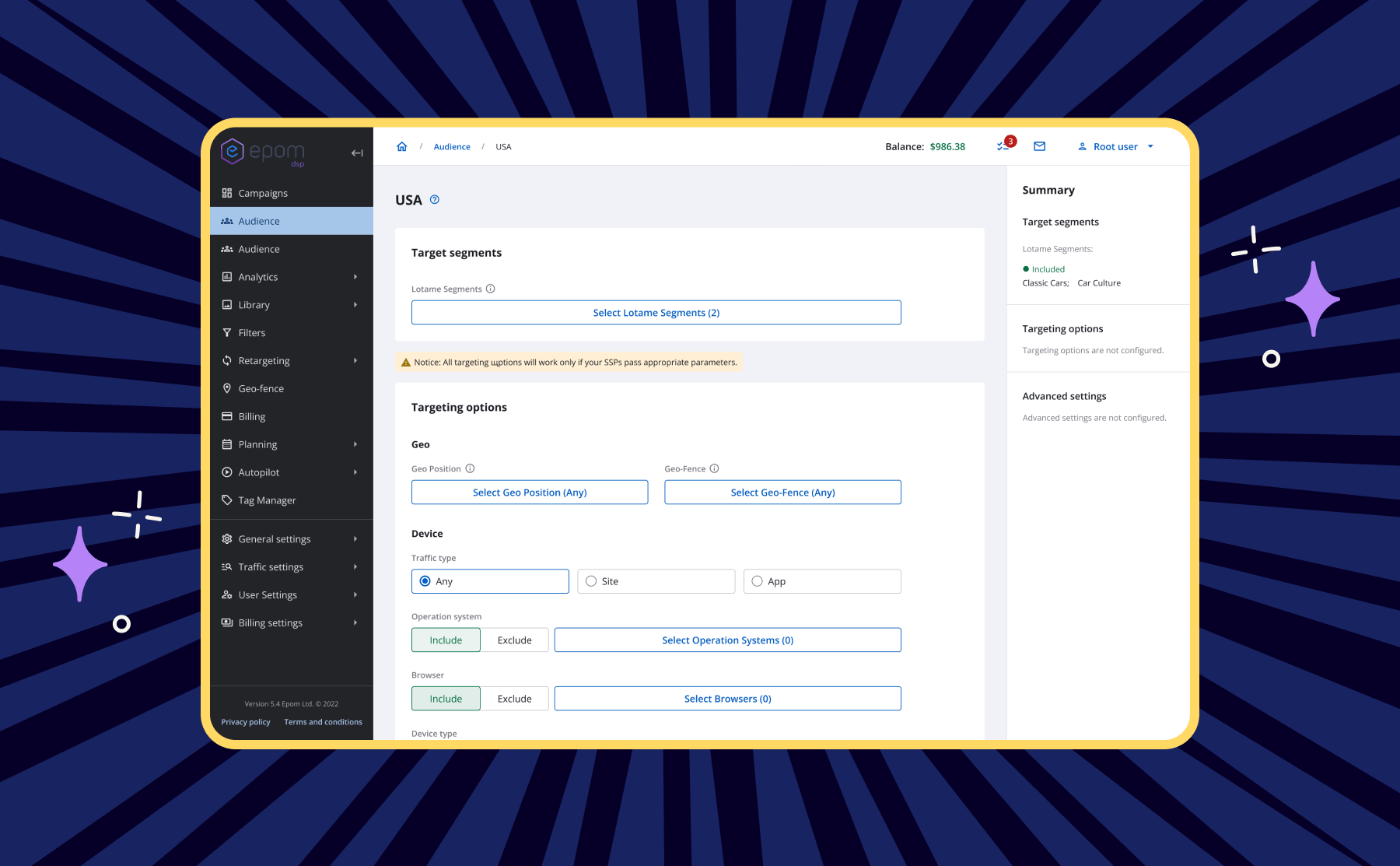
Campaigns can be targeted using multiple parameters, including:
- country
- region
- city
Device and technology
- device type (mobile, desktop, tablet)
- operating system
- browser
Inventory source
- specific supply partners
- ad exchanges
- websites or apps
Audience segments
- behavioral segments
- interest-based audiences
- demographic segments
- point-of-interest targeting (e.g. office buildings, coffee shops, retail locations)
This level of control means you're not just broadly targeting a demographic – you're combining parameters to build precise audience configurations, testing them, and doubling down on what works.
Epom DSP makes it easy to isolate variables, compare results, and make adjustments without having to rebuild campaigns from scratch.
Get Your First-Party Data On Board
One of the most effective targeting strategies in programmatic advertising is activating first-party data.
Instead of relying only on third-party segments, advertisers can target users based on their own customer data, such as:
- CRM lists
- existing customers
- previous website visitors
These are people who already have a connection to the brand, which usually translates into better engagement and converts much more often across all the different places they advertise.
For many advertisers, first-party audiences become one of the strongest drivers of campaign performance. Epom DSP supports first-party data onboarding and identity resolution, allowing advertisers to activate their customer data across programmatic inventory and scale campaigns more efficiently.
3. The Ad Itself Just Isn't Working Out
Even when everything else is dialed in – quality traffic, precise targeting, healthy budget – campaigns can still fall flat. Often, the problem is the ad creative.
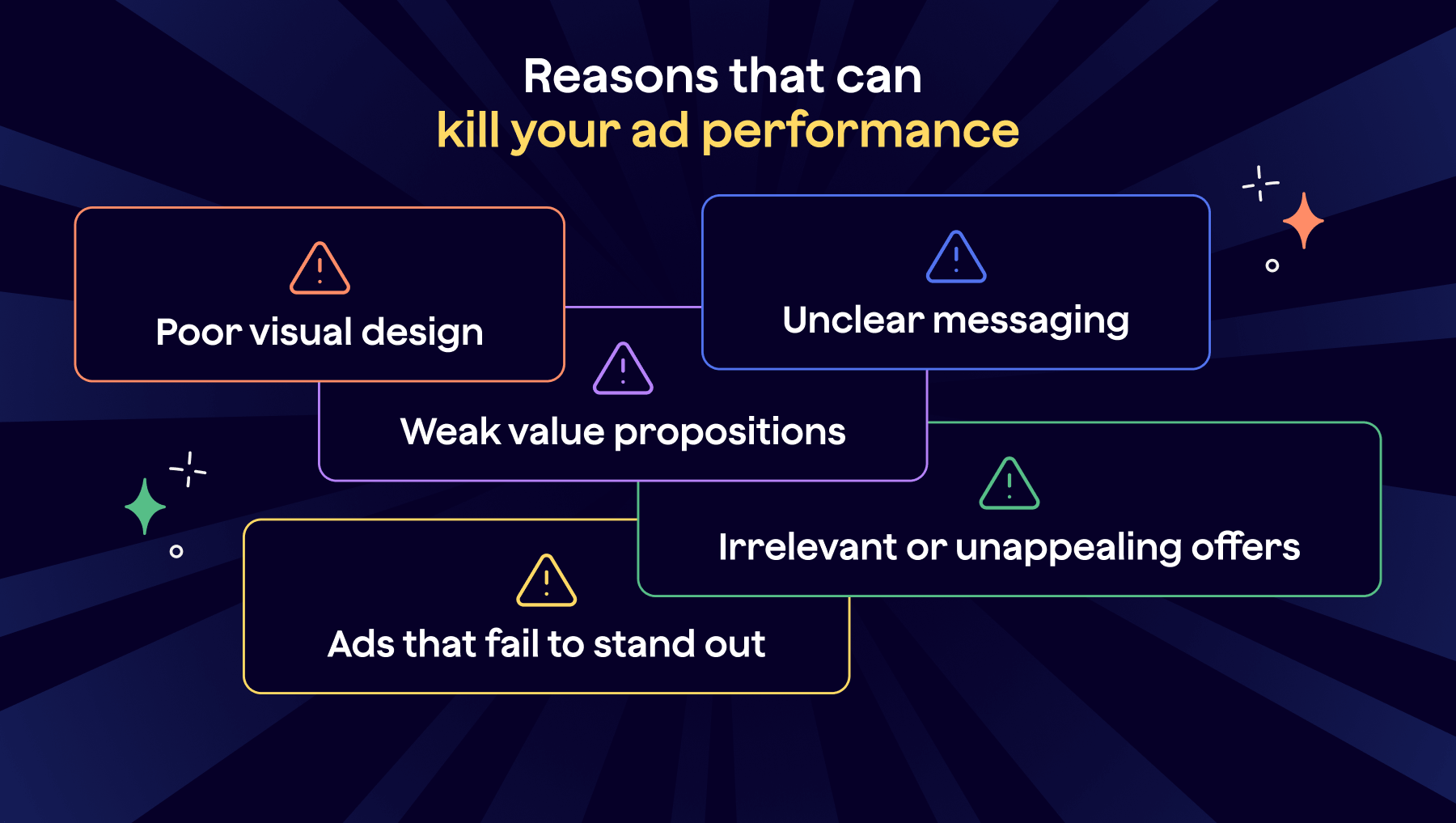
Ads that focus on emotional benefits, rather than just technical features, tend to resonate better with audiences. At the conversion point, using a strong, action-oriented call to action (CTA) can significantly boost conversion rates. High friction in funnels, such as long forms or slow page load speeds, can also significantly reduce conversion rates.
In these situations, the campaign may deliver impressions and reach the right audience, but the ad simply fails to resonate with users.
How to Fix It
The honest truth is that no one really knows which ad is going to work best before running the campaign. The advertisers who get this right aren't just better guessers – they're better at testing.
Typical creative tests include:
- different headlines
- different visual designs
- different messaging angles
- different value propositions
- different calls to action
One of the most effective ways to boost conversions is to use a good call-to-action with specific, action-oriented language rather than generic phrases.
Sometimes it takes just one tiny tweak, like swapping an image or re-wording a value proposition, to step up a lacklustre ad into a real performer, says an Epom specialist. You won't know that without testing, though.
Over time, a regular process of testing and refining ads can build up a clear picture of what really resonates with your audience, and that starts to pay dividends on future campaigns.
Running Creative Experiments at Scale
Creative testing only works if managing ads is simple. Uploading new versions, keeping track of all the different assets, switching ads in and out of live campaigns, and working out which versions are actually pulling through – if any of that is a hassle, it's easy to just test less and assume more.
Epom DSP simplifies creative experimentation by providing tools that help advertisers:
- manage multiple creative assets in one place
- launch new variations quickly
- rotate creatives within campaigns
- compare performance across creative versions
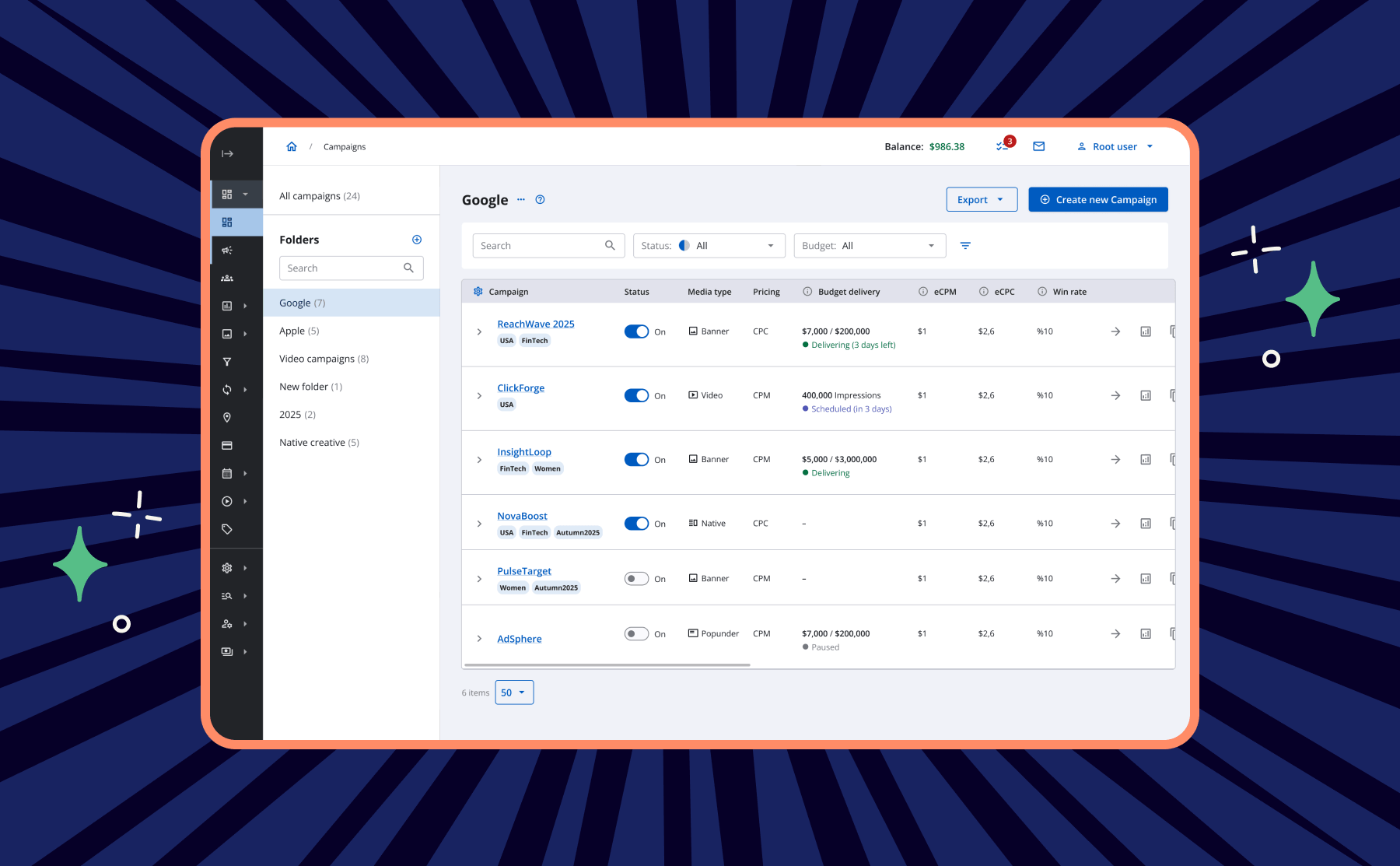
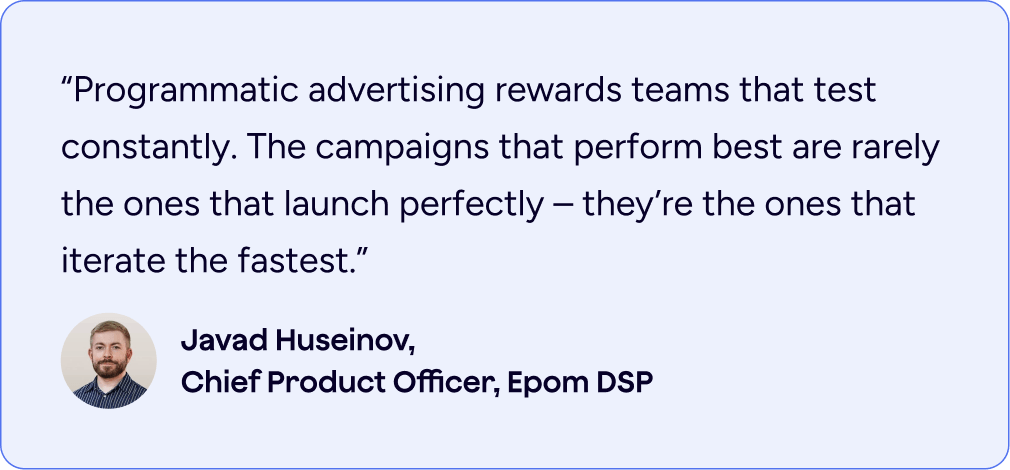
This allows advertisers to test more ideas, iterate faster, and continuously improve campaign performance.
Campaign Performance is Down to Just Three Things
Every programmatic campaign ultimately depends on three factors:
- Traffic quality – ads must reach real users in viewable placements
- Targeting accuracy – ads must reach audiences that are likely to convert
- Creative effectiveness – the message must capture attention and motivate action
When all three elements work together, campaigns perform well. But when one of them fails, the others cannot compensate.
Good traffic won't make up for bad targeting. Precise targeting isn't going to save an ad that's just not working. And no matter how good the ad is, it's a waste of time and money if it's not reaching people who actually care.
The framework is simple, but each component must perform well for the campaign to succeed.
What a Good DSP Should Actually Do for You
Advertisers own their strategy, targeting, and creative decisions. But a good DSP should remove the technical barriers that make campaign optimization difficult.
That means handling critical infrastructure such as:
- traffic verification
- viewability analysis
- inventory planning
- creative management
Platforms like Epom DSP are designed to support these workflows, allowing media buyers to focus on strategy and performance optimization instead of troubleshooting technical issues.
By simplifying programmatic campaign management, the platform enables teams to test faster, refine targeting more effectively, and scale successful campaigns.
Final Thoughts
When ads are not converting, it's rarely because of some mysterious problem. It's usually one of three things we have discussed, or some combination of the three.
- Is the traffic any good?
- Is the ad going to an audience that actually cares about the offer?
- Is the ad good enough to grab attention and get a click?
Answer those three questions honestly, and the way forward becomes a lot clearer. Look after traffic quality, test your targeting to destruction, keep refining your ad, and programmatic advertising ceases to be some spooky black box and starts to feel like a system you can actually get a handle on.
Ready to improve your programmatic ads performance?
Launch Your First Campaign