
TL;DR:
Key Takeaways for 2026:
- B2B average CPAs have hit $127, driving advertisers away from walled gardens (Meta/Google) to the Open Web.
- Buyers must choose between Content Recommendation Widgets (premium, high CPQL), Affiliate Networks (high volume, low CPC), and Programmatic White-Label DSPs (OpenRTB access, margin control).
- Successful 2026 campaigns require Server-to-Server (S2S) tracking, JSON payload creative rendering, and strict inclusion lists to keep Invalid Traffic (IVT) under 2%.
- White-label DSPs allow agencies to move from flat retainer fees to media arbitrage by setting custom CPM markups per client.
Learn how to buy native ads traffic in 2026, what criteria to consider when choosing a platform, and how to get the best results from native advertising without unnecessary costs.
Stop renting traffic and take 100% control of your ad margins today. Start your Epom DSP free trial now!
The 2026 CAC Crisis: Why Buyers Are Flocking to Native Ads
A few years ago, most performance marketers used a tried-and-true formula: they launched campaigns on Google and Meta, optimized them, and scaled what worked. In 2026, this model is working worse and worse. The cost of acquiring customers is increasing, while organic traffic continues to decline. This is what many experts call The Great Decoupling — the gap between advertising costs that are constantly increasing and results that are no longer growing at the same pace.
The numbers only confirm this trend.
The 2026 Digital Advertising Data Landscape:
- +31.2%: The YoY increase in average Customer Acquisition Cost (CAC) on Meta for SaaS companies.
- $127: The current average Cost Per Action (CPA) for B2B advertisers on walled-garden platforms.
- 60%: The percentage of AI-driven search queries completed without a website click (Zero-click searches).
- 77%: The zero-click search rate on mobile devices.
All this leads to another trend — walled garden fatigue. Advertisers are increasingly frustrated with closed advertising ecosystems, where algorithms determine where to show ads, with limited ability to control placement or analyze their quality.
In response, brands and agencies turn to native advertising platforms and native ad networks that provide access to the Open Web. They start purchasing native ad traffic through modern DSPs and, as a result, gain greater transparency, control over inventory quality, and access to contextual targeting. Moreover, advertisers can scale campaigns without being completely dependent on the algorithms of closed platforms.
How to Buy Native Ads Traffic: CPM vs. CPC Models
Before you buy native ads traffic, you should decide on the purchase model. This model determines who will bear the main risk of the campaign — the advertiser or the publisher, as well as how predictable the costs of customer acquisition and ROAS will be.
Most native advertising platforms and native advertising DSPs support two main payment models: CPM (cost per mille) and CPC (cost per click).
Understanding the differences between CPC vs CPM pricing models will help you choose the right approach for your campaign goals. Although both are used to purchase native traffic, they solve different business problems.
| Metric | CPM (Cost Per Mille) | CPC (Cost Per Click) |
|---|---|---|
| Payment Trigger | Every 1,000 ad impressions. | User clicks the ad. |
| Risk Holder | Advertiser. | Publisher / Ad Platform. |
| Best Use Case | Brand awareness, large-scale reach, and visibility. | Performance marketing, e-commerce, and B2B lead generation. |
| Average Cost | Varies by inventory quality. | $0.05 to $0.50 per click. |
| Cost Predictability | Low (CAC and ROAS finalize only post-campaign). | High (Costs tie directly to guaranteed user engagement). |
Many modern native advertising solutions, including Epom, focus on the CPC model for performance marketing.
The 3 Tiers of Native Ad Platforms
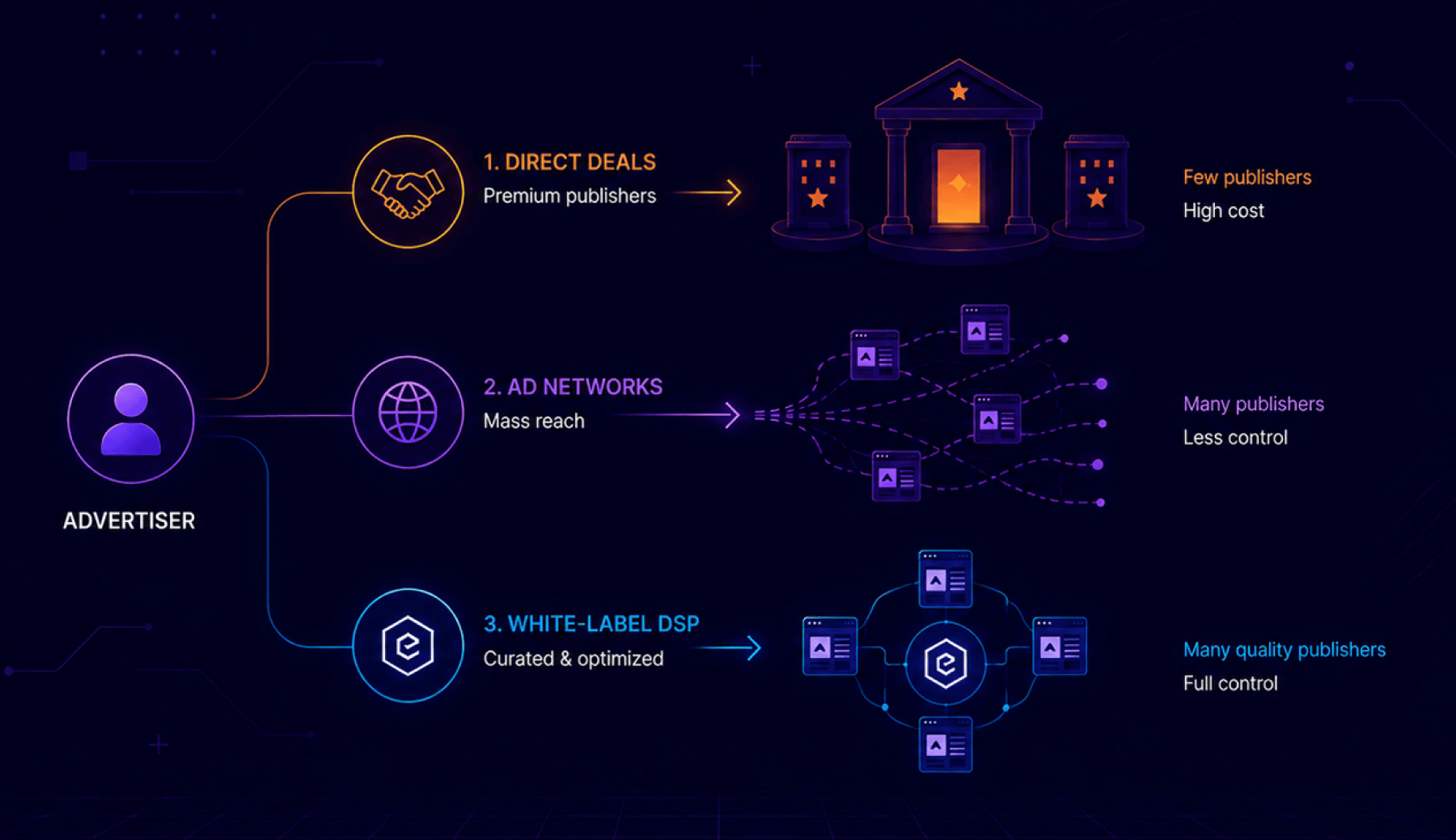
Modern native advertising platforms are categorized into three distinct tiers based on traffic quality and buying control:
- Content Recommendation Widgets (e.g., Taboola, Outbrain): Best for premium publisher placements, but often suffer from high CPQL (Cost Per Qualified Lead) due to "curiosity clicks."
- Affiliate & Volume Networks (e.g., MGID, RichAds): Best for massive scale and low CPCs, but require heavy manual filtering to avoid bot traffic and remnant inventory.
- Programmatic White-Label DSPs (e.g., Epom): Best for agencies requiring transparent margins, OpenRTB access to 50+ SSPs, and direct control over server-to-server tracking.
Understanding the differences between them will help you choose the most effective way to buy native ads traffic depending on your goals.
Tier 1: Content Recommendation Widgets
This category includes platforms such as Taboola, Outbrain, and Revcontent. They display ads as recommendation blocks under articles or directly inside editorial materials. You can recognize these widgets by titles like Recommended for You, You May Also Like, or Around the Web. They are organically integrated into the structure of online media, so the ad looks like part of the user experience rather than a traditional banner.
The main advantage of this format is access to premium advertising inventory from large publishers. Since ads are placed next to high-quality editorial content, they receive the so-called brand halo effect — the positive perception of the authoritative media is partially transferred to the advertised brand. This makes recommendation widgets especially attractive for campaigns focused on increasing brand awareness or large-scale audience reach.
At the same time, this approach has its limitations. Most native ad networks of this tier require relatively high minimum budgets, which makes them less accessible to small advertisers. In addition, a significant portion of conversions are generated by users’ natural curiosity about the recommended content, rather than their willingness to make a purchase or leave a request. For B2B campaigns, this often leads to a high cost per qualified lead (CPQL), because not every click turns into a potential customer.
Like most modern advertising platforms, recommendation widgets are actively implementing artificial intelligence tools. For example, Taboola offers GenAI AdMaker, which helps automate the creation of advertising creatives, launch campaigns faster, and simplify the preparation of content for various native advertising formats.
Tier 2: Affiliate & Volume Network
Platforms like RichAds, Zeropark, and MGID fall into this category. Their main advantage is scale. Unlike recommendation widgets, which work mostly with premium publishers, affiliate and volume networks provide access to a huge number of native traffic sources and allow you to build reach quickly. Due to the large volume of inventory, they often offer lower cost per click (CPC), which is why they are popular with advertisers in the iGaming, dating, and other performance campaign verticals where high traffic volumes and constant testing are important.
However, a large amount of inventory almost always means a significant variance in its quality. Such networks can contain a significant amount of remnant inventory — ad impressions that were not sold through premium channels. In addition, the risk of encountering invalid traffic (IVT), bots, or other forms of fraudulent traffic is usually higher here than in networks with stricter publisher selection. So, a low CPC does not always mean a lower cost of acquiring a customer — part of the budget can be spent on conversions that do not bring any business value.
To get stable results, advertisers have to monitor the quality of traffic actively. Working with affiliate networks involves constantly updating blocklists and disabling ineffective traffic sources. And if you don’t do it, efficiency can quickly decline, especially in large campaigns with wide reach.
It is also worth considering the structure of the audience of individual platforms. For example, MGID reports that about 99% of its traffic falls on mobile devices. For mobile applications, e-commerce or other mobile-first campaigns, this can be a significant advantage. However, for B2B companies, whose sales mostly occur through desktop-first funnels, this feature can become a limitation.
Programmatic White-Label DSPs
While the first two tiers offer access to their own advertising network, a native advertising DSP, such as Epom, uses a different principle. In this case, an advertiser gets access to a large number of inventory sources through a single platform. So, agencies can build their own technological infrastructure without depending on the rules and restrictions of individual ad networks.
These platforms use the OpenRTB standard to connect to multiple SSPs. That’s how you get significantly wider reach and more opportunities for campaign optimization. So, instead of working with a single advertising platform, agencies can receive inventory from dozens of sources through a single interface and manage advertising budgets more effectively.
This is the principle that Epom works on. The platform provides access to 50+ top supply-side platforms via OpenRTB, allowing agencies to work with a wide range of advertising inventory without additional network markups. Unlike many closed platforms, Epom uses a transparent pricing model — 5% of the advertising budget as a fee for using a white-label DSP. In addition, launching your own platform takes only 2-4 days, which allows agencies to get their own programmatic infrastructure quickly.
A Technical Playbook: How to Execute Native Ads Like a Pro
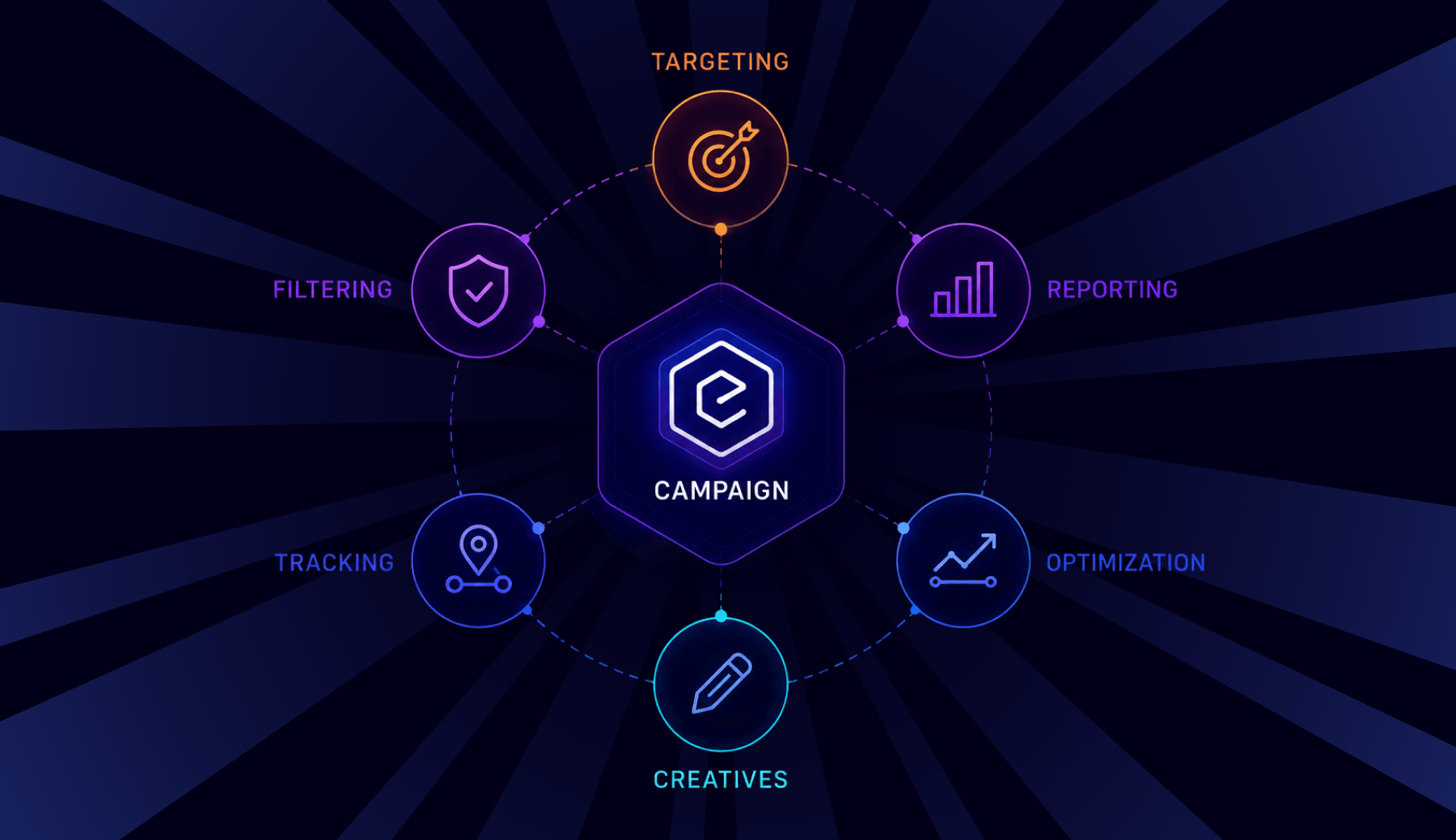
Choosing where to buy native traffic is only half the battle. Even the best ad inventory won’t deliver good results if your campaigns aren’t technically set up properly. Today, native advertising effectiveness depends not only on media planning, but also on how well your tracking works, how well you filter out fraudulent traffic, whether your creatives are displayed correctly, and whether your team has a single source of data for analysis.
The best practices below will help you reduce budget waste and get the most out of any native advertising platform.
1. Shift to Server-to-Server (S2S) Tracking
The Problem: Modern browsers, privacy tools, and ad blockers intercept and distort data transfers via standard browser pixels. This causes dropped conversion data and relies on heavy JavaScript execution that slows down page load speeds.
The Solution: Server-to-Server (S2S) tracking transmits conversion data directly between servers. This deterministic method bypasses browser-level restrictions, neutralizes ad blockers, and completely removes reliance on deprecated third-party cookies.
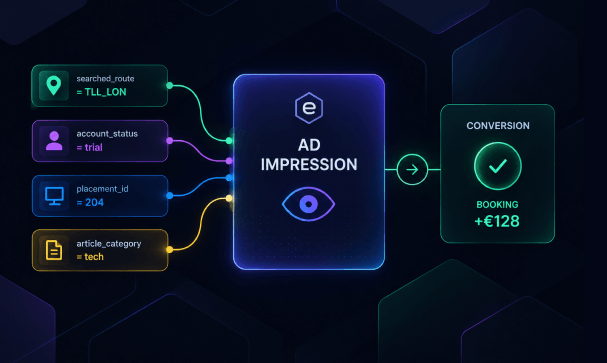
The Epom Advantage: Eliminating heavy third-party browser scripts reduces latency by 400-700ms. Epom utilizes Custom Parameters to dynamically pass first-party data (User IDs, interests, customer status) directly into the campaign URL, training optimization algorithms on perfect conversion data.
2. Destroy MFA Sites and IVT (Invalid Traffic)
The Problem: The Open Web is saturated with Made-for-Advertising (MFA) sites and Invalid Traffic (IVT), including bot networks and automated click farms. Traditional, reactive domain blocklists fail because fraud networks continuously generate new domains, causing advertisers to perpetually waste budget on low-quality, fraudulent inventory.
The Solution: Replace reactive blocklists with strict, manual inclusion lists (whitelists). By exclusively targeting verified publishers that meet rigorous traffic quality, inventory transparency, and brand safety benchmarks, advertisers guarantee their budget targets real users rather than bot traffic.
The Epom Advantage: Epom natively integrates with Pixalate for real-time traffic quality verification and pre-bid fraud filtering. This dual-layered defense—combining automated fraud detection with strict manual inclusion lists—blocks malicious publishers before the bid occurs, maintaining an IVT rate strictly below 2%.
3. Protect Creative Integrity (JSON vs. Publisher CSS)
The Problem: Publishers frequently force native ad assets (which require a 1.91:1 aspect ratio) into legacy standard display banner CSS containers. This automatic scaling stretches, crops, and blurs images, immediately degrading Click-Through Rates (CTR) and brand perception.
The Solution: Transmit native ads via JSON responses rather than fixed HTML blocks. Delivering ad components (image, headline, description, CTA) individually allows the publisher's CMS to render the ad natively according to its own precise layout and UI parameters.
The Epom Advantage: Epom utilizes Component-Based Assembly and JSON payloads to process every ad element independently. The proprietary Native Adapter Template dynamically maps the ad styles to match the publisher’s exact site architecture, guaranteeing flawless rendering across all devices.
4. Centralize Reporting and Escape "Excel-Hell"
The Problem: Multi-platform native campaigns create severe data fragmentation. Media buying teams waste countless hours exporting CSVs, emailing zip files, and manually merging spreadsheets. This decentralized process breeds data inconsistency, increases human error, and blinds advertisers to holistic campaign performance.
The Solution: Transition to a programmatic native advertising DSP. Consolidating campaign execution, real-time tracking, and analytics into a single interface eliminates manual data aggregation and provides immediate, centralized visibility into global campaign metrics.
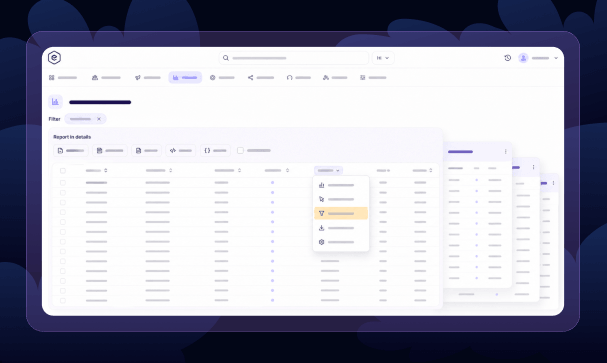
The Epom Advantage: Epom DSP automates customized report generation directly within a centralized dashboard. By eliminating manual CSV merging, the platform reduces agency reporting time by up to 70%, redirecting human resources away from spreadsheet management and toward campaign optimization and scaling.
The Agency Advantage: Controlling Your Margins
For most agencies, profit still largely depends on the retainer model — a fixed monthly fee for running advertising campaigns. This approach provides stable income, but it also limits growth opportunities. If the agency uses third-party advertising platforms, it has almost no influence on its cost structure and commissions. Also, the platform determines margins and operating rules. Hence, scaling the business often means only an increase in the volume of work, not profitability.
This is where the choice between White-Label DSP vs Self-Serve DSP becomes important. A self-serve DSP gives agencies direct access to programmatic buying, while a white-label DSP adds ownership, custom branding, and the ability to build an independent media buying business.
| Feature | Self-Serve DSP | White-Label DSP |
|---|---|---|
| Branding | Third-party platform logo. | 100% Custom Agency Branding. |
| Margin Control | Platform dictates fees and operating rules. | Agency sets custom CPM markups per client. |
| Revenue Model | Flat monthly retainer fees. | Media arbitrage (profit on traffic margins). |
| Infrastructure | Rented access. | Owned proprietary media buying tech. |
An alternative to the retainer model is the media arbitrage model, where the source of income is not only payment for services, but also effective management of advertising purchases. Using its own white-label DSP, the agency can independently set CPM markups for each client and control the profitability of each campaign. Instead of “renting” closed advertising platforms, the business gets its own programmatic infrastructure that works according to its rules.
Moreover, in this model, clients interact with the agency’s brand, not with the logo of a third-party DSP. If you want to strengthen trust in the agency, it can be your answer. In fact, a white-label DSP for agencies becomes part of the agency’s own product.
This is exactly the model Epom offers. The platform provides 100% branded UI and allows you to set up individual CPM markups for each client. What’s more important, Epom doesn’t have spend minimums, so it is suitable for both large agencies and teams that are just starting to build their own programmatic direction. All of them gain more control over media buying, pricing, and profitability.
Stop Renting, Start Owning
Choosing a native ad buying platform is about how much control you have over the entire process, from traffic sources and inventory quality to deterministic tracking, transparent reporting, and site-level optimization. Recommendation widgets, affiliate networks, and programmatic DSPs all serve different purposes. However, if transparency, scalability, and full control over your media buying are important to you, a white-label DSP offers a much broader range of options. With it, you don’t adapt to someone else’s rules; you get your own infrastructure, your own data, and the freedom to build your ad buying process the way your business needs it.
If you want to test this approach without a significant upfront investment, Epom offers several options to get you started. The Light Plan for the ad server is available from $250 per month, and you can try the self-serve DSP with a minimum deposit of $100. So, you can move from using someone else's advertising infrastructure to your own media buying model without high initial costs.
Deposit $100, set your targeting, and launch your first native ad campaign today!