
AdRoll positions itself as an entry-level platform for small-to-medium businesses (SMBs) and direct-to-consumer (DTC) brands. Its plug-and-play e-commerce integrations and lack of upfront minimums make it easy to launch a campaign. As agencies and brands scale budgets, that ease of use transforms into a ceiling, and finding AdRoll alternatives becomes a financial necessity.
When media spends expose inefficiencies in platform margins, conversion tracking accuracy, and bidding controls, media buyers hit the SMB breaking point. If ad dollars are absorbed by opaque pricing, or if retargeters bombard bottom-of-funnel users to claim attribution, it is time to upgrade.
Based on Epom observations, migrating to independent DSP platforms allows advertisers to cut middleman fees and put 15% to 40% more budget directly into working media.
Scaling campaigns on AdRoll and losing media budget to the reseller tax? Epom DSP gives you access to the raw clearing price of inventory with zero platform fees on self-serve accounts. Create your account today.
TL;DR:
- Scaling brands graduate from AdRoll to avoid the Reseller Tax — a black box pricing model where vendors bundle media costs and margins, hiding the raw clearing price of inventory.
- Legacy retargeting networks use aggressive view-through attribution (VTA) windows, claiming credit from organic search and email marketing.
- StackAdapt is best for independent agencies, offering multi-channel contextual targeting with zero minimums for self-serve accounts.
- Pontiac Intelligence is best for cost transparency, eliminating bidding markups with a 20% licensing fee.
- Best programmatic gateway is Epom DSP, which requires a $100 minimum deposit, providing log-level data, bid shading, and a path to a $250/month flat-fee white-label DSP for agencies.
Why Agencies and SMBs Graduate from AdRoll
In the advertising ecosystem, convenience comes at a premium. Teams flock to AdRoll for its machine learning and integrations with Shopify, WooCommerce, and BigCommerce. As campaigns grow, the lack of granular control creates operational and financial friction.
Independent agency owners (Margin Protectors) and in-house SMB marketers outgrow AdRoll due to three pain points:
1. Platform Margin Opacity
When you pay retail CPCs, you are shielded from the raw clearing price of the inventory. This black box pricing model bundles media costs, data fees, and margins into one metric. As one media buyer noted when comparing AdRoll vs Criteo, “Both operate at over 30% margins. You will be able to win a larger percent of impressions when you take out that middle man margin.”
2. View-Through Attribution (VTA) Inflation
A recurring theme among e-commerce marketers is the lack of incrementality. Because retargeters bombard bottom-of-funnel users, the incrementality of those conversions is zero. Practitioners complain these platforms claim 10x more conversions than Google Analytics verifies, by targeting users who were already going to purchase.
3. The Chaos of Scaling
As agencies scale, managing siloed tools becomes difficult. As an agency director noted during an Epom client onboarding: “We work with about nine different publishers, and that is constantly changing. The scale of it is growing, and I'd like for us to have one place where we have everything — and of course, very important, the reporting on it as well.”
Graduating to a Demand-Side Platform (DSP) solves these issues. A DSP allows you to restrict view-through attribution windows, execute cross-channel frequency capping, and improve Return on Ad Spend (ROAS).
How We Evaluated These Alternatives
We scored each of these platforms against five criteria that matter for choosing a DSP for agencies managing multiple clients and brands scaling media budgets.
- Pricing transparency — black box models with bundled margins, or transparent fees accessing the raw clearing price?
- Reporting depth — log-level data, exact publisher domain visibility, and gross/net profit calculations.
- Attribution control — customizable view-through attribution windows and cross-channel frequency capping to ensure incrementality.
- Platform architecture — three-level campaign hierarchy setups, open API access, and white-label readiness for agencies.
- Commercial flexibility — minimum media spends, upfront platform commitments, and month-to-month contract options.
7 Programmatic Platforms Compared
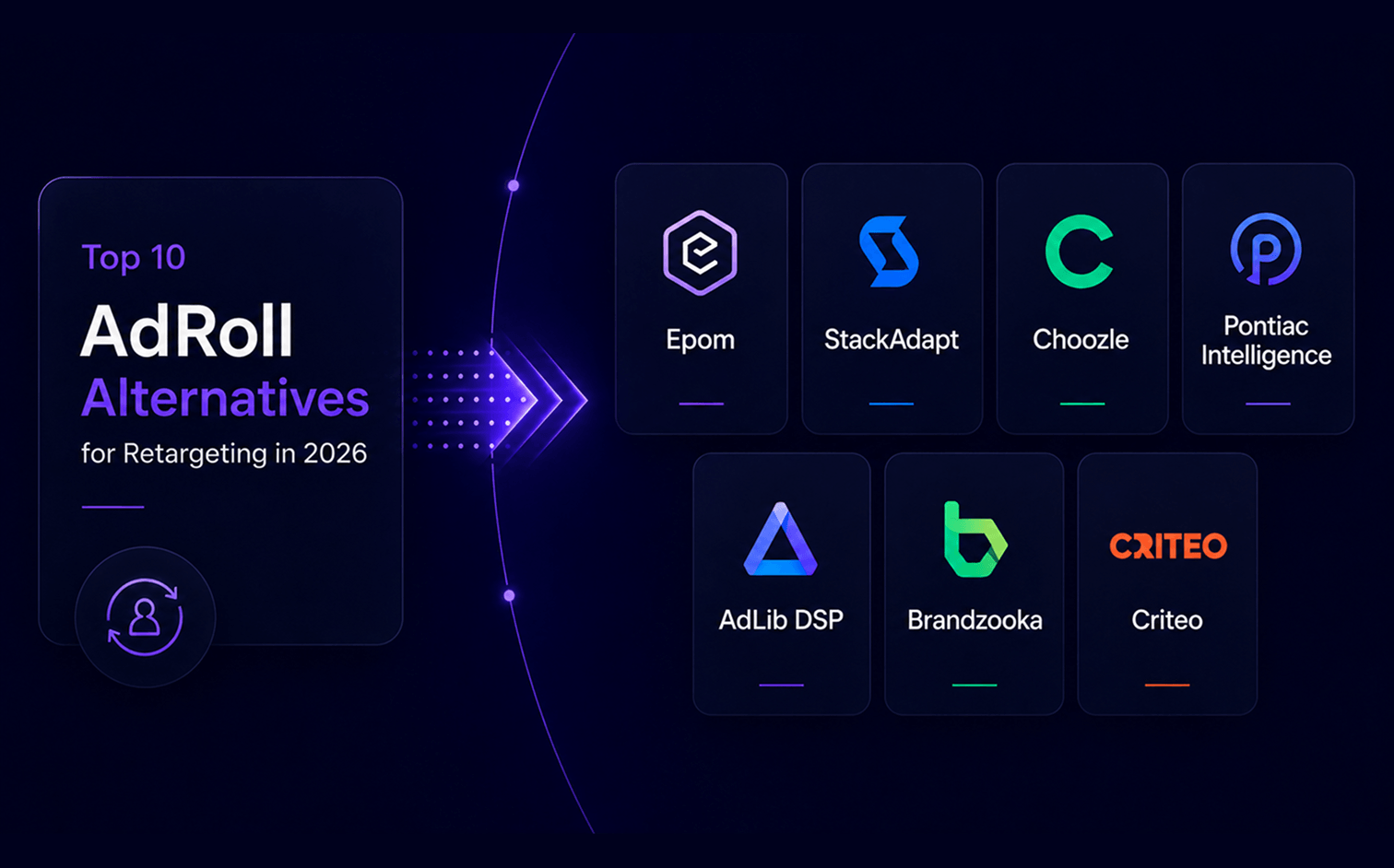
Advanced retargeting platforms enable advertisers to orchestrate programmatic advertising campaigns. The following profiles represent the self-serve programmatic ecosystem in 2026.
Epom DSP: The Transparent Programmatic Gateway
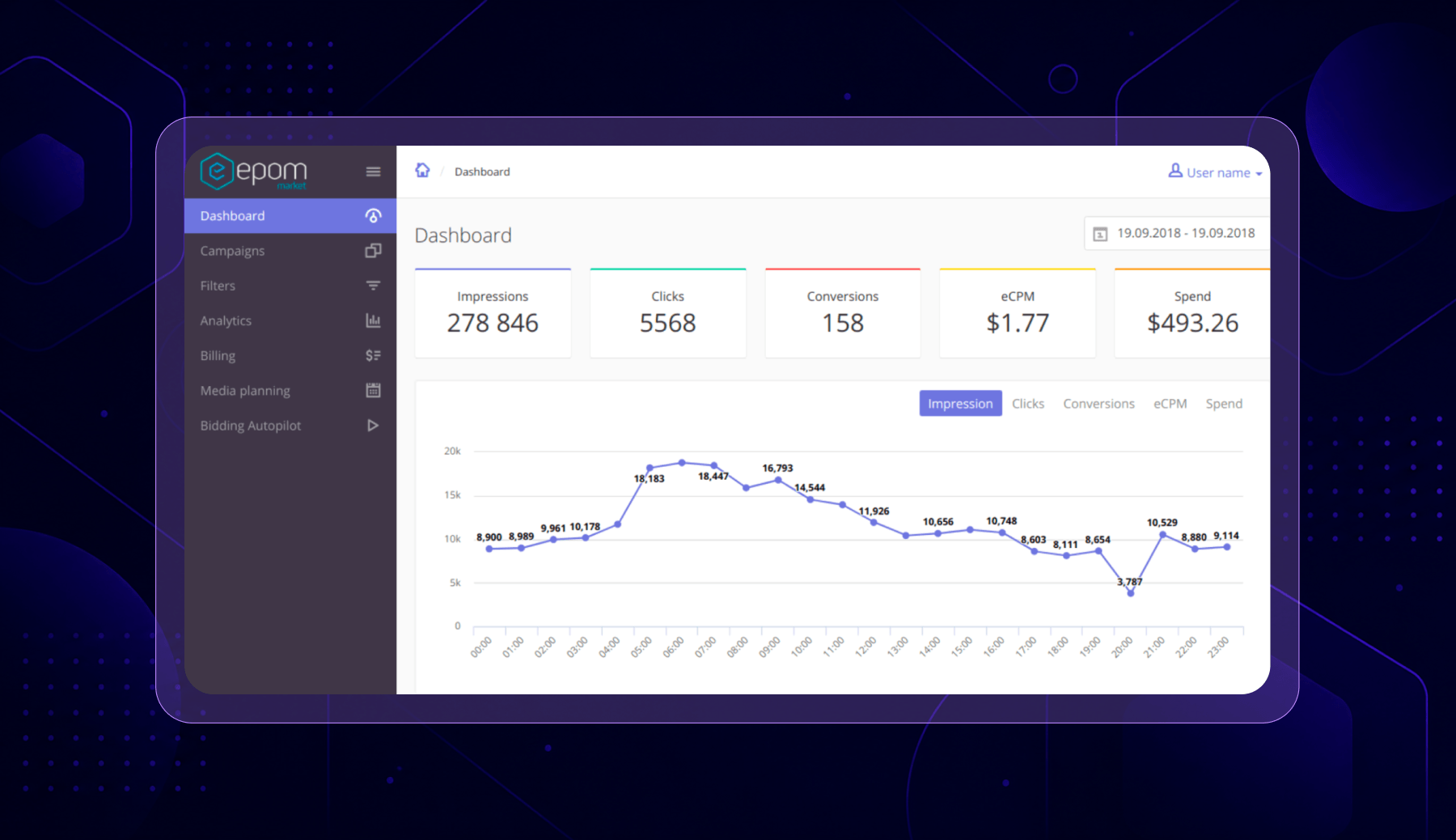
Epom DSP offers placement transparency, integrated Lotame segments, and site-level reporting to address the black box pricing model of traditional DSPs.
Epom's self-serve DSP requires a $100 minimum deposit with no long-term contracts.
Epom offers a transition path to a flat-fee White-Label DSP. Growing agencies shift to a flat technology fee (starting at $250/mo), passing direct media costs straight to the buyer. This allows agencies to control margins and present a branded interface to clients.
Because I don't want to have four clients, advertisers, your interface, I would like to build the interface around your... Solution through API, is a sentiment Epom hears from agency owners. Epom's Open API and custom parameter targeting make this possible.
| Pros | Cons |
|---|---|
| Transparency with access to log-level data. | Requires dedicated creative assets. |
| Path to a $250/mo flat-fee white-label setup. | Features require an understanding of programmatic trading. |
| $100 minimum deposit removes financial risk. | Focused on open web, CTV, and In-App. |
✅ Best for: Brands, performance buyers, and agencies requiring transparent pricing and a path to an in-house branded DSP.
❌ Not for: Advertisers direct-operating below $1K/mo who require platform-integrated dynamic social ad creative formats.
Prior to migrating to a renowned all-in-one AdRoll alternative — Epom DSP — confirm the actual pricing of the platform.
StackAdapt: The Mid-Market Contextual DSP
StackAdapt is a platform favored by B2B marketing teams and mid-market agencies requiring omnichannel reach. It features user support and an interface praised in G2 reviews for an amazing onboarding experience.
StackAdapt operates on usage-based pricing models with no spend minimum commitments for self-serve access. Managed campaigns start between $5,000 and $15,000 per month.
| Pros | Cons |
|---|---|
| Onboarding and user interface navigation. | Requires budgets over $1,000/mo. |
| Multi-channel flexibility utilizing the Ivy AI assistant. | Lacks catalog syncs native to platforms like AdRoll. |
| Creatives designed by an in-house Creative Studio. | Custom pricing makes forecasting margins difficult. |
✅ Best for: B2B marketing teams and mid-market agencies requiring omnichannel reach.
❌ Not for: E-commerce brands reliant on BigCommerce or Wix store integrations.
Choozle: The Reseller Gateway
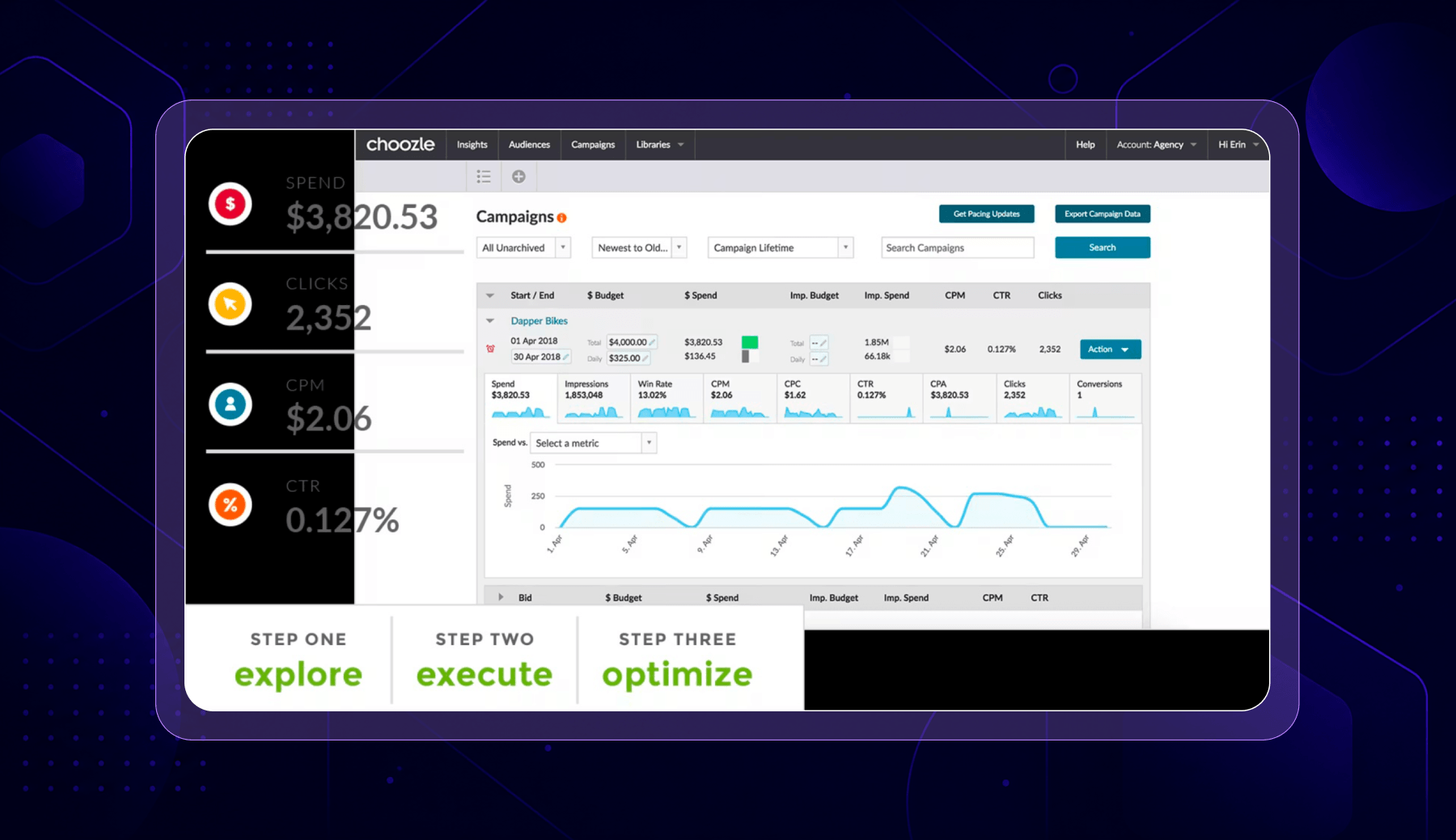
Choozle simplifies demand platform access (acting as a reseller for The Trade Desk and Amazon Ads) within a budget-friendly interface. It attracts agencies that want ad exchanges without signing annual contracts.
Transitioning to Choozle grants media buyers visitor analytics and multi-channel optimization levers. According to r/PPC consensus, “The capabilities, besides retargeting, are awesome. You can gather insights on all of your visitors, and the UI is way better.”
| Pros | Cons |
|---|---|
| Access to enterprise DSPs (The Trade Desk). | Requires a media spend of $15,000 budgets over 90 days ($5,000/mo.) |
| Visitor analytics for targeted insights. | Platform subscription fee of $99 per month applies. |
| Channel coverage: Display, CTV, Video, Digital Audio, Social. | Managed services require a $10,000/mo commitment. |
✅ Best for: Agencies and brands seeking media control with direct ad exchange integrations.
❌ Not for: Advertisers operating below $5,000/mo, or teams unwilling to pay software subscription fees.
Pontiac Intelligence
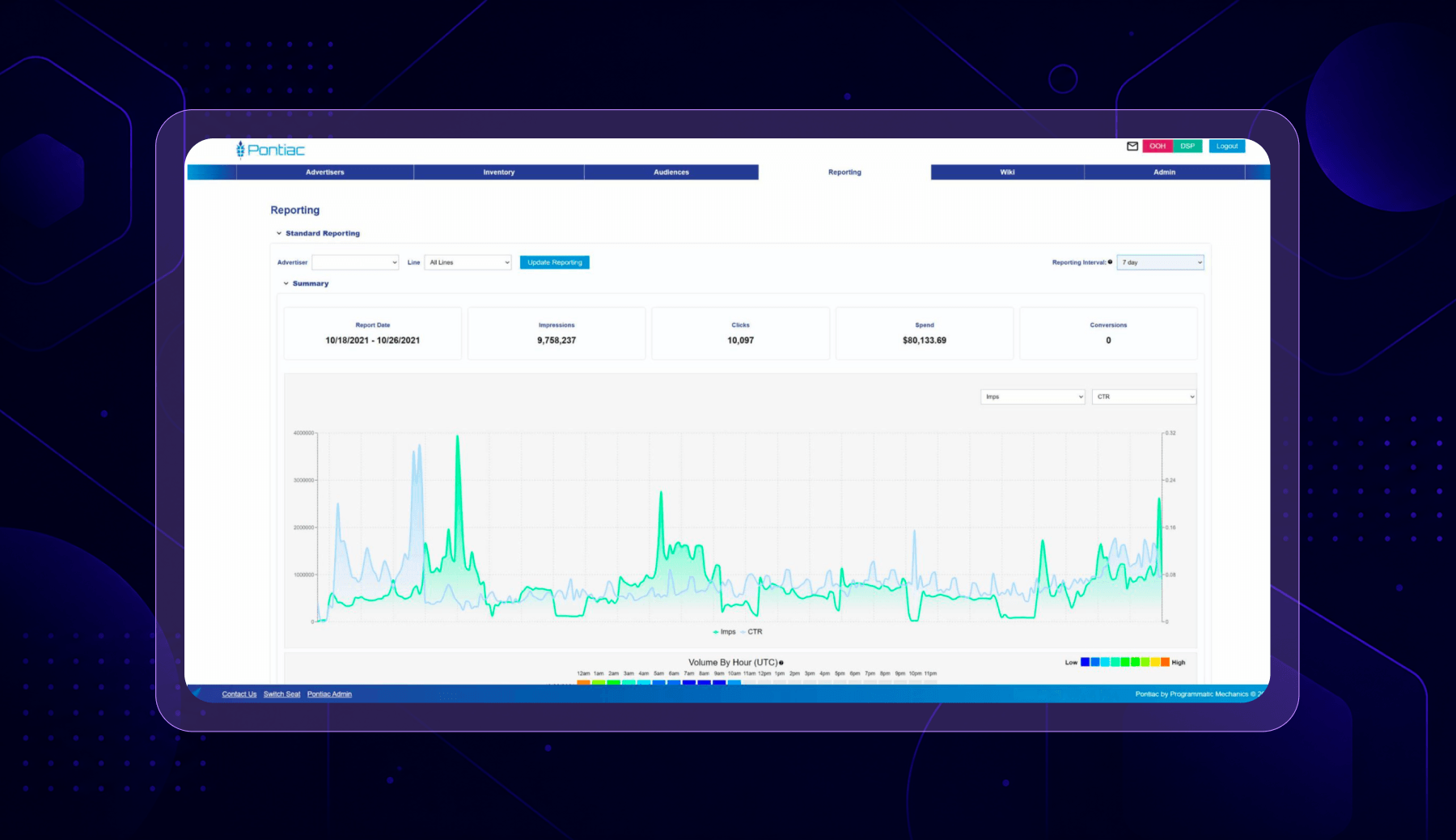
For agencies exhausted by the tech tax, Pontiac Intelligence offers an alternative rooted in cost transparency. Pontiac eliminates bidding markups by utilizing a percentage-based software licensing model (20% fee for self-serve, 30% for managed).
Media buyers pay the raw clearing price for inventory, plus the software fee. There are no campaign spend requirements, though accounts must be pre-funded and the minimum project size is $1,000.
| Pros | Cons |
|---|---|
| Pricing model eliminates black box markups. | Accounts must be pre-funded before launching campaigns. |
| Channel access including DOOH and CTV. | Lacks e-commerce catalog syncing. |
| No minimum spend on the self-serve tier. | The UI feels barebones to non-technical users. |
✅ Best for: Agencies and localized advertisers requiring cost transparency and geographic fencing.
❌ Not for: DTC e-commerce brands requiring platform catalog syncs and dynamic creative formatting.
AdLib DSP
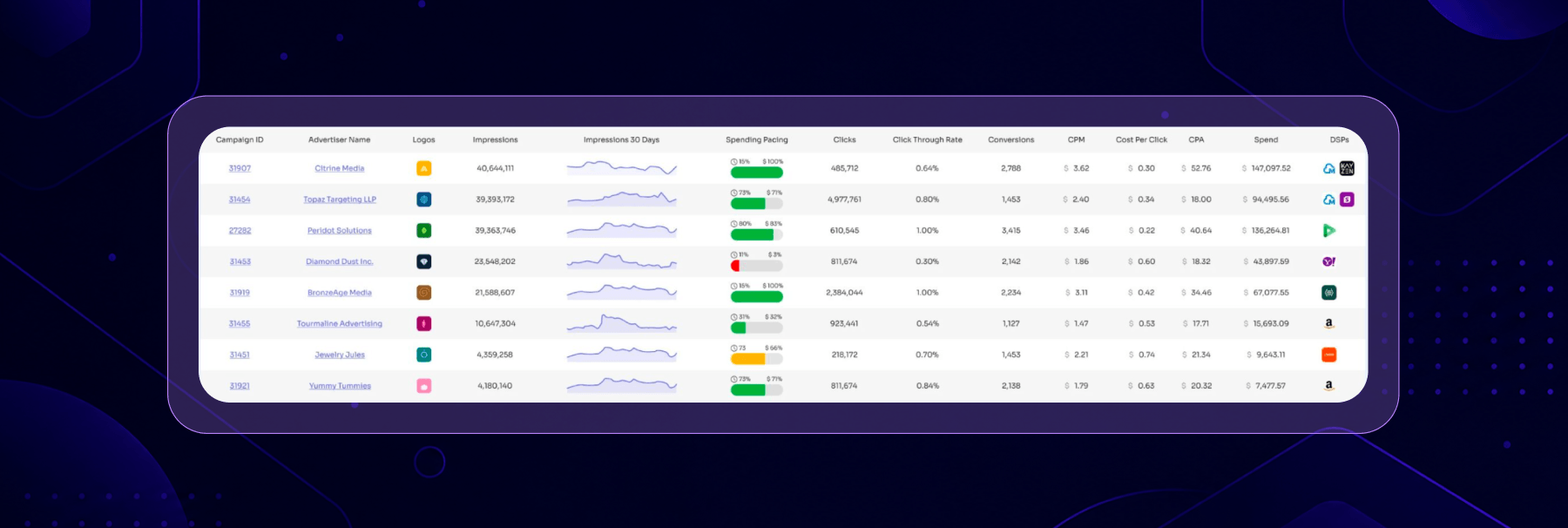
Agencies that spend between $300K and $5M annually in programmatic struggle with cross-channel frequency capping when managing multiple DSPs. AdLib DSP consolidates inventory access across 20+ DSPs and retail media networks into a single screen, complete with YouTube ad delivery.
AdLib focuses on Supply Path Optimization (SPO), streamlining the buying process to remove intermediaries. Buyers cut middleman fees and put the budget directly into media buying.
| Pros | Cons |
|---|---|
| Consolidated access across DSPs via one interface. | Requires cart integrations for e-commerce teams. |
| SPO capabilities ensure direct buying paths. | Requires programmatic trading knowledge to operate. |
| Operates on month-to-month performance pricing. | Support assumes prior AdOps experience. |
✅ Best for: Agencies spending $300K to $5M annually in programmatic requiring cross-DSP consolidation.
❌ Not for: E-commerce brands requiring automatic cart integrations, or teams lacking programmatic trading knowledge.
Brandzooka
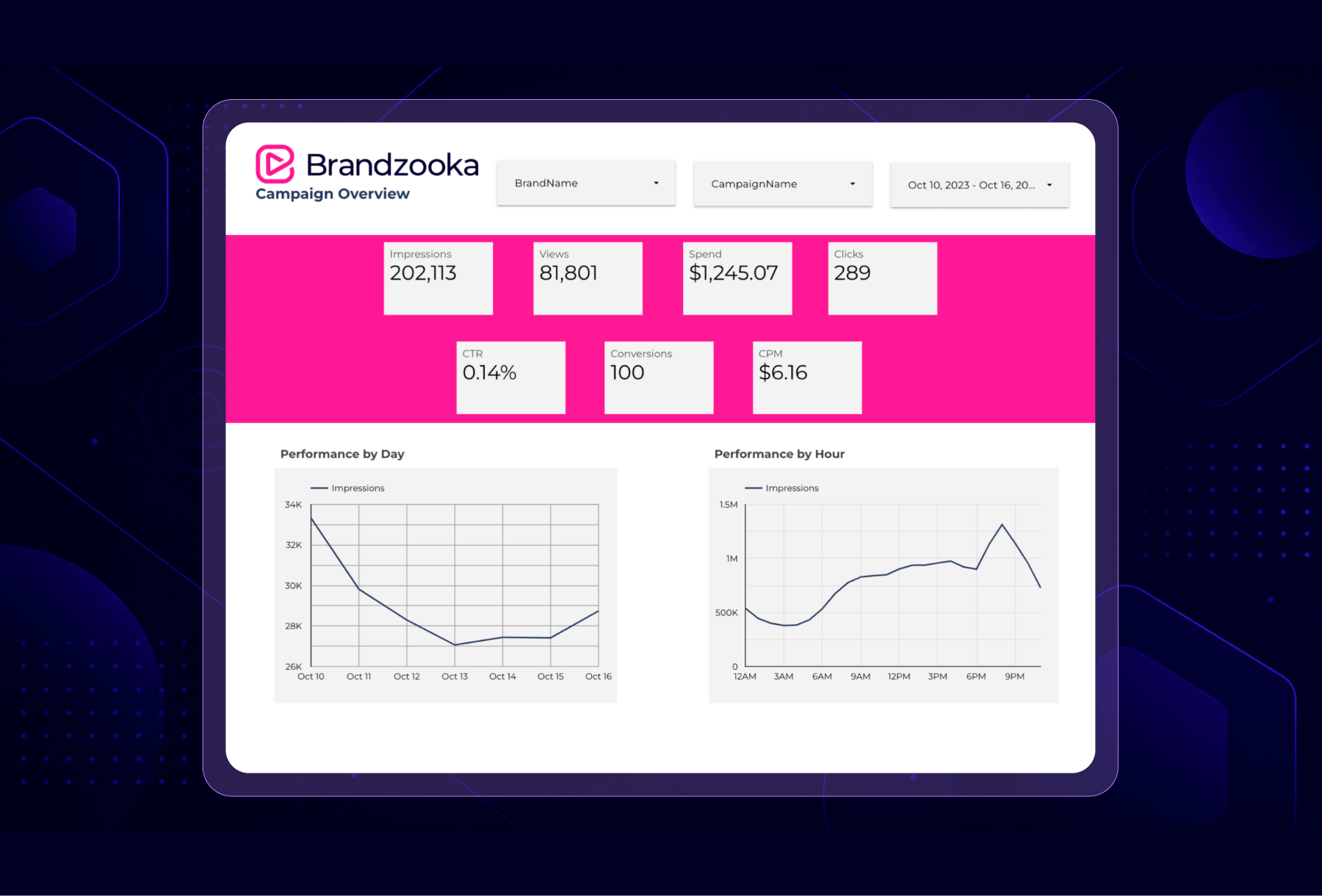
Brandzooka serves small teams, local businesses, and first-time programmatic buyers. It offers a visual workflow that translates AdTech metrics into targeting and placement costs with no subscription fees.
The platform allows campaigns to run with a minimum of $5 a day. It is accessible for marketers looking to push video and display assets across the web without the setup of enterprise DSPs.
| Pros | Cons |
|---|---|
| Zero upfront subscription or registration fees. | Pricing is a combined metric (targeting + placement costs). |
| Low barrier to entry with a $5/day minimum. | Lacks log-level data transparency. |
| Visually intuitive workflow for beginners. | Not suitable for API integrations or custom reporting. |
✅ Best for: Small teams, local businesses, and first-time buyers requiring a web and Connected TV ad setup.
❌ Not for: Media buyers requiring customized reports, API integrations, or log-level campaign data.
Criteo Commerce Growth
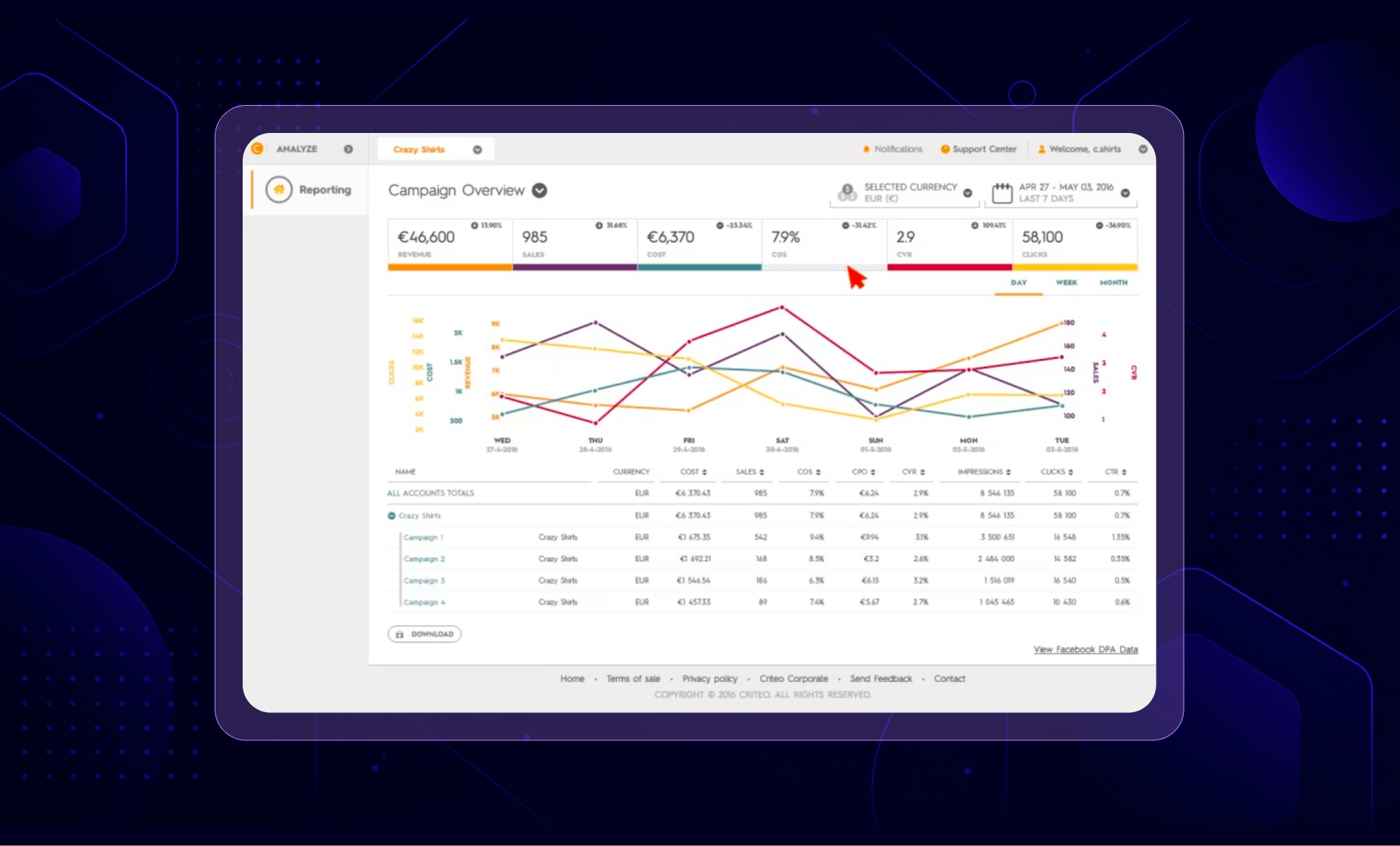
When evaluating AdRoll vs Criteo vs Choozle, Criteo functions as an enterprise e-commerce engine. Criteo is driven by a Shopper Graph capturing transaction and search signals across retail publishers.
For brands with product catalogs, Criteo delivers dynamic product personalization. The self-service dashboard is optimized starting around $10,000/mo, while managed offerings require $20,000/mo or more. It operates with a CPC/CPM model, meaning the raw clearing price remains obscured.
| Pros | Cons |
|---|---|
| Dynamic product personalization for catalogs. | Spend threshold (typically $10,000/mo+) to exit the learning phase. |
| Shopper Graph provides retail network targeting. | Utilizes a pricing model with bundled media margins. |
| Generates ROAS for established retailers. | Poor fit for B2B lead generation or non-retail verticals. |
✅ Best for: E-commerce brands with inventories requiring product personalization and retail network targeting.
❌ Not for: Non-retail brands, B2B lead generation campaigns, or companies without product data catalogs.
How to Migrate Your Retargeting Audiences Safely
Transitioning away from a legacy retargeter requires a process to protect audience tracking data and prevent revenue drop-offs. Because cookie-based audience pools cannot be exported between programmatic dashboards, AdOps experts recommend a technical migration playbook focused on dual-tracking.
1. Replacing the Pixel via Dual-Tracking Warm-up
Deploy the new DSP's tracking pixel across all conversion events (page views, cart additions, purchases) via Google Tag Manager alongside the legacy tracking pixel. Both pixels should run in parallel for 30–60 days. This allows the new platform to build first-party cookie segments and learn site conversion latency before the old account is closed.
2. Rebuilding Audience Segments via CRM First-Party Syncing
As third-party signal loss accelerates, first-party data activation is a priority for marketers. To bridge the cookie gap during migration, utilize CRM integrations (HubSpot, Salesforce) to import first-party email lists. Hashing and uploading customer contact segments to the new DSP allows for deterministic list targeting, providing a baseline while the programmatic pixel accumulates web visitor data.
3. Preserving Historical Data via Automated ETL Data Pipelines
Advertisers utilize open-source ingestion tools (like ingestr) to copy legacy database tables into first-party data warehouses (Databricks, Snowflake, or Microsoft Fabric). This ensures your data science team maintains historical continuity when evaluating direct vs programmatic advertising performance.
Frequently Asked Questions
Conclusion: Graduate from the Reseller Tax
As media buys mature, brands must control their programmatic infrastructure to prevent sacrificing 30% of budgets to hidden markups and cannibalizing organic traffic through inflated attribution models.
Take control of your margins, access raw bidstream data, and execute omnichannel campaigns on your terms.
Ready to see transparency? Deposit $100. Set your targeting. Your first campaign goes live today.