
TL;DR:
- Client-side tracking no longer provides a complete picture of campaign performance. Signal loss, browser limitations, and the rejection of third-party cookies lead to the loss of some conversions and inaccurate attribution.
- In 2026, the new standard will be server-side conversion tracking (S2S), first-party data activation, and independent measurement systems that allow you to verify data from advertising platforms with CRM and backend analytics.
- Instead of optimizing for clicks or platform-reported conversions, you should focus on confirmed business results using post-cookie attribution models and transparent measurement mechanisms.
- According to Epom’s data, publishers who have switched from basic client-side tracking to more stable S2S integrations report an average of 25% more recorded conversions due to reduced data loss and more accurate tracking of user actions.
At first glance, everything looks promising: CPA is within target values, ROAS is growing, and the number of conversions is gradually increasing. However, when you compare these numbers with CRM or backend analytics data, the optimistic picture begins to crumble.
Some leads never become customers, revenue turns out to be lower than forecast, and the advertising platform indicators do not match what the business sees. For performance media buyers, agencies, and ad network founders, such discrepancies are no longer isolated cases — today, they are one of the key problems.
That’s why in 2026, an effective conversion strategy is no longer just about creatives, bids, or landing pages. The disappearance of third-party cookies, signal loss, and increasingly complex cross-device customer journeys make traditional attribution models less reliable. As a result, marketers get ghost conversions — conversions that appear in advertising platform reports but are not confirmed by CRM or internal business data.
💡 Epom Pro Tip: Never rely exclusively on a walled-garden DSP’s dashboard as your single source of truth. Self-attributing platforms overestimate their own incremental contribution to conversions by 25–40%.
To improve conversion rates, companies need a different approach to measurement. In this article, we’ll look at how to implement it and use programmatic media buying optimization to make more accurate and profitable decisions.
The 2026 AdTech Reset: Why Legacy Conversion Strategies Are Failing
A few years ago, most marketers didn't have to think much about how conversions were recorded. Browser pixels handled the job well enough. Someone clicked an ad, visited a landing page, made a purchase or filled out a form, and the platform reported a conversion.
That setup is becoming less dependable. Privacy restrictions, the phase-out of third-party cookies, AI-assisted shopping, and new search experiences all remove pieces of the customer journey from view. The result is sad — the numbers in an advertising dashboard do not reflect what actually happened anymore.
McKinsey estimates that 10–35% of e-commerce transactions are already initiated or completed by AI-native shopping agents. Rather than comparing products across multiple websites themselves, consumers are increasingly delegating research to AI assistants. As these interactions happen outside the familiar click-to-landing-page flow, many long-established conversion strategies struggle to capture the full path to purchase or accurately measure marketing impact.
At the same time, the problem lies not only in changing user behavior, but also in evaluating campaign results. According to Measured, self-attributing platforms can overestimate their own contribution to marketing results by 25–40%. Many performance media buyers have already encountered this situation: the dashboard shows a successful campaign, but the CRM paints a completely different picture.
Another challenge has been the rapid spread of AI search. According to Gartner and Semrush, Google AI Mode already leads to a 93% zero-click rate for certain categories of queries, when the user receives an answer without going to the site. This calls into question traditional approaches to conversion strategy, which rely on visiting the landing page as the key stage of conversion.
In the new environment, you don’t want to simply attract more clicks. Instead, it makes sense to build your conversion strategy around first-party data, independent measurement, and server-side conversion tracking.
Bypassing Signal Loss with CAPI and Server-Side Tracking
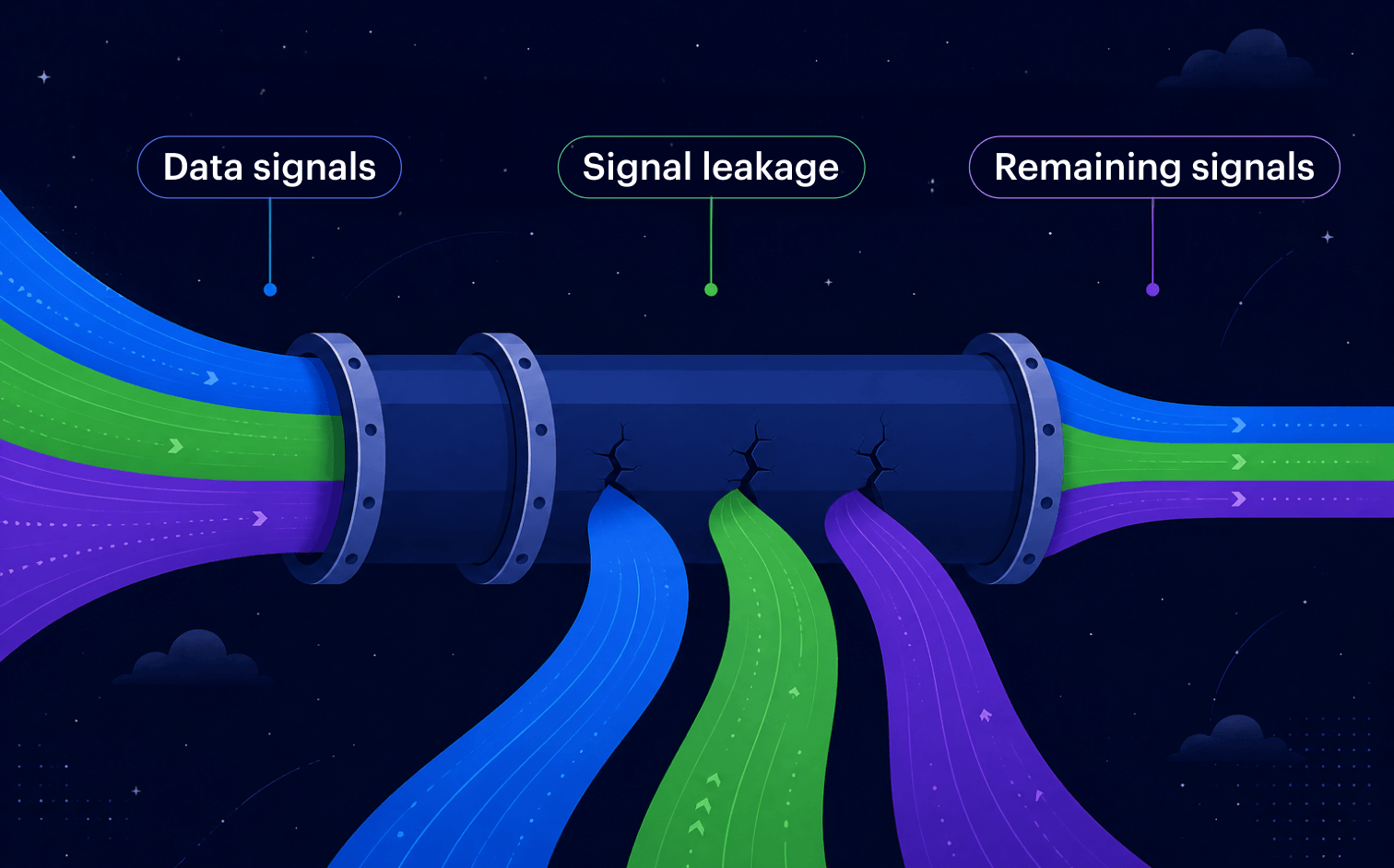
Relying on browser-based tracking in a privacy-first web results in algorithmic starvation. If the DSP bidding engine does not receive conversion postbacks, it cannot optimize bids, causing CPA to rapidly increase.
To restore signal integrity, AdOps teams are abandoning the browser entirely.
| Tracking Infrastructure | Mechanism | Vulnerabilities | 2026 Viability |
|---|---|---|---|
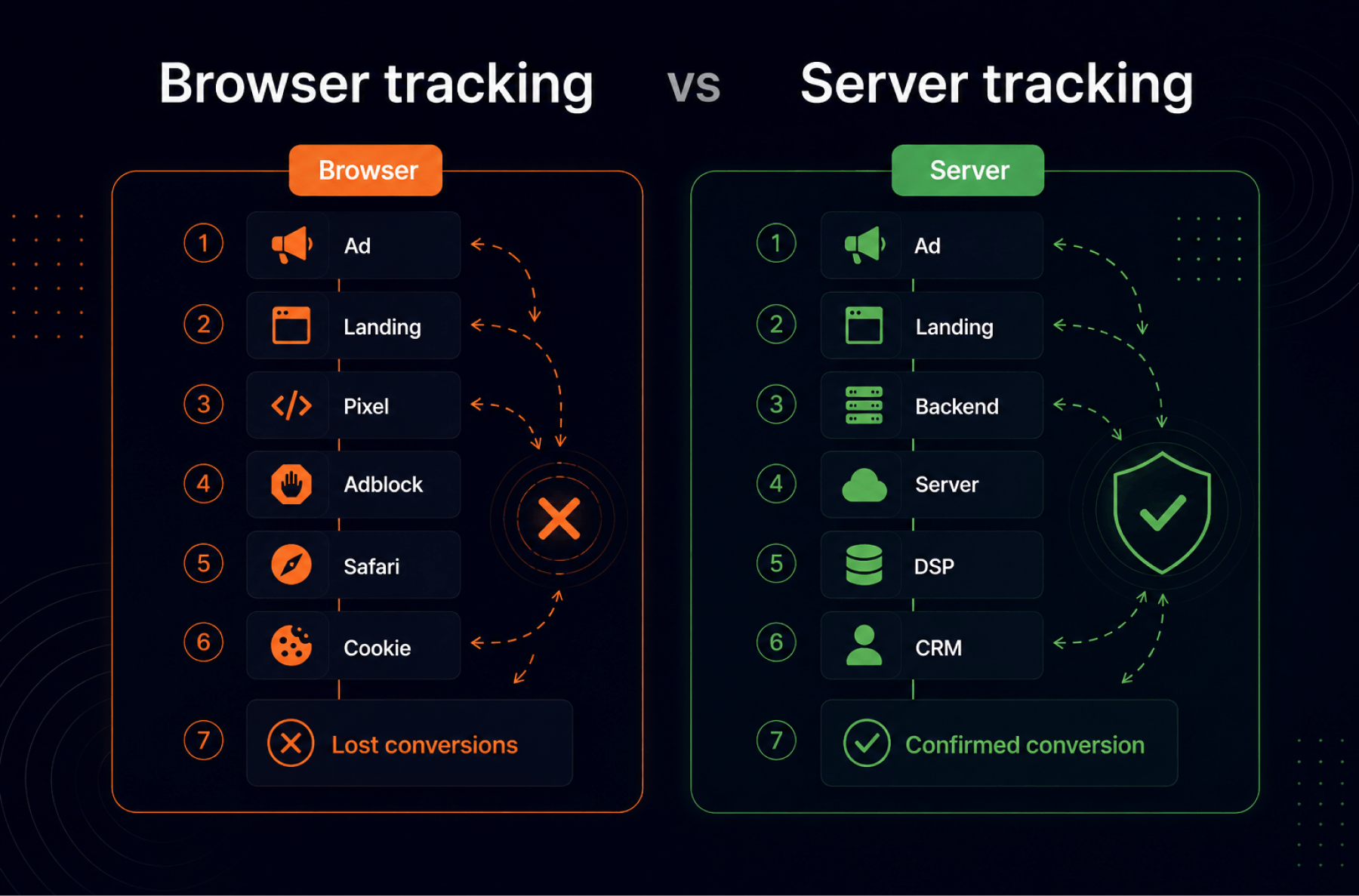
| Client-Side (Browser Pixels) | Fires a script in the user's browser upon conversion. | Blocked by iOS ATT, AdBlockers, Safari ITP, and GDPR consent layers. Fails to capture ~60% of modern conversions. | Obsolete for primary conversion routing. |
| Server-to-Server (S2S Postbacks) | The advertiser’s backend server pings the ad server directly via API upon a confirmed conversion. | Requires developer integration; immune to browser-level ad blockers. | Mandatory for accurate attribution and algorithm training. |
| S2S Piggybacking | Forwards received conversion data to secondary platforms (e.g., passing Epom data to a 3rd party) without duplicating tracking logic. | Latency dependent. | Highly effective for multi-platform measurement. |
To execute this without probabilistic guesswork, Epom utilizes deterministic SUB_ID matching. The platform combines the Action Key with campaign parameters (device type, geo-routing) to accurately match a server-side conversion with the originating impression—requiring zero browser-based identifiers. Furthermore, maintaining a 13ms average response time ensures event processing remains stable even during massive traffic spikes.
Overcoming Fragmented Tool Pain: Consolidating Your Programmatic Stack
For many performance agencies and ad ops teams, the main problem has long been not bids, targeting, or creatives. Reporting is the most time-consuming, invisible task.
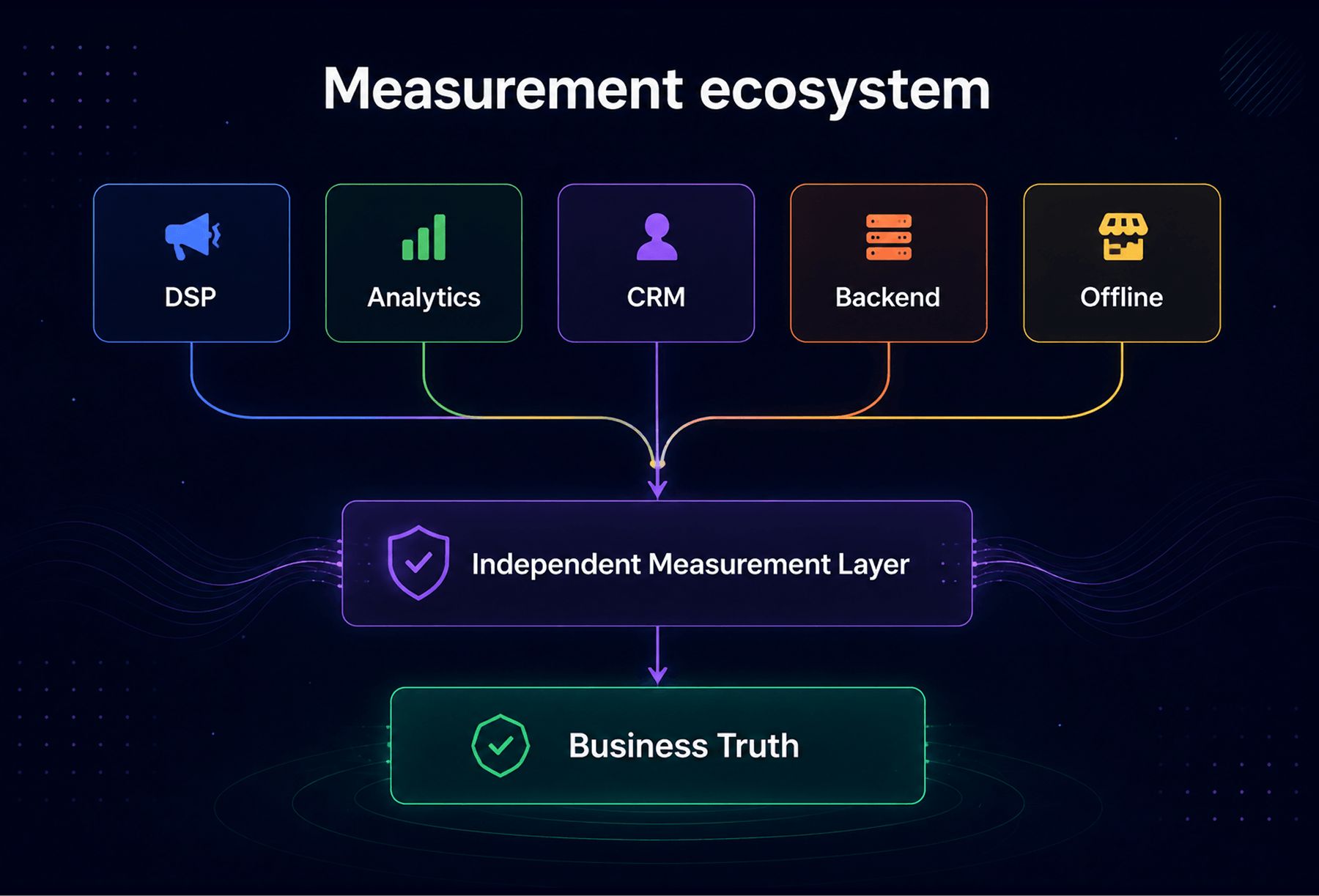
There is no shortage of data — on the contrary, there is too much of it. Some of the metrics come from DSPs, analytics are available separately, CRM data is stored elsewhere… Before the team can start discussing campaign results, they have to export data, compare numbers from different platforms, look for reasons for discrepancies, and decide which system to trust. And all this happens before the actual optimization begins.
Such processes accumulate gradually. Each new tool solves a local problem, but at the same time adds another data source to check. At some point, media buyers spend almost as much time reconciling metrics as working with campaigns. This makes it much harder to understand which changes actually improve conversion rates and support effective conversion marketing, and which ones simply create the illusion of improvement through different attribution models.
To solve this problem, some teams are rethinking the entire architecture of their programmatic stack instead of adding more standalone tools. This is especially important for companies managing programmatic operations in-house, where campaign management, conversion tracking, reporting, and optimization need to work as a single system rather than disconnected workflows. Less time spent reviewing spreadsheets and investigating discrepancies means more time for testing hypotheses and making informed optimization decisions.
According to Epom’s data, consolidating tools reduces reporting time by 70% and manual operational work by 35%. What’s even more important, the team stops constantly comparing numbers between different systems and can finally focus on what directly affects campaign results.
Squeezing Programmatic Fee Transparency & Controlling Supply Paths
Even with properly configured conversion tracking, part of the advertising budget can be lost before the impression affects the user. The reason is a complex programmatic supply chain, where each intermediary adds its own commission, and opaque inventory supply routes that make it difficult to control costs. The good news is, there’s a supply path optimization (SPO) — an approach that helps you buy the same inventory through more efficient and transparent channels.
Another problem is MFA (Made For Advertising) sites. They are created primarily to monetize advertising, and not to interact with the audience. They often generate cheap impressions and attribute view-through conversions to themselves, although their real contribution to the conversion is minimal. As a result, campaigns look more successful than they really are, and the budget is gradually spent on low-quality inventory.
So, the answers to the described problems are controlling supply paths, eliminating unnecessary intermediaries, and collaborating with proven supply-side platform partnerships. By doing so, you can reduce hidden costs and lower CPA by directing budget to sources that truly create business results.
The Technical Blueprint: Building a Cookieless Conversion Tracking Framework
Building a successful conversion optimization strategy in a cookieless environment doesn’t start with choosing a new attribution model. First, you need to change the source of conversion data. Instead of relying on a browser pixel, which may not work due to ad blockers, browser restrictions, or refusal of third-party cookies, the event should be generated on the server and transmitted directly to the advertising platform.
Next, you need to determine how exactly these events will enter the system. The most common approach is S2S postback tracking, which relies on server-to-server (S2S) postbacks. When a user performs a targeted action—places an order, registers, or buys a subscription—the backend automatically sends a server-to-server request to the platform. Since the browser is no longer involved in this process, the risk of losing conversion data is significantly smaller.
The second option is Piggybacks. Unlike S2S Postbacks, the system transfers the already received conversion information to other platforms. So, you can use one event for multiple systems at the same time, without duplicating tracking logic.
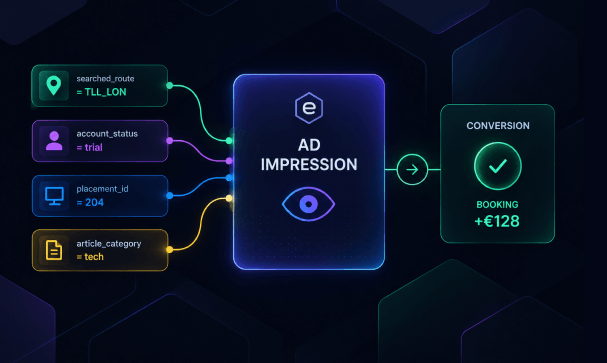
Once event delivery is set up, the next task is to store enough information to associate each conversion with a specific campaign correctly. For example, Epom uses SUB_ID for this. It combines the Action Key with additional campaign parameters, such as device type, GEO, and others. Thanks to this, the platform can accurately match the conversion with the corresponding impression or click without using browser-based identifiers.
If your campaign includes several conversion events—such as registration, purchase, and recurring payment — ACTION DATA lets you track each one separately. Every event gets its own Action Key instead of being merged into a single conversion. This gives you a clearer picture of the customer journey and helps you measure the performance of each step.
No less important is the stability of the infrastructure itself. During peak loads, the system must have time to receive, process, and record each event without delays. For example, Epom supports an average response time of 13 ms and 99.9% uptime, which allows for stable event processing even during sudden traffic spikes.
How to Improve API Match Rates and Signal Security
After moving to server-side tracking, it’s important not only to collect conversion data but also to ensure that the advertising platform can accurately match it to users. This is a critical step in understanding how to increase conversions, because optimization algorithms are only as effective as the signals they receive. That’s why many companies rely on structured first-party data transmitted via APIs. This approach supports privacy-preserving ad measurement while helping organizations comply with CPRA and EU AI Act requirements.
However, the quality of the signal depends not only on the data itself, but also on how the integration works. According to observations from developers on Reddit who have implemented Conversion APIs (CAPIs) — server-side integrations for transmitting conversion data to advertising platforms — configuration errors often lead to Event Match Quality (EMQ) below 6–7 points. As a result, algorithms must compensate for the lack of data by modeling so-called ghost conversions, which negatively affects optimization quality.
What's the solution? Deterministic matching relies on verified identifiers instead of probabilistic models, increasing match rates from approximately 60% to 90%. However, even deterministic matching cannot eliminate every attribution gap. So, modern adtech platforms combine it with cookieless fallback technologies. For example, Epom follows this approach by using a proprietary fingerprinting system that provides a secure fallback mechanism whenever traditional identification methods are unavailable.
Algorithmic Control Tactics: Managing Machine Learning in Media Buying
Modern media buyers no longer just launch campaigns or handle programmatic campaign setup — they manage how advertising algorithms learn. Machine learning models now drive most decisions about bidding, impressions, and audience discovery. So the role of the media buyer is to provide the algorithms with stable signals, sufficient data, and predictable conditions for learning. This is how the traditional marketer gradually transforms into an algorithmic handler. Below are four practices that help you get around the typical limitations of advertising algorithms and achieve more consistent results.
- Step-Function Budget Scaling: Increasing budgets by 50% overnight forces the algorithm back into the learning phase. Scale budgets in 20% increments, holding them flat for 7–10 days to allow the DSP to adapt to the new spending velocity.
- Thresholding (Max Clicks to Max Conversions): Launching a cold campaign on "Max Conversions" starves the algorithm. Run "Max Clicks" to force traffic volume until the campaign registers a baseline of ~30 deterministic conversions, then switch to conversion-based bidding.
💡 Epom Pro Tip: Never launch a cold programmatic campaign on a "Max Conversions" bid strategy. The bidding engine lacks the historical data required to find your buyers, resulting in random bidding and rapid CPA spikes.
- Parallel Intent Scaling: Grouping divergent audience intents into a single campaign confuses bid optimization. Segment campaigns strictly by product usage scenario or geo-tier to provide the algorithm with a unified behavioral signal.
- Lead Event Proxies (Value-Based Bidding): For extended B2B sales cycles, send server-side Lead events with an estimated_value parameter. This feeds the DSP predictive revenue data, allowing Value-Based Bidding (VBB) to function weeks before the actual CRM sale closes.
Combatting CPA Creep and Fraud with Rule-Based Bidding
Signal loss is only half of the conversion problem; the other half is budget bleed via invalid traffic (IVT) and creative fatigue.
To automate margin protection, modern AdOps relies on two programmatic safety nets:
- The Epom I2C Algorithm (Conversion Rate Optimization): Rather than manually adjusting banner weights, Epom’s machine learning continuously analyzes actual deterministic actions (installs, sales). Creatives with higher conversion velocities automatically receive impression priority. Internal data shows automated optimization yields a 30–40% higher ROI versus manual intervention.
- Pre-Bid Fraud Filtering: Epom DSP integrates directly with Pixalate to filter bot traffic at the bid-stream level, maintaining Invalid Traffic (IVT) rates strictly below 2%.
From Proxy Metrics to True Incremental Value: Decoupling Your Attribution
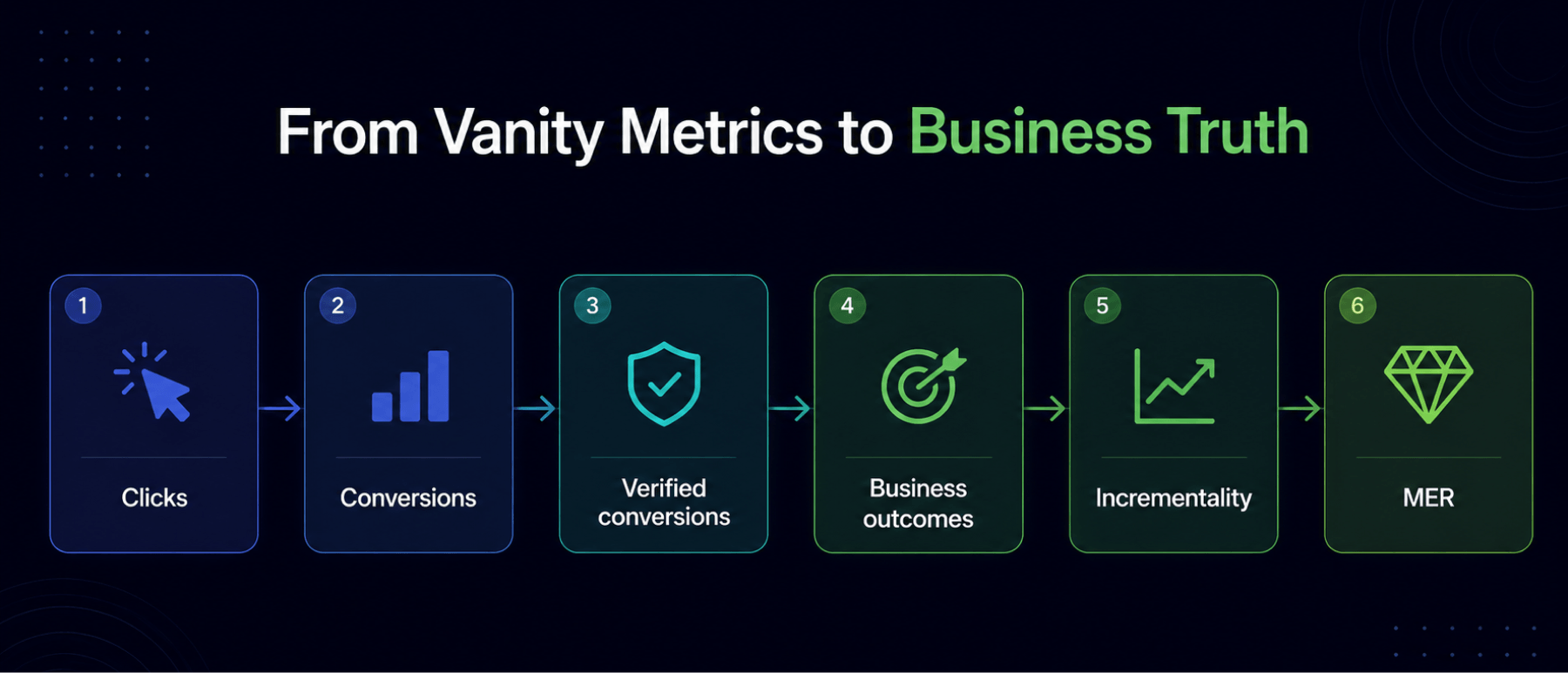
Clicks, viewability, CPM, and even the number of conversions only show part of the picture. They help evaluate a particular campaign, but they don't answer the main question: did the ad really attract new customers who wouldn't have been there without it?
It's even more difficult to evaluate effectiveness due to platform self-attribution. Each advertising platform seeks to "credit" the conversion to itself, so the same sale can appear in Google Ads, Meta, and other systems' reports at the same time. As a result, the numbers in individual advertising cabinets look convincing, but do not add up to a single picture.
💡 Epom Pro Tip: When CPAs rise, amateur media buyers engage in expanding the lookback window (e.g., from 7-day click to 28-day click/1-day view) simply to inflate dashboard numbers. To measure true business impact, decouple your reporting. Use ROAS purely for day-to-day tactical DSP adjustments, and use MER (Marketing Efficiency Ratio) for executive financial reporting.
Have you heard the word “incrementality”? Over the last year, it has already become the main metric of advertising effectiveness. It shows not the number of recorded conversions, but what additional result the campaign actually created. This approach also helps avoid so-called attribution window shopping — the practice of changing the attribution window just to get better indicators in the reports, and not to objectively assess the contribution of advertising.
Another metric that is gaining popularity in this measurement model is Marketing Efficiency Ratio (MER). Unlike ROAS, which evaluates the effectiveness of a single campaign or advertising channel, MER compares total revenue to total marketing spend. This allows you to assess how effectively marketing is working as a whole, not just individual advertising platforms.
At the same time, no single tool provides a complete answer on its own. So it often makes sense to use hybrid measurement stacks that combine attribution, incrementality tests, server-side tracking, and business metrics. In this case, you understand not only where the conversion occurred, but also whether the ad actually influenced the user’s decision.
Automating Margins via the Epom I2C Algorithm
In the past, media buyers had to manually compare ad performance and decide which creatives deserved more budget. Today, machine learning can do much of that work automatically and in real time.
One such solution is the Conversion Rate Optimization (I2C) Algorithm in Epom DSP. The algorithm continuously analyzes actual Actions — conversions, app installs, downloads, and other targeted actions — and, based on this data, automatically changes Banner Weights. As a result, creatives that provide better outcomes receive a larger share of impressions, and less effective ones gradually lose priority. All this happens automatically, without manual intervention from the media buyer.
It helps you respond faster to changes in campaign performance and use the advertising budget more efficiently. Instead of constant manual adjustments, the system automatically optimizes the distribution of traffic between creatives, focusing on real results. Based on Epom data, using automatic optimization tools can provide 30–40% higher ROI compared to campaigns without such optimization.
Niche Playbooks: RMNs, DOOH, and First-Party Identity Resolution
One-size-fits-all approaches to advertising are failing. Each channel has its own challenges, but for retail media networks (RMNs), DOOH operators, and digital publishers, there is a common trend: success increasingly depends on how effectively a company uses first-party data and measures the real impact of advertising campaigns.
For DOOH operators, one of the biggest challenges has always been assessing the effectiveness of advertising after a person has seen a digital billboard. Modern technologies help connect offline contact with subsequent digital actions of the user — the so-called physical-to-digital conversions. With geofencing, you can identify the audience that was in the vicinity of the advertising screen. And Epom's Retargeting Engine allows you to re-engage with these users through mobile advertising using pixels or IFA/Device IDs.
For digital publishers, the challenge is different: how to leverage valuable first-party data without revealing information about individual users. That’s what Data Clean Rooms (DCRs) are for — secure environments where companies can compare their data without sharing personal information with each other. This allows them to create more accurate audiences while meeting modern privacy requirements.
💡 Epom Pro Tip: A Digital Out-of-Home (DOOH) campaign does not end when the user walks past the screen. By utilizing mobile geofencing, you can log the Device IDs (IFA) of users who enter the screen's physical radius. You can then route those IDs directly into the Epom Retargeting Engine to serve sequential display ads to those exact mobile devices hours later.
Retail Media Networks are also evolving in a similar direction. While they used to focus mostly on advertising within retailers’ own sites and apps, today more and more campaigns are going beyond these ecosystems. As a result, off-site RMN extensions are growing three times faster than on-site, allowing brands to activate their first-party audiences on the open web and in other digital channels.
Despite different usage scenarios, all these approaches are developing in the same direction: first-party identity resolution is gradually becoming the foundation of modern advertising, helping to measure results, expand audience reach, and work with data without using third-party cookies.
There’s no single tactic that guarantees better programmatic performance anymore. Success comes from combining accurate measurement, reliable data, AI-powered optimization, and privacy-friendly targeting into one workflow. The advertisers who get the best results are the ones who clearly understand where their budget is going and can adjust campaigns based on real data.
Stop relying on self-attributing platforms to measure their own success. Gain transparent attribution, optimize every dollar of ad spend, and maximize your programmatic margins with the tools built for modern media buying.
Create your Epom account and start optimizing today