
AdButler shows a $179/month starting price, but that base plan leaves out several things a growing network uses daily: targeting, an API, rich media, and log-level data all come as separate add-ons on the lower tiers. Are there any AdButler alternatives with a more affordable and coherent pricing?
Several of tiered features — geo-targeting and enhanced analytics among them — are capabilities most networks would expect in a standard plan by now. The advertised minimum price and the price a working network setup costs are not the same number.
Although cost is the most common reason ad networks start comparing AdButler alternatives, it isn't the only one. Reporting that needs manual reformatting before it's client-ready, caps on advertisers and users at the lower tiers, and CTR-only optimization come up in reviews too. This guide compares seven alternatives across pricing, white-label depth, reporting, and workflow control, so you can match a platform to how your ad network operates.
Running a network on AdButler and watching the add-ons stack up? Epom Ad Server prices by impression volume only — targeting and formats included at every tier. Start your free trial and see for yourself.
TL;DR:
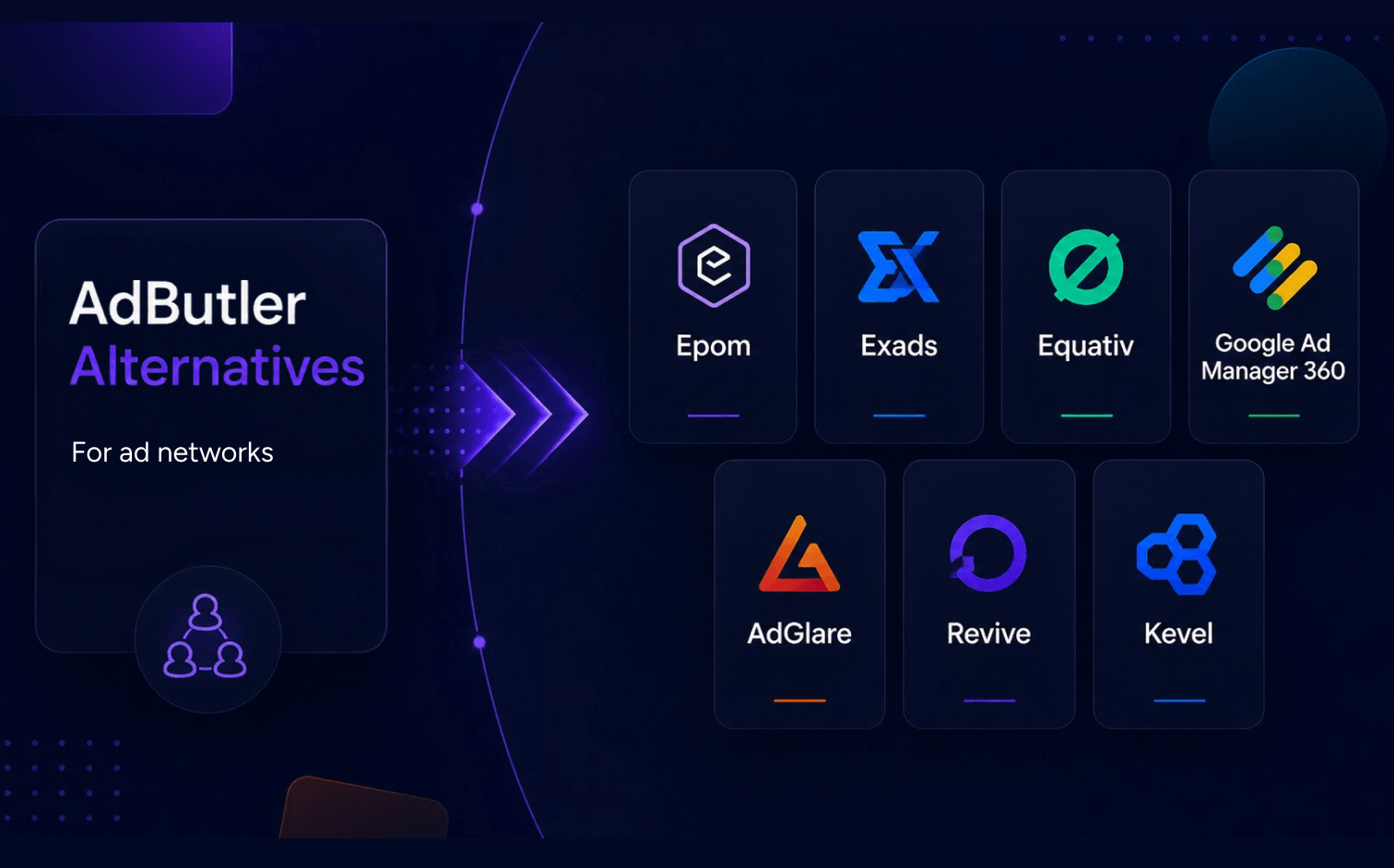
- AdButler alternatives for ad networks are Epom, Exads, AdGlare, Revive, Equativ, Google Ad Manager 360, and Kevel.
- AdButler's tiers list a base price, with API access, rich media, targeting, and log-level data available as separate add-ons — and targeting remains an add-on even on the $2,988/month Advanced plan.
- Beyond pricing, AdButler's lower tiers cap advertisers, users, and zones outright, and its optimization is CTR-only versus multi-metric approaches elsewhere.
- Best open-source alternative: Revive Adserver is the free, self-hosted route for teams with the engineering time to run it themselves.
- Best overall alternatives: Epom and Exads are the most direct white-label replacements built specifically for reselling inventory under your own brand, both with no vertical restrictions.
- Best alternatives with demand: Equativ and Google Ad Manager 360 fit if you specifically need an SSP/DSP stack or AdX demand access — neither is built network-first the way the others are.
- Least suitable alternatives: AdGlare offers free white-labeling and transparent pricing but no programmatic at any tier; Kevel is API-first and built for retail media and marketplaces, not display networks.
Where AdButler Reaches Its Limits for Growing Networks
AdButler's four tiers look straightforward until you check what's included. Ad server pricing isn't the only place the model tightens — the same friction shows up consistently across public reviews and ad ops forums.
Key Features Cost Extra on Top of the Base Price
| Plan | Price | Ad requests | Advertisers | API | Rich media/native | Targeting |
|---|---|---|---|---|---|---|
| Essentials | $179/mo | 1M | 10 max | Add-on ($550/mo) | Add-on | Add-on |
| Standard | $682/mo | 10M | 50 max | Add-on ($550/mo) | Add-on | Add-on |
| Advanced | $2,988/mo | 50M | 100 max | Included | Included | Still add-on |
| Enterprise | Custom | Unlimited | Unlimited | Included | Included | Included |
Disclaimer: All AdButler and Epom pricing figures here reflect published rates as of mid-2026. Vendors adjust plans and add-on structures over time, so confirm current numbers on each provider's pricing page before deciding.
Even at $2,988/month, targeting is a separate line item — $275/month plus $0.005 per CPM. Log-level data adds $1,100/month plus CPM on every tier below Enterprise. White-labeling starts at $59/month on top of whichever plan you're on.
This isn't only our read of the pricing page. In a detailed G2 review, a partnership manager who praised AdButler's control = still flagged that geo-targeting and better analytics are paid add-ons that should be included in the base plan at this price, that the API documentation is weak for anyone who isn't already a developer, and that billing is monthly-only — a short campaign still costs a full month. G2's own aggregated review summary lists the same themes: complicated budget management tied to unclear pricing for additional modules.
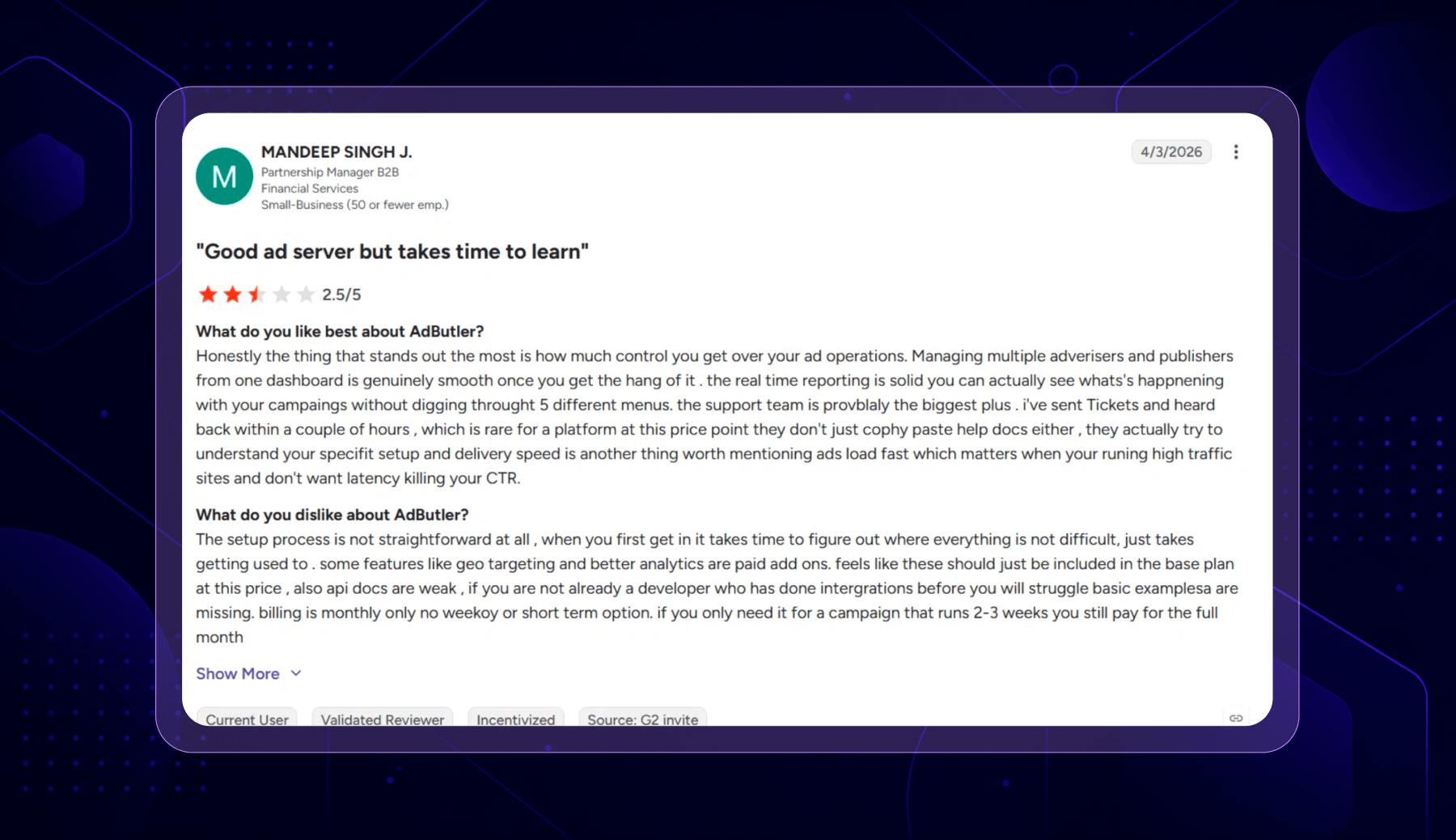
The structure also caps by advertiser count: plans quoted around $2,000/year top out near 15 advertisers, so what a network pays is set by the advertiser ceiling, not impression volume alone.
Lower Tiers Limit How Many Advertisers and Users You Can Add
Essentials and Standard cap you at a fixed number of advertisers, users, and zones regardless of what you're willing to pay for add-ons within that tier.
Account structure is comparatively fixed too: AdButler works around publisher, advertiser, and network supervisor account types — clean for a straightforward setup, but limiting when a network needs to give ten different clients ten different visibility levels.
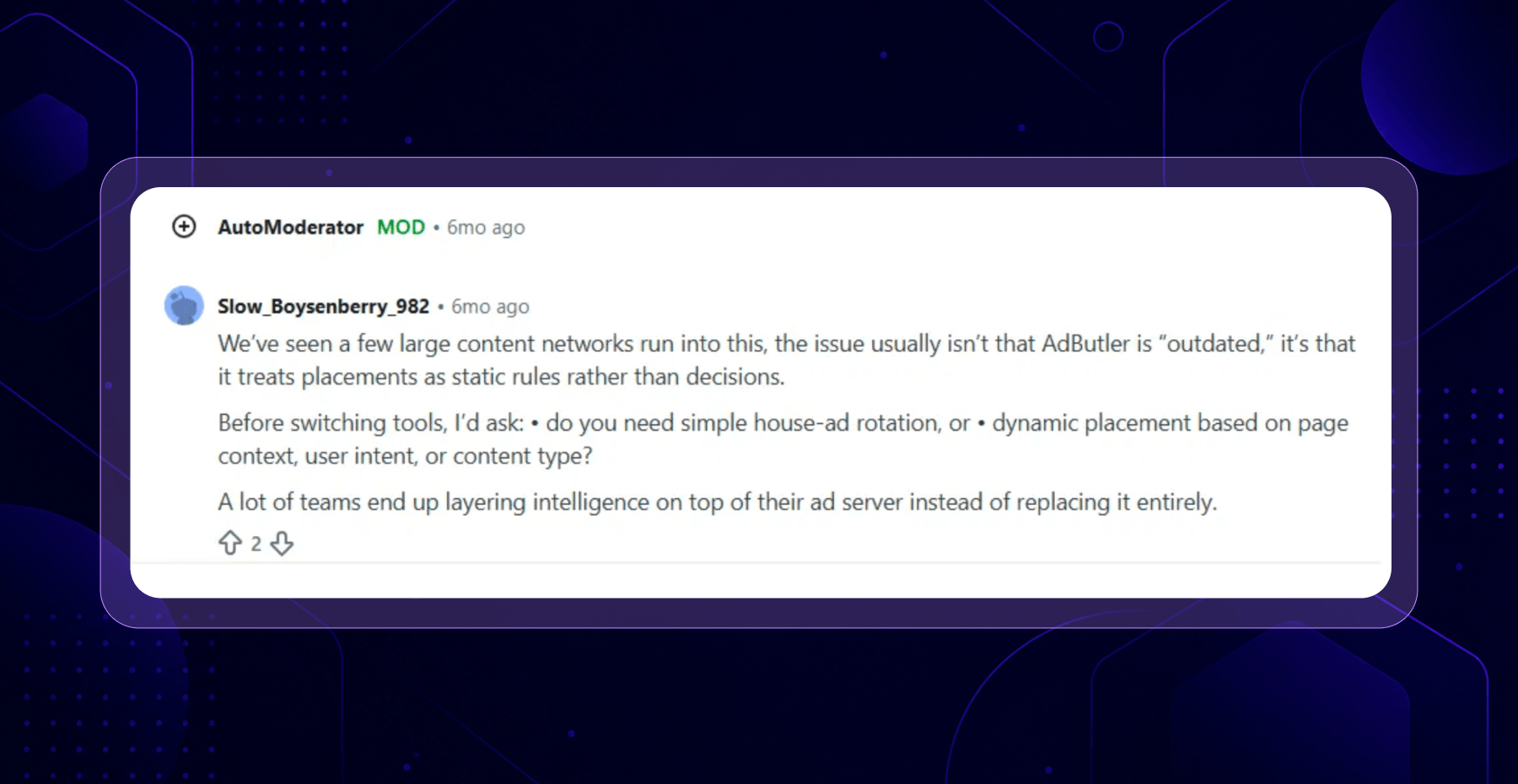
The scaling pain shows up in the field. In one ad ops thread, a practitioner who had watched large content networks hit this described the core issue as AdButler treating ad placements as static rules rather than decisions — the reason teams end up layering intelligence on top of the ad server instead of relying on it alone. Reviewers running one account across multiple clients echo the softer version: it works, but it can get pricey as you scale, especially for a smaller operation.
Limited Formats, Optimization, and Reporting in Basic Plans
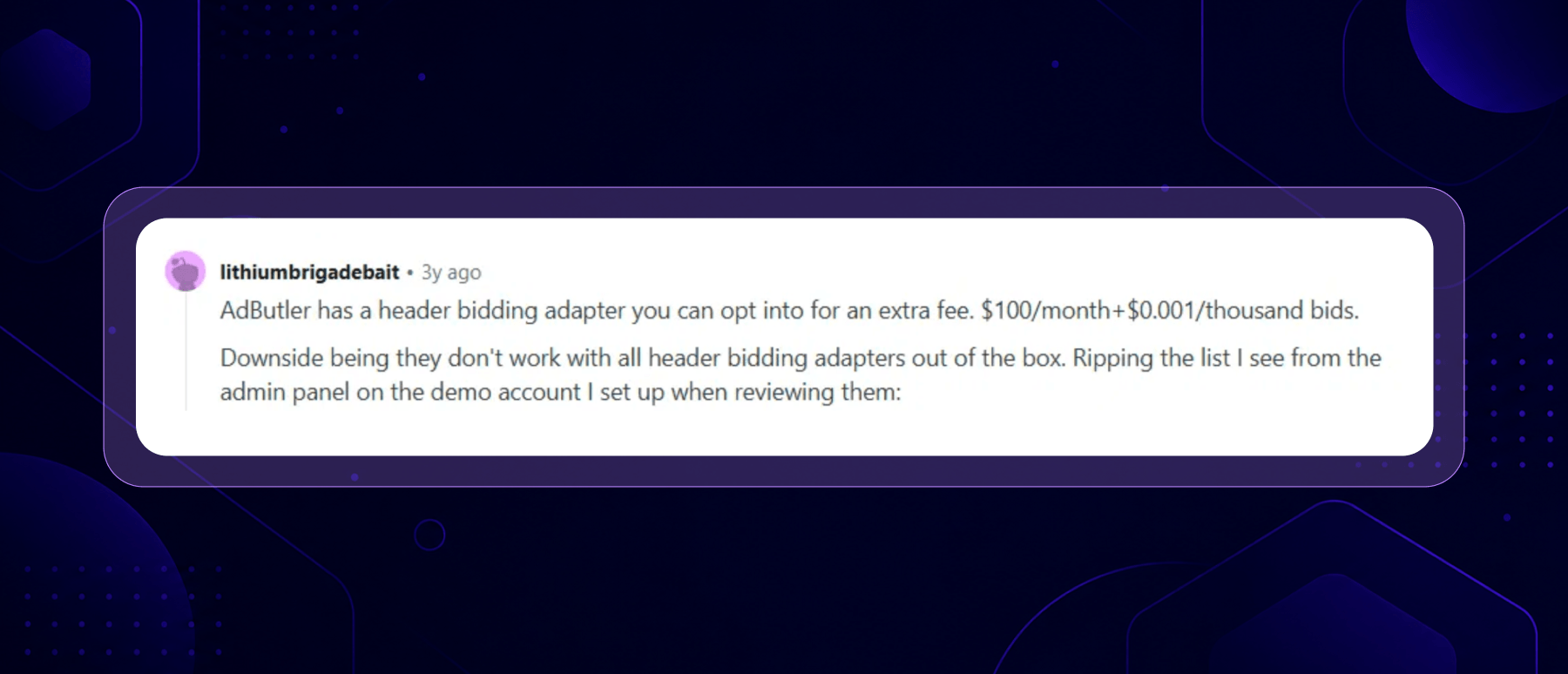
AdButler's Essentials tier doesn't include video at all — that only becomes available on Standard and up. Auto-optimization is CTR-based only across the product. Its header bidding is an opt-in add-on ($100/month plus $0.001 per 1,000 bids), and ad ops users note the adapters don't all work out of the box.
A network running mixed display, video, and CTV inventory, or working to improve yield rather than track it, hits a real capability ceiling here. Several alternatives on this list optimize for CPA and eCPM alongside CTR, and cover OTT and DOOH from their base tier.
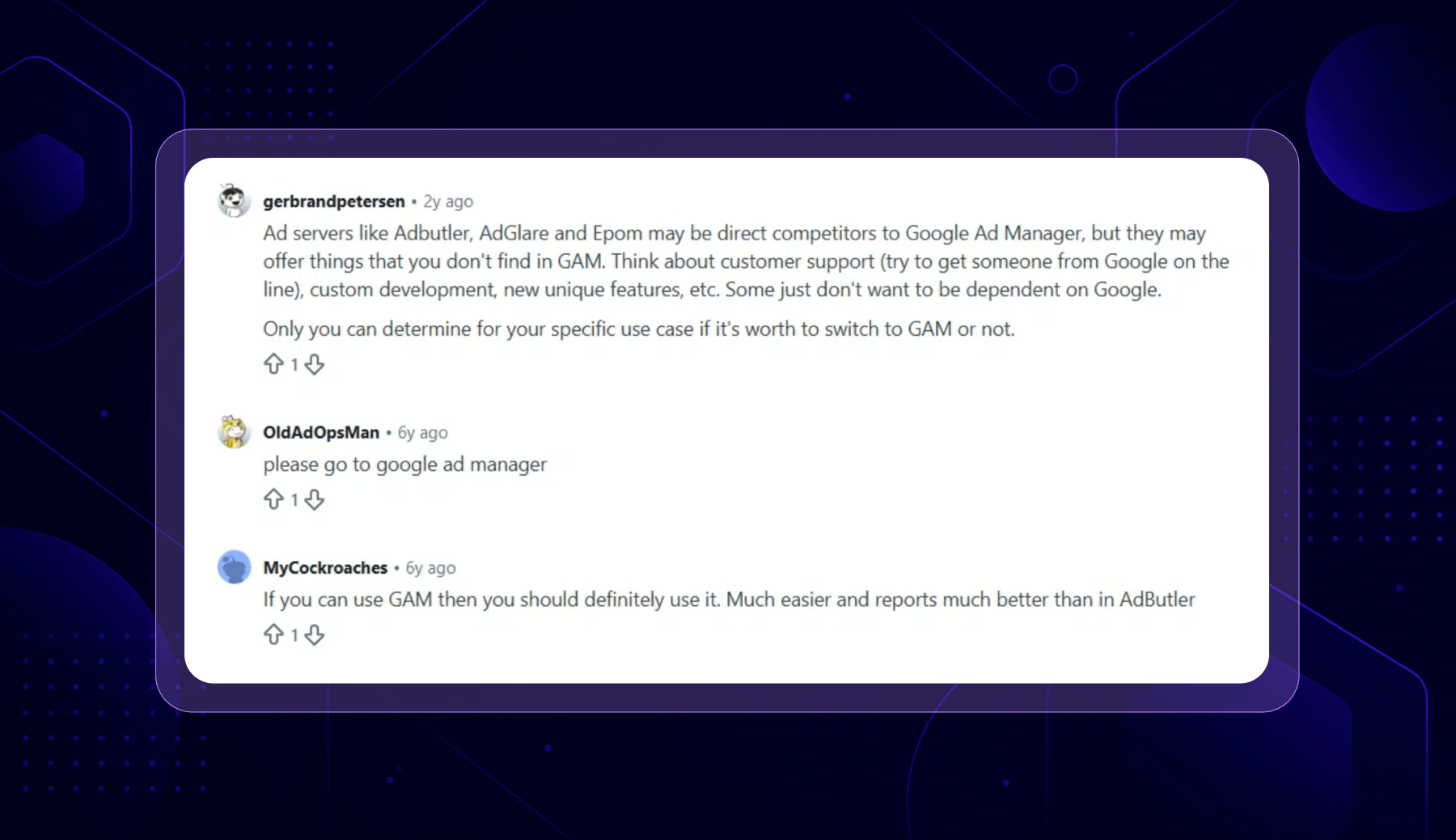
Reporting is the other recurring theme. Users report exporting CSVs but needing to reformat them manually before they're client-ready, and in GAM-comparison threads, ad ops practitioners repeatedly say reporting is smoother elsewhere. For a network regularly sending reports to clients, that manual step is recurring overhead.
AdButler's support is well-reviewed, and its Essentials and Standard tiers get a small operation running quickly. For most growing networks, the friction concentrates in one place: the point where advertiser count, format needs, or targeting requirements outgrow what the base tier was priced for.
How We Evaluated These Alternatives
We scored each of these white-label ad server alternatives against five criteria that matter for choosing the best ad server for ad networks managing multiple clients, not a single-tenant publisher. The same framework works for evaluating any ad server alternatives, not just the ones on this list:
- White-label readiness — is it included, or a paid add-on gated to a top tier?
- Reporting depth — log-level data, custom metrics, export formats
- Workflow control — roles, sub-accounts, permission granularity
- Support quality — included with the base plan or split into paid tiers?
- Commercial flexibility — pricing models, advertiser/user caps, contract terms
📖 For a broader breakdown of what to weigh beyond this list, see how to choose an ad server and the ad server features that matter most to networks.
The Best AdButler Alternatives for Ad Networks
Epom Ad Server
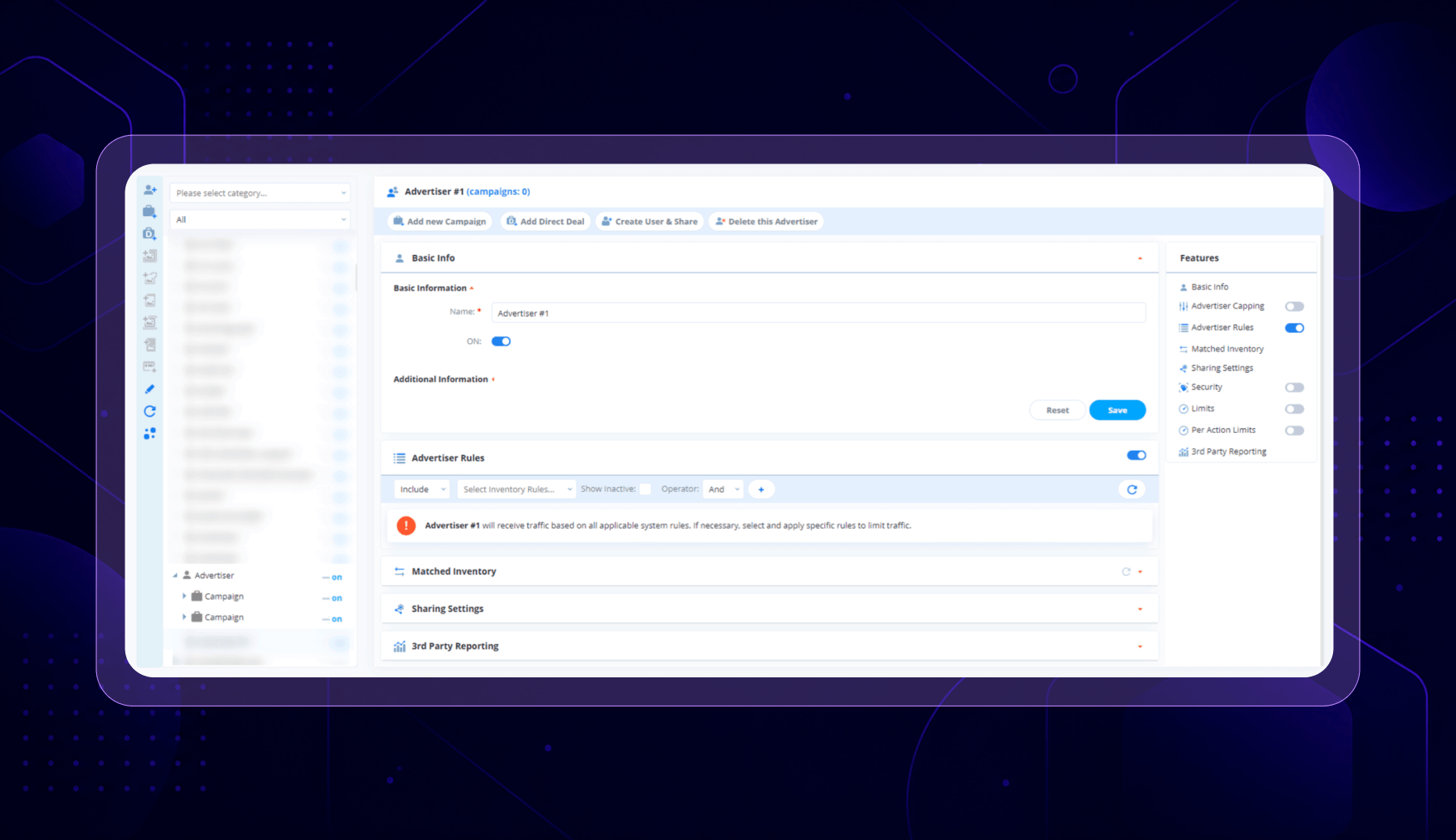
| Epom | AdButler | |
|---|---|---|
| G2 rating | 4.4 / 5 | 4.5 / 5 |
| Entry price | $250/mo (8.5M imp) | $179/mo (1M req) |
| Cost at 10M imp | ~$224/mo | $682/mo |
| Pricing model | Volume only, no advertiser cap | Tiered + add-ons, advertiser caps |
| Targeting / rich media | Included every tier | Add-on until Advanced |
| White-label | $250/mo add-on | From $59/mo add-on |
| Channels | Display, video, in-app, CTV, OTT, DOOH | Display, mobile, in-app; video on Standard+ |
| Verticals | Any, including gambling, crypto, adult, dating, nutra | General; publisher/retail-leaning |
Epom's four tiers — Light ($250/mo), Growth ($1,000/mo), Pro ($2,500/mo), and Enterprise (custom) — differ only by impression volume. Rich media, native, HTML5, and all ad formats are included from the first tier. Genuine paid add-ons exist too: white-label ($250/mo), premium support ($250/mo), advanced analytics ($500/mo), and the SSP/programmatic module (usage-based).
The difference from AdButler is what's not on that add-on list — targeting and formats aren't gated behind a fee. Roles and permissions run deep: custom sub-accounts with granular access, so a network can isolate each client's visibility without buying an enterprise tier.
| Pros | Cons |
|---|---|
| Flat, volume-based pricing with no advertiser cap | API and SSP module are usage-priced add-ons |
| Targeting, rich media, and all formats included at every tier | Do not provide demand/supply, only technology |
| Granular custom roles and sub-accounts for multi-client control | Documentation depth flagged by some reviewers |
| Widest channel coverage on this list, including CTV/OTT/DOOH | White-label and advanced analytics are paid add-ons |
| No vertical restrictions — runs gambling, crypto, adult, dating, nutra | |
| Dedicated support included on every plan |
✅ Best for: ad networks that want white-label, full formats, and granular roles included at every tier, without a spend floor to unlock them.
❌ Not for: ad networks that are looking for extra demand or supply provided to them.
Prior to migrating to a renowned all-in-one AdButler alternative — Epom ad server — confirm the actual pricing of the platform.
Exads
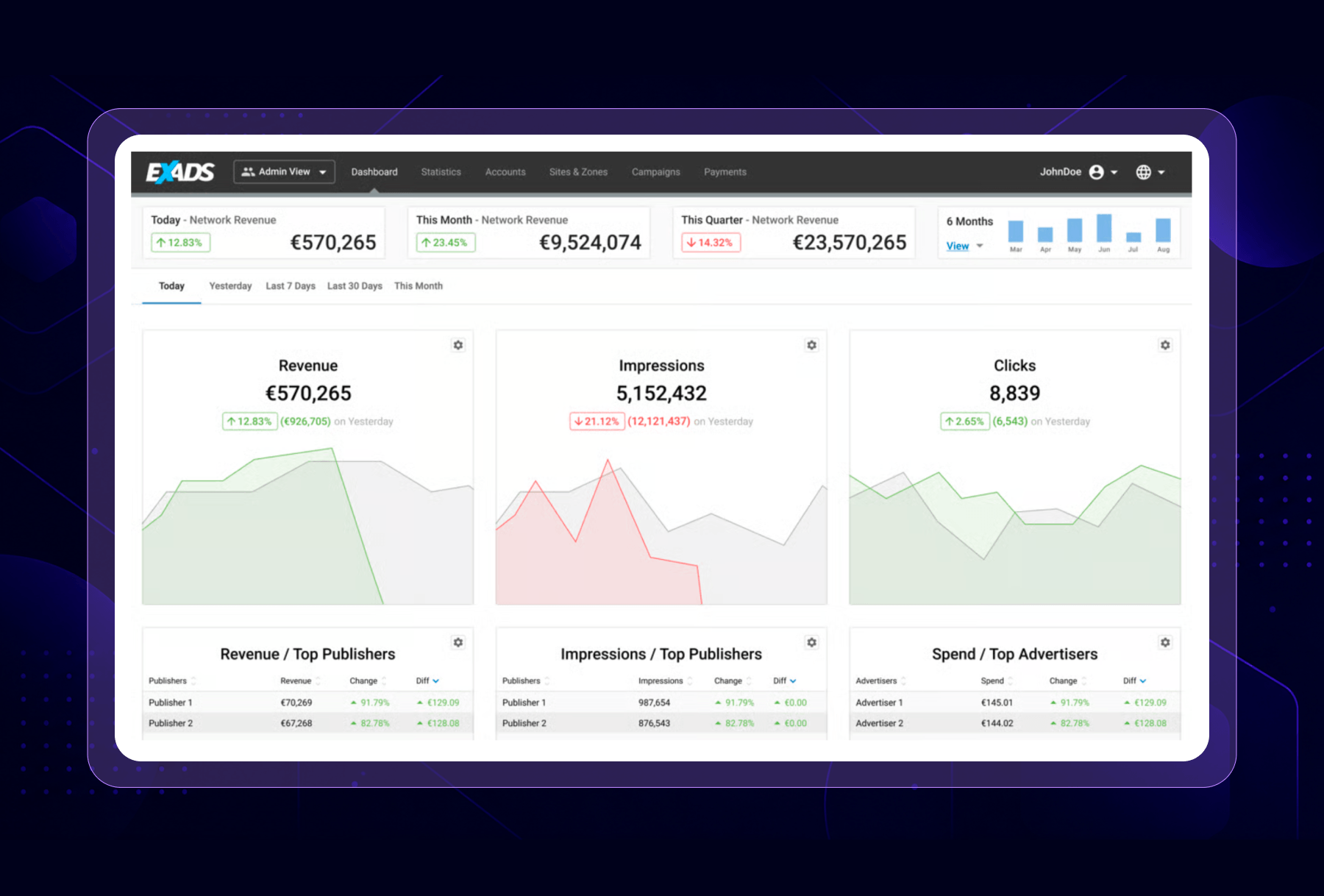
| Exads | AdButler | |
|---|---|---|
| G2 rating | 5 / 5 (low volume) | 4.5 / 5 |
| Entry price | Quote-only | $179/mo |
| Built for | High-volume performance verticals | General publishers/networks |
| White-label | Core to product, easy custom branding | Add-on |
| Programmatic (RTB) | Yes, publisher-side | Add-on |
| Verticals | Every niche — affiliate, gambling, dating, nutra, mainstream | General; publisher/retail-leaning |
Exads is positioned specifically for ad networks, advertisers, and publishers running high-volume performance traffic, and the internal comparison data highlights its strong white-labeling with easy custom branding and versatility for every possible niche. Pricing isn't publicly listed. G2 reviews are limited in number but uniformly positive, praising its responsive ad serving technology and ease of setup.
| Pros | Cons |
|---|---|
| White-label with easy custom branding is core, not an add-on | No public pricing — sales call required |
| Built for every vertical, including restricted performance niches | Low public review volume |
| Publisher-side RTB and high-volume traffic handling | Less suited to mainstream brand/display-only networks |
| Detailed analytics with mobile emphasis and 28+ filters | Basic access control vs. granular role systems |
✅ Best for: networks running performance verticals that want a white-label platform.
❌ Not for: ad networks that need granular roles and permissions.
Equativ
| Equativ | AdButler | |
|---|---|---|
| G2 rating | 4 / 5 | 4.5 / 5 |
| Entry price | Quote-only | $179/mo |
| Stack | Ad server + SSP + DSP | Ad server |
| White-label | Available | Add-on |
| Verticals | Broad; strongest in premium publisher and CTV-focused verticals | General |
| Best-fit buyer | Large publishers, CTV | Networks, publishers |
Equativ (formerly Smart AdServer) is a vertically integrated ad server, SSP, and DSP, and its ads.txt implementation explicitly supports reseller declarations — so it's technically capable of powering a network's reselling business.
Its own marketing and case studies lean toward large publishers and CTV, not toward "build your own branded network" the way Epom, AdButler, and Exads position themselves. Reporting is real-time and programmatic-focused, centered on bid, fill-rate, and revenue metrics rather than the multi-format custom exports a direct-sold network leans on.
| Pros | Cons |
|---|---|
| Ad server, SSP, and DSP in one stack | Not built network-first; skews to large publishers |
| Reseller declarations supported | Quote-only pricing |
| Strong CTV and video depth | Reporting is bid/fill/revenue-focused, lighter on direct-sold custom exports |
| Real-time bid, fill-rate, and revenue metrics | Heavier platform than a network needs for simple white-label serving |
✅ Best for: ad networks that also need SSP and DSP infrastructure in the same stack.
❌ Not for: ad networks whose primary need is simple, fast white-label ad serving.
Google Ad Manager 360 (via MCM)
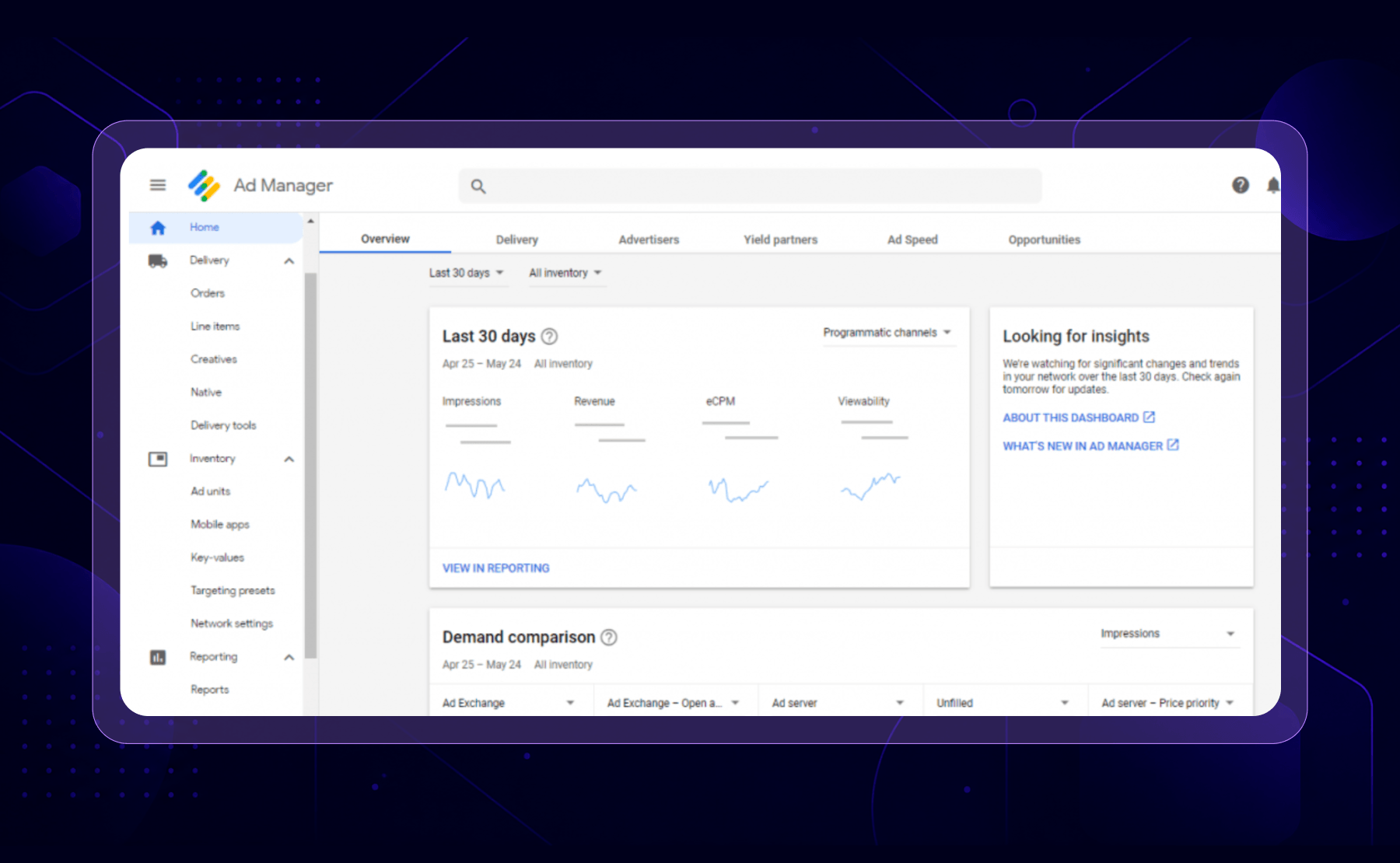
| GAM 360 | AdButler | |
|---|---|---|
| G2 rating | 4.5 / 5 | 4.5 / 5 |
| Entry price | $0 (standard) / ~$8K/mo (360) | $179/mo |
| Network model | MCM (parent/child publishers) | Native network accounts |
| White-label | No — Google's interface | Add-on |
| Demand | AdX / Open Bidding | Direct + optional programmatic |
| Verticals | Mainstream only | Broader; fewer category bans |
GAM 360 isn't a typical network tool on its own — it's built around a single publisher's inventory. But its Multiple Customer Management (MCM) feature lets a parent company manage ad accounts and inventory for multiple child publishers, with the option to route their traffic through Google's ad exchange.
Reviewers consistently praise its powerful ad management and detailed analytics for targeting and revenue optimization, and its integration with other Google products, while noting a steep learning curve for beginners that makes initial setup and navigation challenging.
| Pros | Cons |
|---|---|
| Direct access to Google AdX demand | No white-label — it's Google's interface, not yours |
| Powerful analytics and revenue optimization | Steep learning curve for setup and navigation |
| Deep integration with the Google stack | Managed reseller model, not a branded network platform |
| Free/rev-share entry for qualifying publishers | Google dependence some networks want to avoid |
✅ Best for: networks large enough to want access to Google AdX demand through a managed reseller relationship.
❌ Not for: networks that want their own branded platform rather than a Google-run backend.
AdGlare
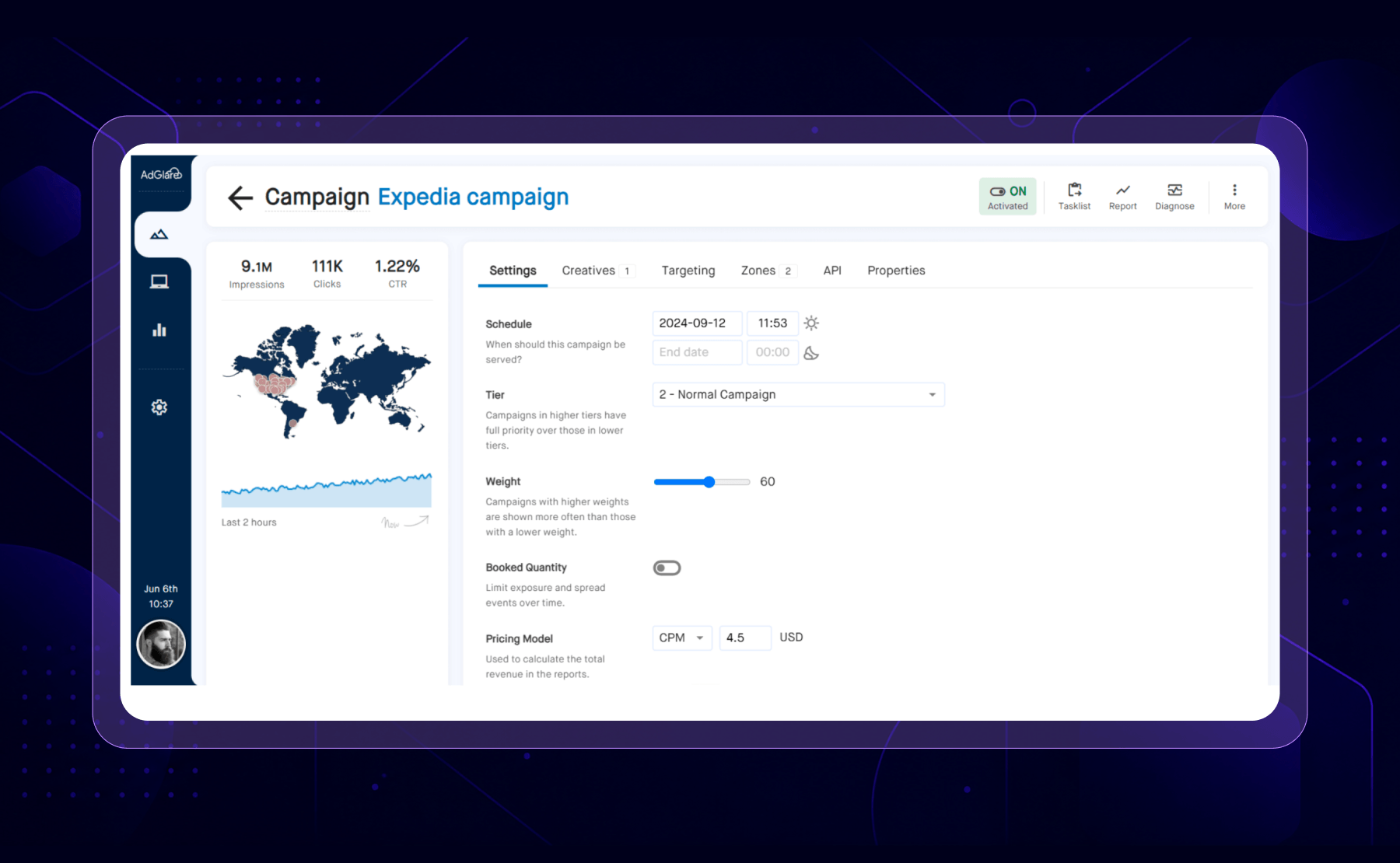
| AdGlare | AdButler | |
|---|---|---|
| G2 rating | 5 / 5 (low volume) | 4.5 / 5 |
| Entry price | ~$99/mo (1M req) | $179/mo |
| Cost at 10M imp | ~$499/mo | $682/mo |
| Pricing model | Public, tiered | Tiered + add-ons |
| White-label | Free white-labeling | Add-on |
| Programmatic / header bidding | Not supported | Add-on |
| Verticals | Broad; universal white-label serving | General; publisher/retail-leaning |
AdGlare's Lite plan starts around $99/month for 1M requests, scaling to roughly $499/month at 10M. The internal comparison highlights its free white-labeling and real-time analytics accessible right in the dashboard. AdGlare doesn't support header bidding or programmatic integrations at any tier.
| Pros | Cons |
|---|---|
| Free white-labeling, not a top-tier add-on | No header bidding or programmatic at any tier |
| Real-time analytics in the dashboard | Fewer granular roles |
| Transparent public pricing | Best suited to direct-sold rather than mixed inventory |
| Clean, fast, collaboration-focused interface |
✅ Best for: networks that want free white-labeling and transparent flat pricing, and don't need programmatic or header bidding.
❌ Not for: networks planning to run programmatic alongside direct-sold inventory.
Revive Ad Server
| Revive | AdButler | |
|---|---|---|
| G2 / market rating | Niche, community-rated | 4.5 / 5 |
| Entry price | Free (self-host) or $100/mo hosted (10M) | $179/mo |
| Pricing model | Open-source licence, pay for hosting | Tiered + add-ons |
| Support | Community / self-managed | Included, tiered paid upgrades |
| White-label | Yes, self-managed | Add-on |
| Verticals | Any (self-hosted, no policy restrictions) | General; publisher/retail-leaning |
Revive is free, open-source, and self-hosted — or available as a low-cost hosted edition starting at $10/month for up to 1 million requests, billed at $0.01 per 1,000 requests beyond that. The real cost isn't the licence; it's hosting, maintenance, and the engineering time to keep it patched and running. Independent estimates put realistic total cost of ownership at $50–$500+/month in infrastructure alone.
| Pros | Cons |
|---|---|
| No licence cost | Requires in-house engineering to run and maintain |
| Full control over hosting and data | No included support — community only |
| White-label achievable at no vendor fee | No native programmatic/header bidding without extending it yourself |
✅ Best for: technically capable teams that want to eliminate licence costs and are comfortable owning the infrastructure.
❌ Not for: teams without in-house PHP/MySQL expertise or dedicated ops support.
7. Kevel
| Kevel | AdButler | |
|---|---|---|
| G2 rating | 4.6 / 5 | 4.5 / 5 |
| Entry price | Quote-only (deck estimate ~$1–3K/mo) | $179/mo |
| Model | API build-your-own | Configurable UI |
| White-label | Yes — build your own frontend | Add-on |
| Setup effort | High — needs engineering | Low |
| Verticals | Retail media, marketplaces, ecommerce (Home Depot, Dollar General, iFood) | General; publisher/retail-leaning |
Kevel is API-first by design and built specifically for retailers, marketplaces, and ecommerce platforms launching their own retail media networks — its customer list runs to Home Depot, Dollar General, iFood, and PayPal, not traditional display networks.
There's no published pricing, which is less transparent than AdButler's fragmented public numbers. It's a well-reviewed platform, but it assumes a development team. Ad ops practitioners routinely ask what Kevel and AdButler even do differently — a sign the build-your-own model isn't self-explanatory to buyers evaluating a switch.
| Pros | Cons |
|---|---|
| Purpose-built for retail media and marketplaces | Requires a dedicated engineering team |
| Fully custom ad logic from API primitives | No published pricing; deck estimates ~$1–3K/mo |
| High G2 satisfaction among technical users | No ready-to-use UI — you build the frontend |
| First-party-data-driven, cookie-free targeting | Overkill for a straightforward display ad network |
✅ Best for: retailers and marketplaces with in-house engineering that want to build a custom retail media network from API.
❌ Not for: display-focused networks without dedicated engineering resources to build on the API.
How to Choose the Right AdButler Alternative for Your Network
The right AdButler alternative for ad networks depends less on any single feature than on four questions that narrow this list faster than a feature-by-feature comparison.
1. How many advertisers are you managing, or planning to manage within 12 months?
Under 10, and AdButler's Essentials tier or AdGlare's Lite plan may be enough. Past 10, every AdButler tier starts requiring either an upgrade or an add-on to keep operating the way you need.
2. Do you need the platform under your own brand?
If yes, that rules out Google Ad Manager 360 as a branding solution (it's Google's interface, not yours) and moves AdGlare's white-label out of reach unless you're ready for its Enterprise tier.
3. What's your primary vertical?
Performance and affiliate traffic — gambling, dating, nutra — points toward Epom or Exads, both built for that traffic with no category restrictions. Retail media and marketplace inventory points toward Kevel. Mainstream display/video/CTV opens the full list, though note Google Ad Manager restricts categories like gambling and adult by policy — a real constraint if your network carries that demand.
4. Do you have in-house engineering capacity?
Kevel and Revive both assume real development resources — Kevel to build your interface on its API, Revive to host and maintain the open-source stack yourself. Without that capacity, the configurable-UI platforms (Epom, AdButler, AdGlare, Exads) are the realistic starting point.
| IF: | THEN: |
|---|---|
| Under 10 advertisers, 1M requests | AdButler Essentials or AdGlare Lite |
| 10–100+ advertisers, 10M+ requests | Epom |
| Performance/affiliate vertical (gambling, dating, nutra) | Epom or Exads |
| Retail media / marketplace inventory | Kevel |
| Need SSP/DSP stack in the same platform | Equativ |
| Need Google AdX demand access specifically | Google Ad Manager 360 (via MCM) |
| Need tech support and potentially cust dev | Epom |
| In-house dev team, want full custom control | Kevel |
| Zero license budget, real ops/engineering capacity | Revive Adserver |
📖 Related reading: How to choose an ad server.
What Changes When You Switch
Moving onto a flat, volume-based one comes down to three practical differences:
- Cost predictability. A plan priced by impression volume means the bill doesn't change when you sign your 11th, 51st, or 101st advertiser. A plan priced by advertiser count does.
- Feature access without a sales negotiation. Rich media, native templates, and targeting either ship with the platform or they don't — there's no in-between tier where you're paying twice for the same capability.
- Control over who sees what. Granular sub-account permissions mean a network can safely expand its client roster without exposing one client's data to another, at any plan level — not just the top one.
How to Prepare for Migration
Switching ad servers is mostly a data and trafficking exercise, and it goes smoothly when you sequence it:
- Export your current setup. Pull your AdButler advertisers, zones, placements, and active campaign settings, plus historical performance data you'll want for continuity.
- Map your account structure. Decide how publishers, advertisers, and internal users map to the new platform's roles and sub-accounts before you rebuild — this is where a granular permission system pays off.
- Rebuild and re-tag. Recreate zones and placements, then generate and deploy new ad tags. Ask your new provider whether they offer a migration script for bulk zone/placement transfer.
- Parallel-run. Serve on both platforms briefly to confirm delivery, tracking, and reporting line up, then switch traffic over once numbers reconcile.
Onboarding speed during a migration tracks this table closely — a dedicated AM from day one moves faster than a support ticket routed through sales.
| Platform | Support model |
|---|---|
| Epom | Quick response, included on every plan, onboarding, dedicated account manager |
| AdButler | Three support tiers; two of the three come at an extra fee |
| AdGlare | Support beyond self-serve is routed through sales, not a helpdesk |
| Kevel | Community and forum support, not a dedicated support line |
| Equativ | Free tier is help-center/self-serve only |
| Google Ad Manager 360 | Direct human support only on the paid 360 tier; standard GAM is self-serve |
| Revive Adserver | Community support and documentation — no included live support |
| Exads | Hands-on and responsive, including custom feature requests |
Frequently Asked Questions
Bottom Line
AdButler is a reasonable, low-friction choice if your network is staying under a few dozen advertisers, doesn't need advanced targeting or rich media beyond the standard set, and values a platform with two decades of market presence, responsive support, and a large existing integration list. Its reputation for easy setup and hands-on support is well earned at that scale.
Past that point the add-on model and the fixed account structure start working against you.
For most growing networks in that position, Epom or Exads cover the white-label ad server use case directly, with full formats included. Kevel and Revive are the right call only with real engineering capacity behind them. Equativ and Google Ad Manager 360 make sense for the specific SSP/DSP or AdX-access needs they're built for, not as general-purpose replacements.
Ready to compare it with your numbers? Book a walkthrough of Epom Ad Server and bring your current AdButler invoice — we'll show you exactly where the costs and capabilities diverge.