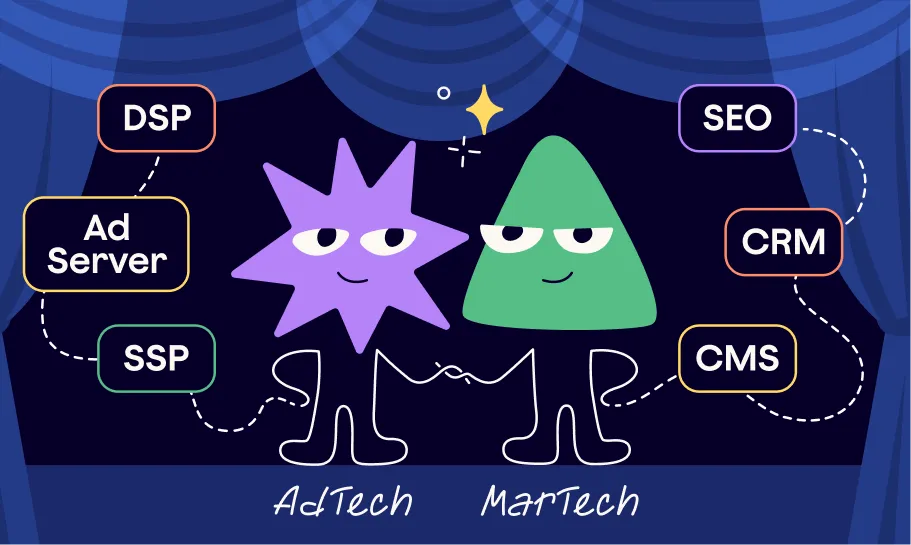

AI in digital advertising is not the next hot trend — it’s a response to the growing complexity of the adtech market and the decline of user-level data. Platforms powered by AI can analyze multiple contextual signals and predict future performance, reducing the need for manual interventions. Today, AI is integrated in various parts of the adtech ecosystem: DSPs, ad servers, and supply-side platforms. In the future, we can expect advancements in its features and further shifts in the role of humans towards strategic oversight rather than operational control.
AI in advertising is quickly becoming a must-have. According to IAB Europe, 85% of businesses already rely on AI-based tools for marketing. Around 75% of respondents report that at least one of their campaign functions uses AI. Moreover, none of the participants plans to cut the budget on AI-related innovations.
So, since this technology is clearly here to stay, let’s explore how it works, where it’s used, and how AI is changing advertising. By the end of this article, you’ll get all the answers!
The Role of AI in Advertising
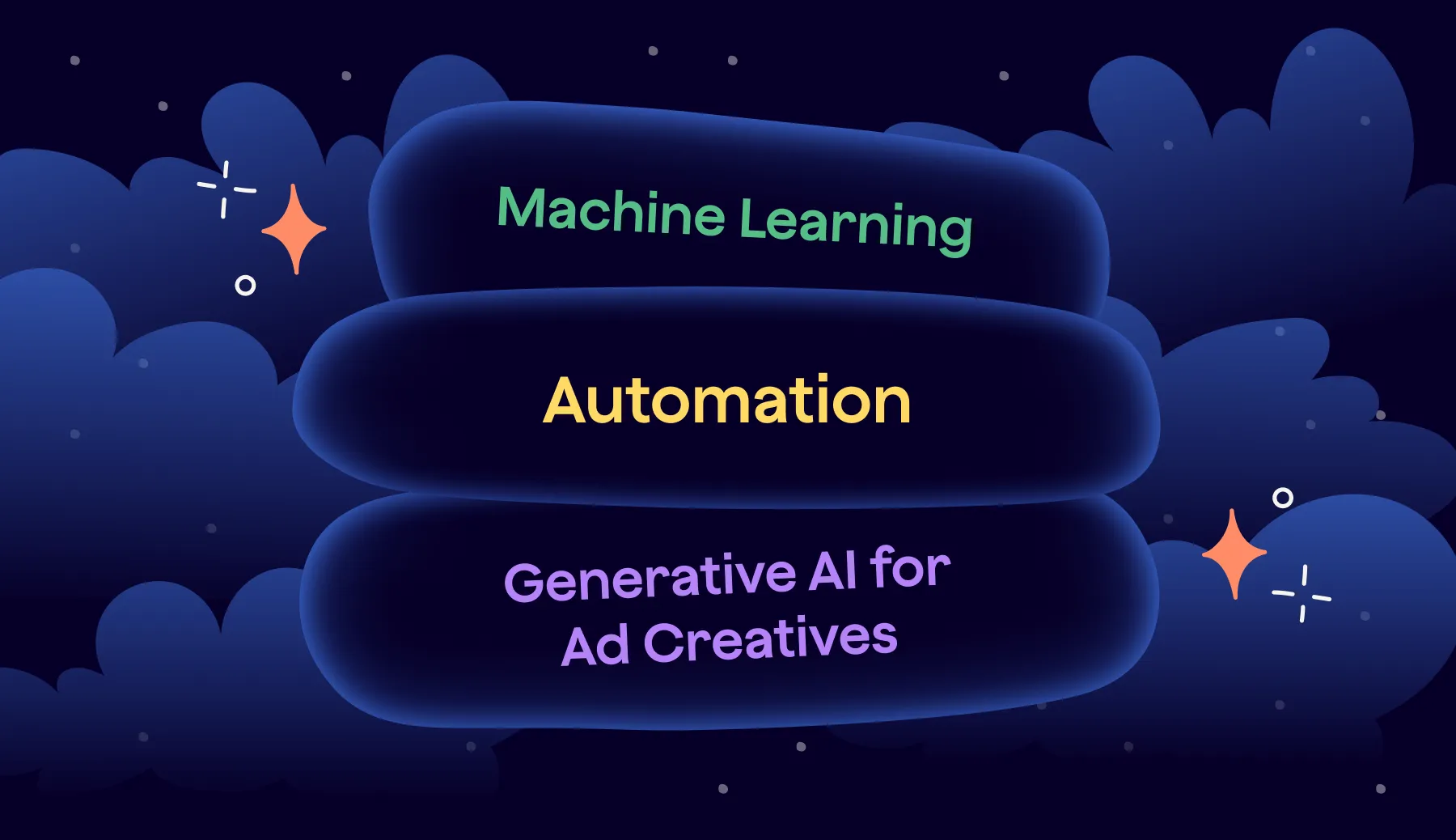
Simply put, AI in adtech helps elevate ad campaigns by automating and optimizing them. Leveraging AI-powered tools is becoming essential for modern advertising strategies, enabling marketers to improve campaign performance, efficiency, and user engagement. However, AI is way more than a single, even powerful, tool. Typically, it combines several approaches and technologies, each with its own benefits and limitations.
1. Machine Learning
ML models enable ad tech AI tools to analyze user behavior, perform historical data analysis, and make accurate predictions. ML models are used to interpret patterns in user behavior, allowing for improved ad targeting, personalization, and fraud detection. Imagine your ad server projecting eCPMs across ad formats and reallocating traffic to optimize the overall result. Or picture your DSP predicting the auction outcome and adjusting your bids to maximize the chances of victory. These scenarios become possible with the help of machine learning models.
Also, predictive analytics powered by ML algorithms can model conversions, predict lifetime value, and provide a clear view of performance even when signals are limited.
However, this wonder-approach has a limitation: as with any machine learning algorithm, ML models in AI ad tech require substantial data to learn and perform best across vast arrays of ad operations. That’s why it became such a breakthrough in the field of AI in programmatic advertising.
2. Automation
Automation is the backbone of many AI ad tech tools, and there’s a simple reason: automation typically doesn’t require much data to learn. Instead, it follows straightforward rules. For instance, if CTR drops below the preset threshold, DSP stops the ad campaign. Another example: an ad server automatically chooses a demand partner with the highest eCPM to serve ads.
AI significantly reduces repetitive tasks, such as automating routine activities and optimizing ad delivery, which allows teams to focus on more strategic and creative efforts.
The limitation of this approach becomes apparent when the situation doesn’t follow the projected scenario. Say an ad server has a rule: a demand partner has the highest priority until its eCPM exceeds $5. It works well in typical circumstances, but if demand suddenly spikes across multiple placements, the system may not respond. It will continue serving ads in accordance with the rule. Hence, the publisher won’t benefit from the short peak demand. For those seeking a more flexible solution, you can start your free trial of Epom's ad server or DSP to explore advanced features that can help you adapt to dynamic market conditions.
3. Generative AI for Ad Creatives
Generative AI models accelerate content creation across images and videos, headlines, and ad copy, producing AI-generated content tailored to target audiences and brand requirements. These models help scale campaigns by adapting creatives to multiple device types, languages, or regional preferences.
A/B testing becomes much easier and faster with generative AI in adtech companies, as AI enables the creation and testing of multiple ad variations simultaneously. You can generate several headlines or CTA options and launch the test via an ad server or DSP in just a few minutes. Human oversight remains crucial to ensure the quality and authenticity of AI-generated content.
This technology is gradually taking over the market. According to Kantar’s Media Reactions study, only 41% of consumers claim that AI-generated ads bother them. At the same time, only 29% of marketers say AI-based ads worry them.
GenAI also has some limitations when applied to digital advertising. For instance, the performance of the resulting campaign depends on how well people interacting with the AI tool understand the ad format’s goals, priorities, and limitations. Even perfect ad copy won’t deliver great results if you choose the format poorly.
When It All Comes Together
All these technologies, combined, help businesses make informed decisions, set up and execute well-designed rules, and scale their efforts across multiple channels. As external complexity continues to increase, AI in adtech becomes a point of differentiation and an opportunity to overtake competitors.
According to IAB Europe research, the most used AI-based functions today are targeting and content generation. However, it’s just the beginning! AI-driven insights also allow advertisers to deliver personalized marketing content without relying on tracking cookies, enhancing user engagement.
Why AI in Advertising Is So Trendy Now
Nobody can deny that we live in an increasingly complex world that requires increasingly sophisticated solutions to address its challenges. AI in digital advertising is one such solution. But what’s so special about now that we need AI so much?
Too Many Variables
Even small publishers have to consider multiple variables: ad format, placement, the device type, location, time of day, page context, etc. Often, the eCPM for the same ad format varies widely across regions or time slots. As a result, adtech companies can’t set rules covering all possible scenarios – and can’t adjust them in real time – because it’s too expensive and time-consuming. AI in programmatic advertising helps make automation smarter by leveraging historical data analysis and demand predictions.
Third-Party Cookies Decline
Although this process is going more slowly than the market expected, it already affected how companies target customers. Without user-level data, context becomes king. And since contexts change — and often change quickly — manual rule-setting can’t keep up, unlike AI-based systems. By analyzing past data, page content, and ad placement type, they can predict how well a given format will perform in a given context.
Decision-Making Speed
Before the programmatic approach to advertising, people could make all the decisions. Now, with real-time auctions and dynamic campaign optimization, humans’ role is to set the rules the system uses to select bids, creatives, and demand partners. Yet again, the increasing complexity of the adtech market calls for innovations. AI in programmatic advertising is the answer.
AI provides real-time insights, allowing businesses to make faster decisions and optimize campaigns on the fly. For example, DSP with AI can analyze past data, consider the budget and competitors, and decide the odds of winning the auction. If the chances are slim, there’s no point in participating.
AI can also analyze vast amounts of user data to predict future buying behaviors, enabling brands to deliver highly relevant and timely ads. By leveraging these insights, marketers can deliver hyper-targeted campaigns and serve timely ads when users are most likely to convert, improving engagement and advertising performance.
Flawless Operational Efficiency
The cost of mistakes rises as decision-making speed and the complexity of adtech systems increase. For instance, if the platform serves ads in less effective formats for a few hours, the publisher can lose quite a sum. Moreover, losses tend to accumulate across the network, which makes the problem scale. Ad tech AI tools can prevent costly mistakes and ensure no revenue is lost. AI also reduces wasted ad spend by optimizing bidding strategies, targeting audiences more precisely, and adjusting ad delivery and pricing in real-time.
Also, AI helps increase operational efficiency by reducing the need for manual campaign management. Instead of putting down “fires” across ad inventory, people can focus on strategic decisions.
To sum up, AI in advertising is more than the next trendy thing — it’s the answer to challenges that have been accumulating for quite some time. Companies can no longer rely on static rules; they need dynamic systems to manage the variety of ad formats, placements, and demand sources as they scale their operations. That’s why more and more adtech businesses are implementing AI-based solutions.
How Companies Use AI in Advertising Today
When we talk about AI in adtech, it sometimes sounds like we’re discussing an experimental treatment. In reality, AI-powered advertising and advanced AI systems are already integrated in various parts of the advertising ecosystem: ad servers, DSPs, SSPs, and ad networks. These AI systems underpin predictive analytics, personalized marketing, and automation, enhancing decision-making and targeting in modern marketing strategies. Wherever companies need faster decision-making, accurate predictions, smarter automation, or ad-related content creation, there’s room for AI. Let’s take a look at several practical AI in advertising examples.
AI-driven DSPs
In DSPs, AI helps make better real-time decisions. AI-driven DSPs use audience segmentation by analyzing consumer behavior and purchase history to identify patterns and trends. Machine learning models can analyze past data for a specific ad format (e.g., video ads) on a specific device (e.g., mobile or desktop) at a specific time (e.g., in the evening) and observe that conversions tend to increase under these conditions. Hence, it decides to raise the bid. What’s best is that everything happens automatically, without human intervention and in real time.
Also, AI can help advertisers control their budgets more efficiently. For instance, it identifies time slots that have driven more conversions in the past and reallocates the budget to optimize revenue. Moreover, AI oversees budget spending and makes real-time corrections when performance changes.
Finally, with AI’s help, it’s easier to reach the campaign goal. Say the advertiser’s priority is high conversions rather than high CTR, ML models can focus on segments more likely to convert.
AI-powered Ad Servers
While AI in DSPs is mostly about strategic priorities and decisions, AI in ad servers focuses on delivery, i.e., deciding what ads to serve and where. AI optimizes ad placements and ad delivery by using algorithms to determine the best timing, platform, and format for each impression, ensuring ads reach the right audience at the right time for maximum effectiveness.
One practical application is allocating traffic across different ad formats and partners. Unlike ad servers that operate on static rules, AI enables predictive modeling and uses this information to inform delivery decisions. For example, if there are two ad format options for a specific placement (say, video and display), an ad server allocates more traffic to the format it predicts will generate more revenue.
Also, AI on the ad server level enhances A/B testing. Traditionally, traffic allocation between two options relies on fixed rules and manual interventions. With AI, this decision is made dynamically by the algorithm, which analyzes past performance to make predictions. If the results are positive (for instance, eCPM is growing, and fill rate isn’t decreasing), the model allocates more traffic to this option. So, AI helps protect revenue and lower the risks of bad decisions.
Dynamic creative optimization is another key feature, allowing AI to automatically adjust ad elements such as messaging, visuals, and offers in real time based on user preferences and behaviors, further improving engagement and campaign performance.
There is so much more AI can do to improve ad servers’ performance. It can adapt to shifts in demand in real time, automatically redirecting traffic to other partners; predict fill rates to avoid underdelivery and inform the team about these risks so that they can introduce a new ad format; and significantly lower response time to incidents through continuous monitoring of performance metrics. These AI-powered features altogether make scaling ad operations faster and smoother.
AI for the Supply Side
In this case, AI is primarily used to manage ad inventory more efficiently and optimize revenue. AI models analyze data to optimize advertising revenue: the demand may fluctuate, so AI-based platforms help keep fill rates as stable as possible. For instance, if one of the demand partners becomes less active, the algorithm can lower its share and redirect traffic to other sources.
One of the most promising applications of AI in adtech on the supply side is yield optimization. For example, several direct campaigns and programmatic demand may compete for the ad placement. An ML model can predict which option will yield the highest revenue by analyzing past data from similar placements (taking into account location, time of day, etc.).
AI also plays a crucial role in helping to prevent ad fraud. AI-driven fraud detection systems can analyze vast amounts of data to identify patterns indicative of fraudulent activity, such as suspicious clicks or impressions, and protect advertisers from financial losses caused by ad fraud. This ensures that ad revenue is safeguarded.
Same as with ad servers, AI on the supply side can detect issues faster. Say, if some placement shows an unusual drop in performance, the system will inform the operations team on the spot.
All significant parts of the digital advertising ecosystem may face challenges due to the rapid pace of the market and increasing uncertainty. Even though their challenges are quite different, there’s something in common: AI helps shift from manual corrections and static rules to dynamic, faster processes, enabling easier growth and scaling.
As usual, large corporations are among the early adopters, so they have been exploring AI capabilities for some time. Let’s find the answer to the question: how does big tech use AI in advertising today?
For example, Google has entirely changed how Google Ads operates with AI-powered smart bidding. ML models process vast amounts of data (over 70 million signals per auction!) to optimize bids in real time. Algorithms take into account device type, geographical location, time, operating system, browser, and other parameters.
Meta, among other things, uses AI to enable faster, more convenient ad creation and smarter targeting. Meta AI can generate multiple versions of ads with tailored, professional-looking backgrounds. Also, it analyzes past data to enhance targeting, then monitors performance and optimizes in real time as needed.
As for Amazon, this company uses AI to predict customers’ intent to buy. Algorithms calculate the probability of a purchase by analyzing past behavior and multiple contextual factors, then optimize ad placement to show the most relevant ads.
So, for many large businesses, AI is already at the core of their operations. For many more, it will soon become invaluable. To properly prepare for what’s coming next, we should be aware of the early signals of change. And that’s what we’re going to explore!
The Future of AI in Advertising
Based on Epom’s observations, many crucial changes in ad tech AI are already in the market; however, some remain underdeveloped. In the near future, we’ll likely see further improvements across multiple AI features.
From Campaign-Level to System-Level Optimization
Optimizing a single campaign or ad format is limited and flawed. What if you’re improving performance across one campaign but at the same time cannibalizing on another? To avoid that, many modern adtech platforms are migrating from campaign-level to system-level optimization. It means an AI-based platform predicts the broader consequences of potential moves. For example, historical data analysis says that demand for a specific ad format drops after an initial rise. Hence, the system limits traffic to prevent loss. This shift also leverages marketing analytics to provide a holistic view, enabling platforms to optimize performance across all campaigns and channels.
In the future, most decisions will be made at the system level. Ad tech AI will manage delivery across all inventory to optimize potential gains.
From Short-Term to Long-Term Metrics
Before artificial intelligence overtook the adtech realm, short-term metrics like eCPM or CTR were the main focus of ad operations teams. So, decisions were primarily based on the events happening right now or in the very recent past. However, AI offers both a trip to the past (by analyzing past data) and a glimpse into the future (by making predictions). It helps discover patterns, such as radical changes in floor prices influencing fill rate within several hours.
Soon, we can expect AI to foresee more distant consequences: not hours, but at least days. For example, an ad server will serve an ad based on a week-long prediction of its impact on overall system stability and profitability.
Human As an System Architect
We can clearly see this change today: teams perform fewer manual operations and make fewer micro-level decisions. Gradually, the human role shifts towards setting a framework for AI. There’s rarely a need to manage bids manually or intervene every time ad performance metrics change. Instead, people set campaign goals (e.g., maximizing CPA or ROAS) and constraints, and handle critical incidents. For example, a team can set up an acceptable revenue range, and the system maintains it by balancing traffic allocation.
In time, humans will likely decide on high-level priorities (like what’s more important: stable fill rate or immediate eCPM growth?) and define policies. All the rest will be implemented by ad tech AI, including the selection of the delivery strategy.
Paradoxically, AI in advertising is changing not only (and not primarily) how adtech platforms operate, but also how people think about ad optimization and how their roles evolve: from short-term to long-term, from low-level to high-level, from executors to policy-makers.
Conclusion
Now you know how AI is changing advertising across the entire adtech ecosystem. This technology is not going anywhere, and it's much more than the next trendy thing. AI elevates the logic behind advertising, making optimization a part of the bigger game. Having short-term gain is nice — but scalable success is way better.
That's why there's no more doubt about AI's value; the real question is how to integrate it into your ad infrastructure.