

TL;DR:
There are different digital ad formats. The ones used in display generally come down to banner ads (static or animated placements), interstitials (full-screen transitional ads), rich media (multimedia banners), natives (content-integrated ads), and video ads (in or out of video player).
The ad formats that live outside display advertising are search ads, social ads, and email ads. Each ad format has its own pricing and best usage scenario.
Banner, natives, outstreams, instreams, search, and so on – you see us throwing these terms left and right, dedicating articles to them, and chewing on tech details. But what about a single article that would explain each?
That’s right, it’s finally time for a massive guide. This digital ad format article will serve as both an entry point for newcomers and an insight-rich guidebook for seasoned ad businesses.
There’s too much to explain, so without further chatter, let’s go!
What Are Digital Ad Formats?
Digital ad formats are standardized units of online advertising that define how an ad looks, behaves, and is delivered in ad campaigns.
There is a lot of potential for messing up the definitions further and screwing up your digital advertising strategy, so follow our hands.
Types of Display Ad Formats
The following theory applies both to an ad server and a DSP.
According to the Interactive Advertising Bureau (basically, the word of God in ad tech), the main digital advertising formats in programmatic include:
- Banner (Display) Ads: Graphical ads on pages (static/animated image + text/video)
- Interstitial Ads: Full-screen ads between page views (user leaves one page, sees an interstitial, then goes to the next).
- Rich Media Ads: Interactive display units (e.g., expandable banners, in-banner video, overlays) that “contain perceptual or interactive elements more elaborate than the usual banner.”
- Native Ads: ad units that are integrated in the user's content experience and usually take the form of the content on the page.
- Video Ads: Pre/mid/post-roll video spots shown in video players are Digital Video Ads. Display‐page video (not in a player) is treated as rich media
Truth be told, although we have a list of digital advertising types from IAB, these are not as strict as you might think. Every ad tech provider changes the classification a bit, just so that it makes sense in how these formats look and work in their product.
For instance, here’s what the types of online ads look like in Epom DSP:
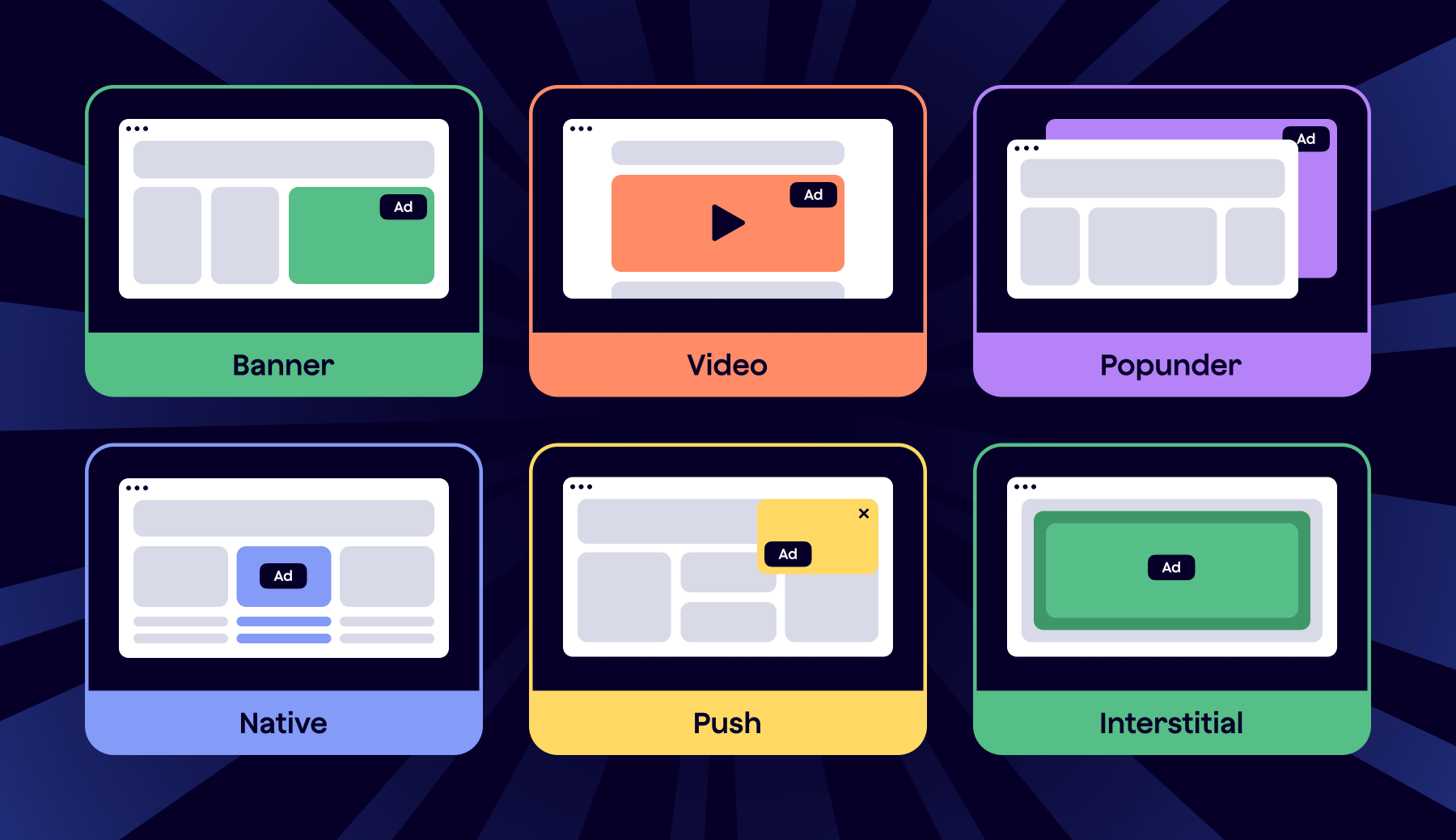
These are called “display ad formats” because you literally see them on the publisher’s sites and apps. They have defined characteristics like size, weight, and clickthrough tracking.
New formats like AR/VR placements or audio advertising on music streaming services emerge and count as display too.
Push and pop-under have been defined as their own display ad formats, too.
Other Ad Formats
What about the other types of digital advertising? You surely see ads on Chrome, in your TikTok feed, and don’t get us started on dozens of emails attacking your inbox every day.
These stand as their own entities:
- Search Advertising (SEM): boost a site’s visibility in search engine result pages
- Social Media Advertising: deliver creatives on social media platforms, including social networking and social gaming websites and apps
- Email Ads: send paid placements or promotional emails; governed by the IAB Email Committee’s metrics and best practices
We’ll mention each in this article, but not as much as the main ones.
By the way, if you feel like these ad formats are not enough for your taste, we have a secret (don’t tell anyone): with the Epom ad server, you can make your custom ad templates. We did those for Adera and helped them boost CTR by 34%.
Check out how custom ad templates can dramatically boost CTR
Discover Adera’s success storyAd Formats vs Ad Placements
All of that might sound awfully similar to ad placements (which we covered deeply), but it’s not the case.
Ad format defines the creative type and tech specs of the ad itself (banner, video, native, etc.), while ad placement refers to the exact location or context in which that creative is displayed (in-feed, pre-roll, sticky footer, etc.).
The same ad format can perform 3-10× differently depending on the placement, and vice versa.
Banner Ads (Display Ads)
Banner ads are the standard image or animated ads that appear in designated slots on web pages and apps.
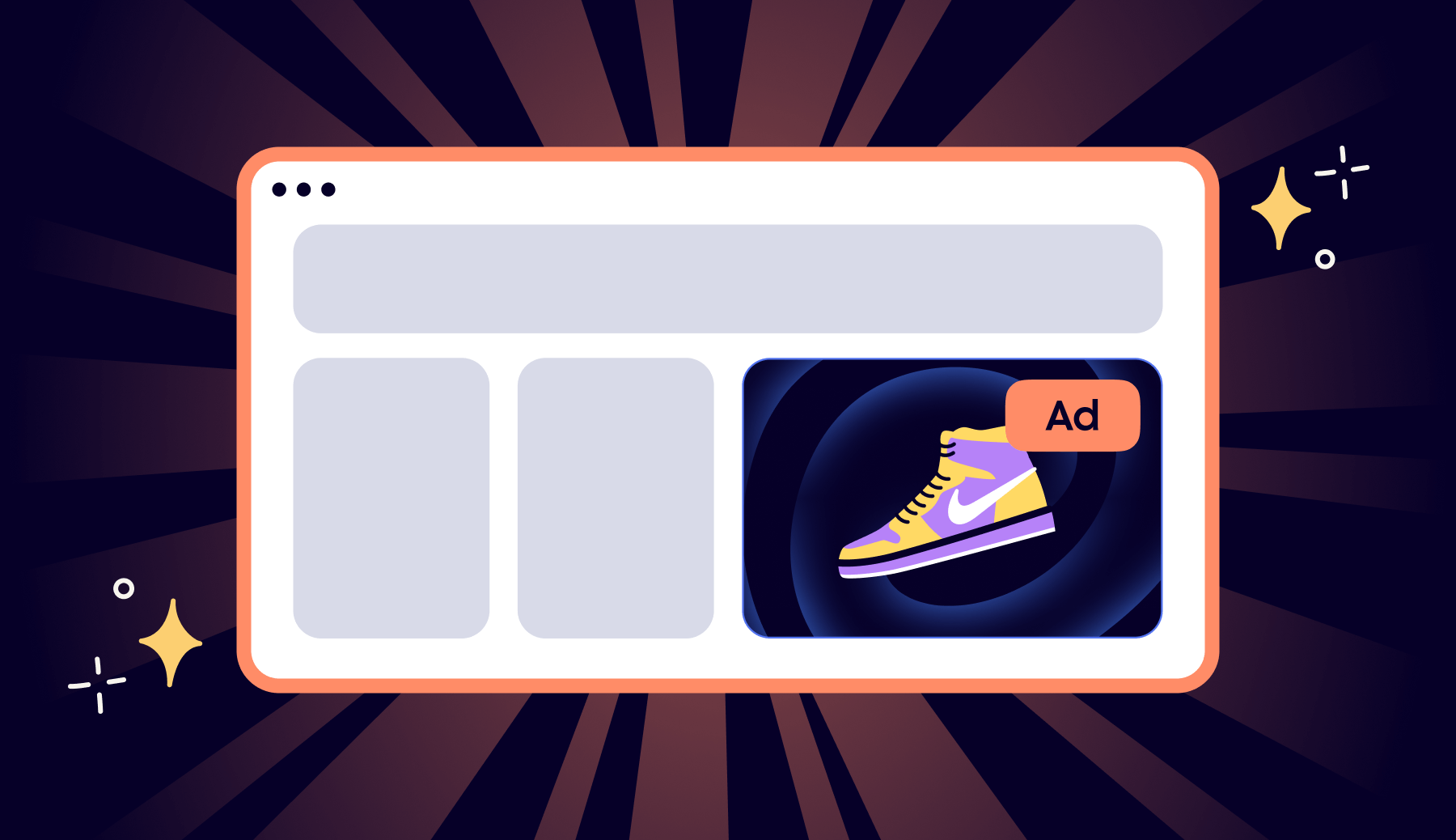
They come in various IAB-standard banner ad sizes (like 300×250 “medium rectangle,” 728×90 leaderboard, etc.) and are usually sold on a CPM basis (cost per thousand impressions).
Many believe that banners are 100% static; that’s not the case. A simple HTML5 code can bring banners to life, turning them into looped animations, text swaps, multiple-image carousels, or parallax effects.
This is not the same as rich media ads (that we’ll analyze further), cause the scope of what you can do is still limited. Nevertheless, even basic animations deliver up to 267% higher CTRs with no additional coding.
Some DSPs, like Epom, even allow you to blur the lines, but hey, your attention span is not limitless, so let’s move on.
Pros of Banner Ads
Banner/display ads are ubiquitous and cost-effective for reaching a wide audience at the top of the funnel. They are a pillar of advertising, and despite “banner-blindness” being a real thing, they are still used widely (about 30% of global digital ad spend)
If we were to sum up the benefits, they’d be:
- Cost-effectiveness and scalability
- Ease of programmatic implementation
- Suitability for retargeting and TOFU reach
- Support of various creative types (static, animated, rich media)
Cons of Banner Ads
In a world where we are all bombarded with information, it’s simple to deduce that static banners won’t be as effective as they were in the late 90s.
The global average click-through rate for display banners is only about 0.06% (roughly 1 click per 1,600 impressions).
In practice, a 0.05%–0.1% CTR is commonly cited as the baseline for banners. This is why banners are often viewed as a top-of-funnel format – great for building brand exposure and frequency at a low cost, but not the best when it comes to immediate response.
So for the cons, we have:
- Low average CTR
- Banner blindness
- Limited engagement unless enhanced with interactivity
- Often ignored in content-heavy environments
Who Should Use Banner Ads and When?
Anyone can use these digital ad types, but you have to understand that they work best for cost-effective, broad, top-funnel advertising.
The average CPM ranges from $ 2 to 10, CPC $0.3 -3. CPC averages $5.26, but banner/display is on the lower end.
For best results, pair banners with strong creative (clear CTA, high‑quality visuals) and precise targeting (contextual, audience, or retargeting).
Native Ads
Native ads are paid ads designed to blend in with the content of the platform on which they appear.

These are chameleon creatives that match the look, feel, and function of the media format in which they are delivered. Native ads don’t look like ads at first glance, and that’s why both ad businesses and users generally like them more.
Pros of Native Ads
According to MarketingLTB, native ads accounted for 15-20% of budgets in 2025, and for a good reason (or even reasons).
Native ads:
- Are non-intrusive, mobile-friendly;
- Enhance brand trust and content consumption;
- Often results in longer time-on-site and higher brand recall;
- Deliver high CTR and engagements;
Cons of Native Advertising
The disadvantages are basically the side effects of the pros. They include:
- The requirement for more creative production effort
- Native can be mistaken for content if not clearly labeled
- Native can raise ethical concerns if the closure isn’t strong
Who Should Use Native Ads and When?
Native is ideal for brands, publishers, and agencies that prioritize content and being non-disruptive.
These are great for mid-funnel goals like engagement, education, or soft conversions. Native ads are especially suited for storytelling, long-form content promotion, or lead nurturing.
As for pricing, you can roughly estimate:
- CPC: $0.10–$1.00;
- CPM: $5–$15;
However, premium native (custom content) may exceed $25 CPM or be priced per article. Now, let’s get over to the native’s biggest rival in the engagement department.
Video Ads
Video ads are dynamic, motion-based creatives that deliver a message through audio-visual storytelling.

To be honest, video advertising is a dimension of its own. Each of its aspects, from CTV advertising to VAST tags, deserves its own article, and sure enough, we’ve managed to cover almost all of them in our blog.
That’s why let’s be brief. Video ads generally come in two forms: in-stream and outstream ads. The differences are:
- In-stream video ads require a player and interrupt the main content (pre-roll, mid-roll, post-roll).
- Outstream video ads run outside the website’s video player and can be skipped or scrolled.
- Instream ads autoplay with sound; outstream ads are muted by default.
Video ads are delivered across platforms like YouTube, Hulu, TikTok, in Connected TV (CTV) and Over-the-Top (OTT) environments. They can be skippable, non-skippable, or even reward-based.
Pros of Video Advertising
Watching stuff is more fun than reading it (oh, the irony). That’s why video ads have 27x higher CTR than static banners. But that’s not all. Among other benefits, video ads have:
- High recall and brand lift, potentially boosting purchasing intent up to 90%
- Support of a variety of formats and ad tags
- Higher CPMs, often 3x to 10x higher than display ads
Cons of Video Advertising
You know about the cons if you’ve ever tried running a TikTok page. Video ads:
- Require more time and money for production;
- Have the potential to cause ad fatigue;
- Require a strong creative strategy and direction to stand out
Who Should Use Video Ads and When?
Overall, video ads are still worth it, especially once you embrace the goldmine that is CTV.
Of course, video ads are best for brands with storytelling or demo needs, targeting Gen Z, mobile users, or OTT viewers. They are ideal for awareness and retargeting. The viewability and completion rates make videos perfect for both top and mid-funnel.
The costs vary greatly:
- CPM: $10–$30+;
- CPV: ~$0.05–$0.10.
As for CTV, it can exceed $40. YouTube TrueView ads average $0.10 per view. Now, let’s move to the ad format that captures attention a bit more straightforwardly.
Interstitial Ads
Interstitial ads are full-screen ad units that take over the entire screen during natural transition points in mobile apps or websites.
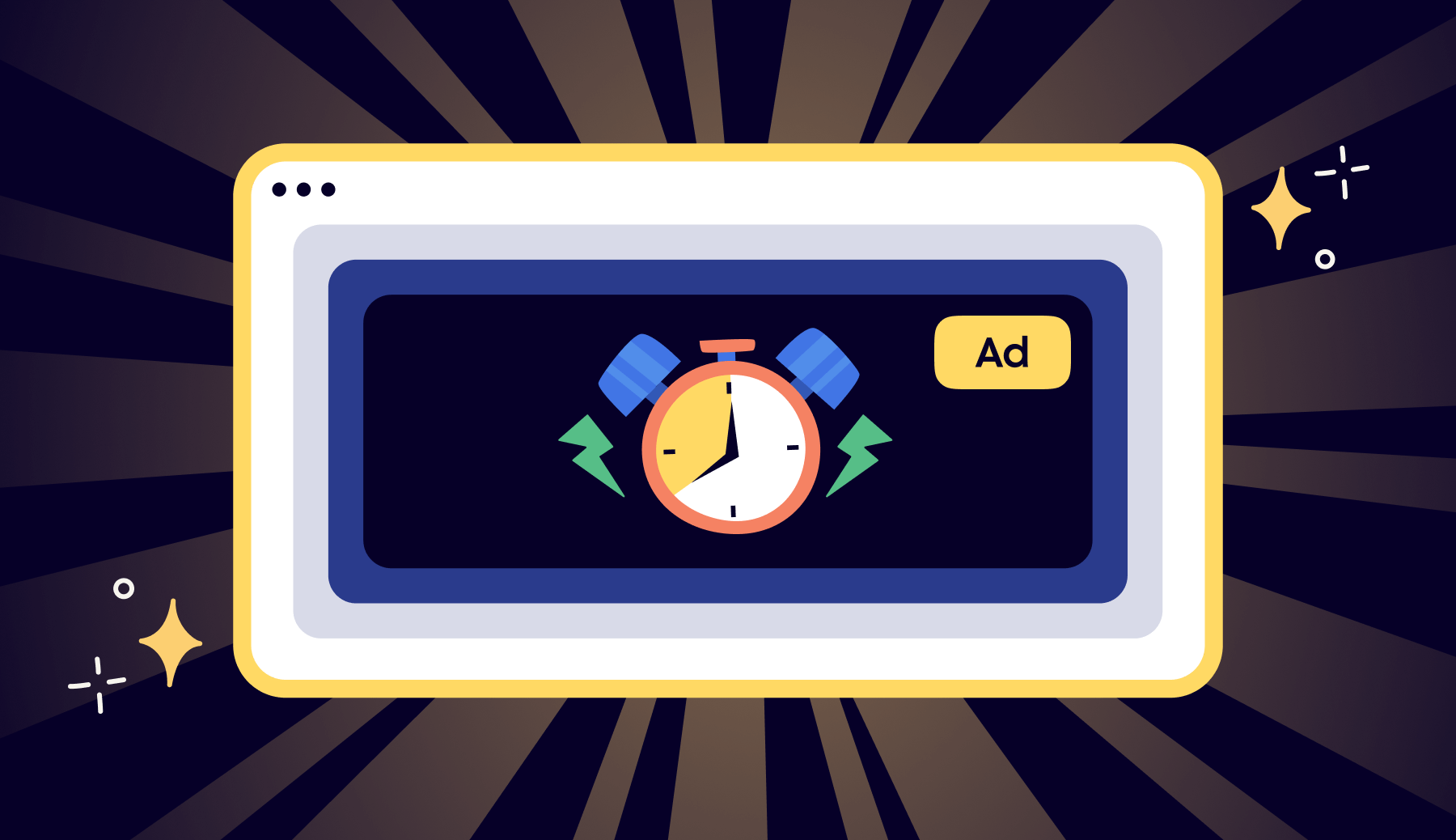
Interstitials can be anything from static images and HTML5 creatives to videos with fake ”close” buttons in between game levels and article pages.
Interstitials command immediate attention and can’t be ignored. But with great power comes great responsibility, so use these very carefully and wisely.
Pros of Interstitial Ads
Obviously, interstitial ads have 100% viewability. But along with that technical benefit come the other, such as:
- CTR of 2–5% (5–10x higher than banners)
- Higher publisher eCPM
- Better installs in mobile advertising by 20% compared to other ad formats
Cons of Interstitial Ads
It’s not hard to deduce that a full-screen ad at a random moment might not be everyone’s cup of tea. The disadvantages of interstitial ads include:
- Can be intrusive or disruptive if poorly timed
- May cause higher bounce or uninstall rates if misused
- Not suited for desktop or long content experiences
Who Should Use Interstitial Ads and When?
Interstitial ads are best suited for app publishers and any marketer working in mobile. It works best during natural user flow breaks, and once again, this works great on mobile.
As for the pricing:
- CPM: $5–$15;
- CPC: $0.50–$2
Rich Media Ads
Rich media ads are advanced digital ads incorporating video, audio, 3D elements, forms, or user interactions, typically built with HTML5 for immersive storytelling.
We’ve already explained what they are and how they differ from dynamic banner ads earlier, so let’s be brief.
Pros of Rich Media Ads
Rich media ads are highly engaging while retaining similar affordability and scale to banners without demanding a strong creative strategy like with video advertising. Not accounting for those, the other benefits include:
- Interactive elements drive dwell time and conversion
- Suitability for product demos, data capture, and storytelling
- Enhancement of brand experience and memorability
Cons of Rich Media Ads
Complex creatives = complex optimization. As for the disadvantages, rich media ads are:
- More expensive to develop and serve
- Require creative troubleshooting and testing
- Require cross-device QA to avoid performance issues
Who Should Use Rich Media Ads and When
Rich media is great for mid-to-bottom funnel campaigns, especially in tech, retail, or entertainment.
Use them when interactivity or creative storytelling is your primary aim. Rich media works best on premium publisher placements.
As for the pricing, it falls somewhere between banner and video prices:
- CPM: $10–$25+;
- CPC: $1–$4.
Premium expandable units can exceed $30 CPM. But it’s worth the price when you take into account that rich media generates 3x longer site visits post-click than static banners. According to our observations, the interaction rates on well-made creatives can exceed 20%

Now, to the more aggressive, but not less effective formats in digital advertising.
Push/Pop-Under Ads
Push and pop-under ads are “outsiders.” These formats fall outside traditional display ad definitions but are widely used in performance and affiliate digital marketing.
Push Ads
Push ads deliver short, real-time messages directly to a user’s device or browser.
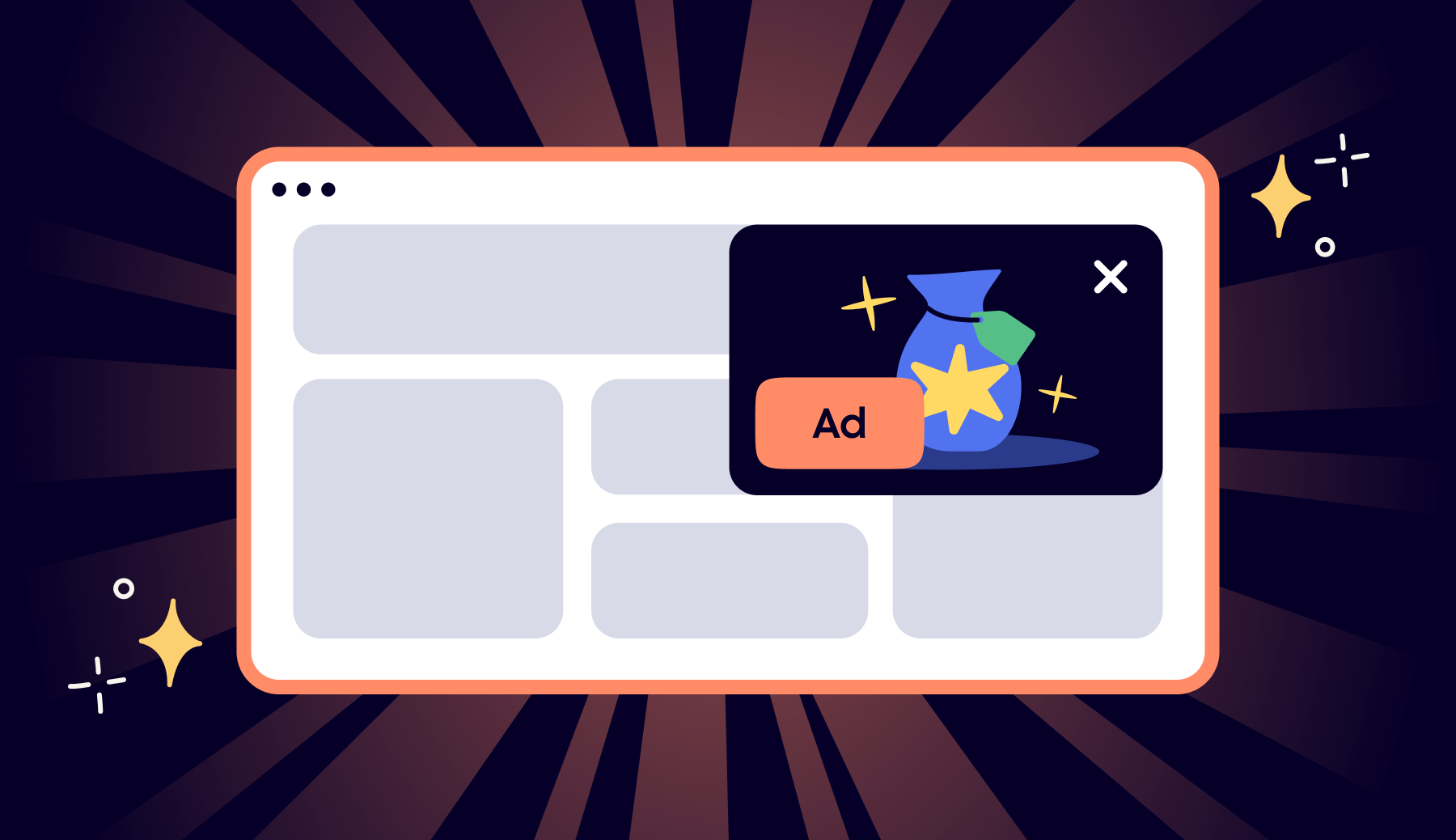
Don’t sleep on push advertising. These ads are excellent for flash offers, app re-engagement, and retargeting. These are incredibly versatile, delivering 2–8% CTRs, with ROI often outperforming banners or native in short-funnel campaigns.
They are effective for retargeting and seasonal promotions, especially in e-commerce or sweepstakes.
As for the drawbacks, they include limited creative space for messaging and the risk of being overused or irrelevant.
The pricing: CPC: $0.01–$0.10; Effective CPMs can be <$1. Large volumes allow scale.
Popunder Ads
Popunder ads, meanwhile, open a new tab or window behind the active one, capturing attention after the main session.

They load directly to the landing page and bypass many ad blockers. You can see how these may appear spammy and result in lower intent than opt-in formats.
On the other side, popunders offer extremely high volume and scalability. They bypass most ad blockers and provide strong performance in impulse verticals for a low cost.
Speaking of, popunders are CPM-based. The pricing ranges from $0.5 in Tier 3 to $1-4 in Tier 1.
Wondering how all of these work and which sub-types those have, along with animations on how each appears on a PC and a mobile? Well, you’re in luck, because we have just the right page.
Discover 30+ rich media ad formats supported by the Epom ad server
Explore all ad formatsNon-Display Digital Ad Formats
We feel your attention span slipping away. Don’t worry, we’ll compress the info on the other ad formats. After all, they are more relevant to martech than ad tech + each has a mountain of related content on the web.
Social Media Ads
What they are: Platform-specific ads (e.g., Facebook carousel, Instagram ads) blending images, video, or interactive elements.
Who should use them: SMBs, agencies, or marketers targeting demographics; ideal for "ad formats explained" queries.
When to use them: During all stages. Social media offers easy-to-use targeting, which works for everything, especially for events or user-generated content.
Costs: CPM $5-15; CPC $0.50-2 (Madgicx, 2025 benchmarks).
What to expect: CTR 1-2%; conversion rates 5-10%.
Email Ads
What they are: Promotional messages or sponsored content in newsletters (e.g., banners in emails).
Who should use them: emails are widely used in E-commerce for loyalty offers and content promotion.
When to use: Naturally, these work best for retention or nurture. Time them for sales cycles.
Costs: CPM $10-50 for sponsored; low production costs (~$0.01 per send).
What to expect: CTR 2-5%; open rates 20-30%.
Search Ads
What they are: Text-based ads on search engines (e.g., Google PPC), triggered by queries.
Who should use them: Performance marketers use these for intent, and agencies – for client ROI.
When to use: these are often used for the bottom-funnel and high-conversion queries.
Costs: CPC $1-10+ (average $5.26, WordStream 2025); no CPM typical.
What to expect: CTR 3-5%; conversion 5-10%.
Wrapping Up
We’ve tried to cover all types of ads and ad format examples, from rich media and natives to email and search.
But this is all just theory that is tossed around under different interpretations in different ad tech stacks. Without practice, it won’t be of much use. Don’t worry, you don’t have to spend thousands of dollars and go through several sales calls just to try these out.
Just sign up for our demo account in several clicks, and launch trial campaigns to your heart’s content. Yes, it’s that simple, and it’s free for 14 days. So, what are you waiting for?
Try out each of the display ad formats in the Epom demo account
Apply for free